

Audio By Carbonatix
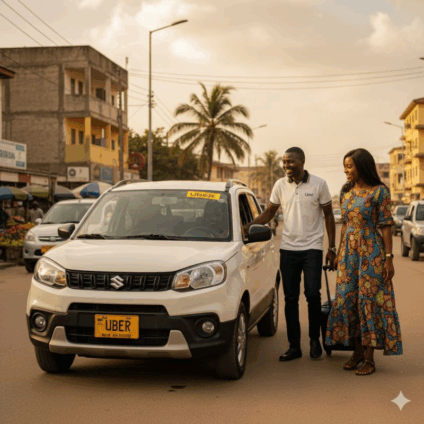
Yesterday, after church, I ordered an Uber. Nice breeze, worship songs still in my head. Then, just as we were about to move, the driver gently leaned back and said in that polite Ghanaian negotiation tone:
“Boss, please let’s go off trip.”
I asked him, “Why?”
He replied, “Uber will take around GH¢60 from this ride… just like that… for sitting in an office and doing app.”
You know that moment where you pause and blink twice? That was me.
So I explained that what he calls “just app” involves things like paying Google for the Maps API, maintaining servers, customer support, fraud systems — and all those things don’t run on prayer and fasting. They cost real dollars.
He still wasn’t fully convinced. He hit me with a quick Ghana market analysis: “Uber has more than 4,000 cars in this country. If each driver pays around 200 cedis a day, do you know how much they are getting?!”
Classic. Fast multiplication, no expenses, no tax, no overhead. Straight profit calculation with confidence.
So I told him plainly — Uber is actually making losses in markets like Ghana. Their underlying cost to run the system here is not that different from America — Google API doesn’t say “Since it’s Ghana, let me charge small.” But because of our purchasing power, they can’t charge Ghanaian riders at the true operational cost. So they are basically bleeding to stay in the market… playing long-term investment games.
He went quiet. The kind of silence that says, “I hear you, but chale my fuel too is not on scholarship.”
At this point, I decided to call a friend who works in that mobility space to sanity-check my argument. We broke it down on the call, and I realised something crucial — both Uber and the driver are struggling, just on different balance sheets. Uber is taking a hit to build market share. The driver is hustling to survive daily. And in Ghana, these systems only work when someone like me comes in to broker a fair middle ground — which is literally my line of work.
So I told the driver this: “Everybody is adjusting to survive. Uber is absorbing losses to stay here. You’re adjusting trips to make ends meet. My job in life is to find that sweet spot where both parties can breathe without fighting.”
He nodded slowly — the Uber driver acceptance nod. The matter had landed.
And Then… The Plot Twist
The person I was with needed to drop off on the way. The driver looked at me and said — calmly, with a small smile: “But boss… why didn’t you add it as a stop? Uber created that feature so that passengers don’t cheat the system.”
Ladies and gentlemen…That’s when your “fairness consultant” also realised he intentionally didn’t add the stop — so I wouldn’t be charged extra.
Latest Stories
-
Andre Ayew Backs Grassroots Sports as Ghana-Anhui Chamber Donates 2,120 Items for Constituency Games
3 minutes -
Hostel Owners Association accuse Rent Control of threats, unfair treatment to operators
8 minutes -
NSA opens special desk to resolve Ghana Card, school biodata mismatches
10 minutes -
Ghana hosts Kenya, Netherlands, South Africa for talks on turning climate plans into action
27 minutes -
‘Now it’s action, no talking’ – Rent Control cracks whip on hostel operators
30 minutes -
GACC, Save Our Environment Foundation train Tano South residents on corruption and accountability
32 minutes -
MOGMusic to headline Ransomed Ministries Ghana’s Total Worship 2026
36 minutes -
Multimedia Group pays courtesy call on Petrosol ahead of GSE listing
46 minutes -
Gov’t acknowledges unresolved grievances over mining damage, displacement
46 minutes -
Joy FM to host maiden Back-to-School PrayerFest ahead of new academic year
49 minutes -
Ghana must legislate minimum community development obligations for mining companies – Mireku Duker
59 minutes -
GoldBod costs could have been minimised with better planning – Prof. Bokpin
1 hour -
GoldBod operations imposing losses on BoG balance sheet – Prof Bokpin
1 hour -
Mining must improve lives in host communities, not just national figures – Presidency
1 hour -
Nigeria influencer arrested after seizure of cocaine worth $28m destined for the UK
1 hour