

Audio By Carbonatix
Minority Chief Whip, Frank Annoh-Dompreh, has made a passionate call for Ghana to embrace clean urban transport systems and a circular waste economy as central pillars of its urban renewal agenda.
Speaking on the floor of Parliament on Tuesday, November 4, during a statement on “Transforming Urban Ghana: Evidence-Based Solutions for Sustainable, Clean, and Resilient Cities,” he warned that Ghana’s urban future hangs in the balance as cities struggle under mounting congestion, pollution, and neglect.
“There comes a defining moment in the life of every nation when progress can no longer be measured by the grandeur of its skylines or the length of its highways, but by the harmony it achieves between humanity and nature,” he said.
“Ghana stands today at that crossroads,” the Member of Parliament for Nsawam-Adoagyiri said.
Citing data from the Ghana Statistical Service, he noted that more than 56% of Ghanaians now live in urban areas, up from 50.9% in 2010.
That figure, he said, is expected to exceed 60% by 2030 — a trend that has intensified the pressure on land, housing, water, and sanitation.
While cities contribute over 70% of Ghana’s GDP, Annoh-Dompreh cautioned that they also generate more than 12,000 tonnes of solid waste daily, with only 70% collected and even less treated.
“Poor sanitation, pollution, and waste mismanagement together cost Ghana nearly 3% of GDP annually,” he said, referencing World Bank data.
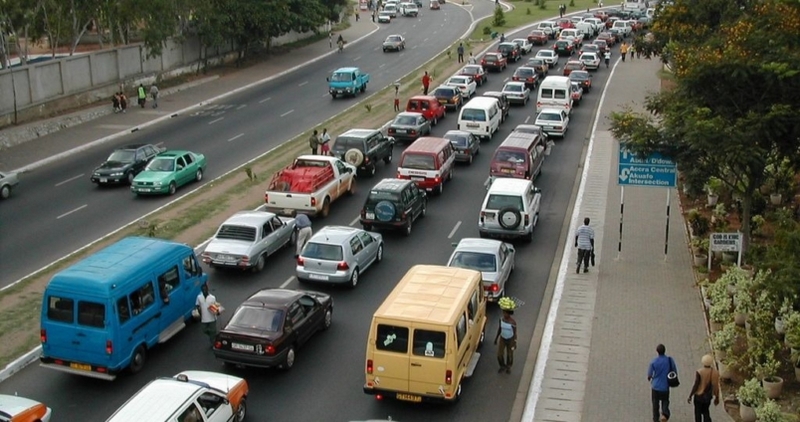
On transport, he expressed grave concern over worsening air quality, particularly in Accra, where the Environmental Protection Agency attributes 40% of PM2.5 pollution to road transport.
“If this trajectory continues unchecked, by 2040, Accra could host more than 7 million people, living amid worsening traffic congestion, frequent flooding, rising temperatures, and declining air quality,” he warned.
Read also: Transforming Urban Ghana: Evidence-based solutions for sustainable, clean, and resilient cities
The MP called for Ghana to learn from international examples. He pointed to Kigali, Singapore, and Copenhagen as cities that have demonstrated how visionary urban planning, green infrastructure, and disciplined enforcement can transform national development.
“In Copenhagen, investing in protected cycling lanes and pedestrian-friendly infrastructure has made cycling account for over 35% of daily trips,” he said.
“For Ghana, this translates into the urgent need to create non-motorised transport corridors and Bus Rapid Transit systems to reduce congestion, improve health, and cut carbon emissions.”
He argued that Ghana’s urban policy must now prioritise greener and cleaner mobility options, including electric buses and modernised trotro fleets.
“Cleaner mobility will directly reduce air pollution, improve productivity, and align Ghana’s transport sector with its commitments under the Paris Agreement,” he said.
On waste management, Annoh-Dompreh urged the country to move from a collection-only approach to a circular economy that recycles, recovers, and reuses materials.
“Ghana should move from collection-only systems to a circular waste economy—with recycling cooperatives, material recovery facilities, and composting plants that create green jobs while safeguarding the environment,” he said.
He also proposed that metropolitan assemblies commit to increasing tree cover and green spaces, reorganising markets, and promoting “15-minute city” designs that integrate schools, clinics, and sanitation services within walking distance.
“The future of Ghana’s cities will not be determined by chance, but by the courage of our choices,” Annoh-Dompreh said in closing.
“If we build without foresight, we will inherit congestion, pollution, and decay. But if we build with purpose — guided by ecological wisdom, justice, and innovation — we will create cities that breathe, move, and heal.”
He urged Parliament to spearhead a national agenda for Green, Healthy, and Inclusive Cities, saying Ghana’s destiny lies in whether it chooses to build with conscience or continue down a path of urban decay.
Latest Stories
-
Police warn against religious statements that incite violence
31 seconds -
Parliament recall unnecessary, waste of taxpayers’ money – Habib Iddrisu
6 minutes -
Incumbent Western North NPP Regional Chairman withdraws from seeking re-election
11 minutes -
Galamsey is taking back our forests – Erastus Asare Donkor warns gains are being lost
12 minutes -
Ho: Allied Health Professions Council closes six facilities over safety breaches
15 minutes -
Madina Police to crack down on child labour and trafficking at market
20 minutes -
Deputy Communication Minister urges stronger information management to drive Ghana’s digital transformation
25 minutes -
One dead, five injured in crash on Accra–Kumasi Highway
30 minutes -
SSNIT targets 100 co-location points in membership drive
35 minutes -
NIA to create over 120 jobs as it rolls out 24-hour Prestige Centres
39 minutes -
Bagre Dam below spillage level, WRC monitoring situation
43 minutes -
CSIR calls for coordinated action to protect Ghana’s water bodies
48 minutes -
Adaklu District Police Commander appeals for accommodation for personnel
52 minutes -
IDEG pushes for NDC, NPP consensus on election of local government executives
58 minutes -
BoG Governor urges banks to develop innovative diaspora investment products
1 hour