

Audio By Carbonatix
The presidential directive is a clarion call, a constitutional signal fired in the battle for economic sovereignty. President John Mahama's mandate, compelling all schools, from basic to secondary, to purchase only Ghanaian-produced rice, maize, chicken, and eggs, is a powerful intervention designed to forge a stable, captive market for local farmers. It is a vital non-cash subsidy that guarantees demand and arrests the perilous glut of surplus food that has recently crashed farm-gate prices.
However, a great policy, like a magnificent ark, must be built to withstand the turbulent waters of the market. The essential question, and the crucial pivot of this new dawn, is the pricing paradox.
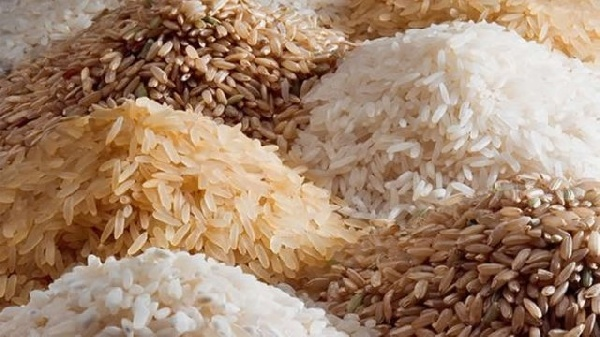
The public’s critique is sharp and justifiable: local rice remains relatively more expensive than its imported counterpart. This juxtaposition reveals the true challenge.
The imported grain, often benefiting from foreign subsidies and economies of scale, sets a deceptive price ceiling. The Ghanaian farmer, in contrast, grapples with high domestic production costs, from the cost of quality certified seeds and fertiliser to mechanisation and post-harvest losses.
To decree mandatory purchase without comprehensively addressing the cost of production is to replace one market distortion, cheap imports, with another, potentially overburdening the national school budget. The directive is the demand shock our agricultural sector needs, but without an accompanying supply-side revolution, the cost burden risks being simply shifted from the farmer's post-harvest loss to the state's procurement ledger.

The administration, in its wisdom, has not been blind to this dual challenge. The policy's strength lies not just in the mandate, but in its accompanying interventions: The immediate release of GH¢200 million to the National Food Buffer Stock Company (NAFBC) is the government’s commitment to mop up surplus food. This action acts as a floor price mechanism, protecting farmers from catastrophic price drops and ensuring a baseline profit. The Ministry of Food and Agriculture is actively working on a nationwide policy to standardise the pricing of key produce like maize and rice.
Furthermore, the 2026 Budget details plans for interest rate subsidies for agribusinesses in value chains like rice and poultry, alongside the establishment of Farmer Service Centres providing affordable machinery and technical support. These are direct assaults on the high cost of production.
This systemic approach is an acknowledgement that the price of local food is not a moral failing of the farmer, but a structural problem of the market. The policy transcends mere school feeding; it is a profound step in securing national food self-sufficiency. Deputy Minister for Finance, Thomas Nyarko Ampem, has rightly advocated for broadening this mandate to all state institutions, not just schools. The government is the largest spender, and this vast purchasing power, when directed internally, becomes a powerful engine for growth.
The ultimate goal is not just to sustain farmers, but to create a virtuous cycle: guaranteed demand leads to increased production, which, combined with reduced production costs via subsidies and mechanisation, leads to higher volumes and, critically, lower unit costs over time. This is the only path to making Ghanaian rice, maize, chicken, and eggs genuinely cost-competitive with the imported variety, without sacrificing the farmer's livelihood. The presidential directive is a profound assertion of national will. It is the seed of a new economic paradigm.
But for this seed to bear the fruit of both prosperity and competitive pricing, its roots must be nourished by rigorous enforcement, unyielding investment in farm-to-market infrastructure, and an unwavering commitment to driving down the cost of production.
The policy has provided the market; the government must now provide a fair price. The success of this mandate is the measure of our commitment to our own land and our own people.
*******
Raymond Ablorh is a Policy, Research & Strategic Communication Consultant
Latest Stories
-
Green finance goes beyond banks and big corporations to driving climate and environmental solutions – Nanabanyin Addo-Brown
1 minute -
The journey is short
5 minutes -
Teacher unions give government September 24 deadline to resolve promotion arrears
6 minutes -
Restoring BDC confidence helped turn around TOR – MD
17 minutes -
Chipper Cash launches bank-backed virtual accounts through collaboration with Universal Merchant Bank in Ghana
17 minutes -
I’m beginning to suspect NPP members may be involved in drug trafficking – Mustapha Gbande
20 minutes -
How hasty reading and inattention to complex texts may affect Ghanaian learners’ comprehension
24 minutes -
Public transport fares to increase by 8% from September 26
24 minutes -
How a $125m plant meant to fix Teshie-Nungua’s water crisis became a $235m judgment debt
24 minutes -
NPP calls for parliamentary inquiry into cocaine trafficking concerns
25 minutes -
Appiatse redevelopment enters final phase with 69 new housing units
26 minutes -
Ahafo Ano South West DCE was tipped to win parliamentary for NDC seat in 2028 – Ashanti Region NDC Chairman
32 minutes -
UniMAC Dean urges freshers to build strong personal brands, networks
35 minutes -
Meet Larry Prince: Maamobi-born artiste turning street experiences into music
36 minutes -
Career opportunity: Senior Geologist sought for key mining role
37 minutes