

Audio By Carbonatix
“Neo-colonialism is the worst form of imperialism.” – Dr. Kwame Nkrumah.
Are we, as Ghanaian technologists and startup founders, not good enough to build technologies that advance key sectors of Ghana, like education? The answer is a resounding no. Yet, the actions of our leaders suggest otherwise.
Ghana’s Ministry of Education (MoE) has chosen to partner with a German for-profit company, AMBYLON, "as strategic partner to spearhead the complete digital transformation of the nation's education system". Let that sink in. A foreign entity is being handed the reins to shape the future of Ghanaian education, with the plan beginning as a pilot in select regions and, if successful, rolling out nationwide. This partnership appears to come to fruition with the involvement of key stakeholders in the German government.
This development is not just disappointing—it is alarming. It follows closely on the heels of the MoE’s recent announcement to partner with an American AI nonprofit, Playlab, another foreign entity, to develop and deploy an AI-powered tool for teachers across Senior High Schools in Ghana, despite the presence of capable local startups. I have previously voiced my concerns about this trend, and I must reiterate: Ghana’s thriving local tech ecosystem is being sidelined in favor of foreign interests.
As someone who has spent over a decade in Ghana’s EdTech space, I have witnessed firsthand the innovation, resilience, and contextual understanding that local companies bring to the table. Yet, time and again, our political leaders seem fixated on awarding contracts and partnerships to foreign companies. Why do these outsiders enjoy easier access and a more receptive audience with key decision-makers—privileges that local players have struggled for years to obtain?
Critical questions demand answers:
- What was the process for the setup of this partnership or procurement? Was it transparent and competitive?
- Was there a public call for proposals, complete with clear criteria and submission timelines?
- Are we to believe that no Ghanaian EdTech company was deemed competent enough to build this tool?
It is inconceivable that AMBYLON’s platform could offer better local curriculum contextualization than Ghanaian EdTechs like eCampus LLC, which have been serving our people for years. The expertise and experience embedded in our local solutions are unmatched by any foreign import.
To be clear, there is nothing inherently wrong with collaborating with foreign companies or organizations. I’m aware that local institutions such as the National Council for Curriculum and Assessment (NaCCA) — Ghana’s curriculum authority — and the Centre for National Distance Learning and Open Schooling (CENDLOS) are involved in these initiatives. However, when such partnerships elevate a foreign tech company to the position of tech lead—while relegating local innovators to the sidelines and denying them equal opportunities—the result is deeply harmful. It undermines our national tech sovereignty, a value that is more critical than ever in an increasingly AI-driven world.
A common justification offered by these foreign organisations is that their intentions are noble and that they are providing their platforms to the Ghanaian government free of charge. But let us not be naïve: there is no such thing as a free lunch. What is the real price of these so-called “free offerings”? The answer is our digital sovereignty. By accepting these platforms without due scrutiny, we risk ceding control over our data, our educational content, and ultimately, our future, to external interests. The hidden costs—loss of autonomy, dependency on foreign technology, and the erosion of local capacity—are far greater than any upfront savings.
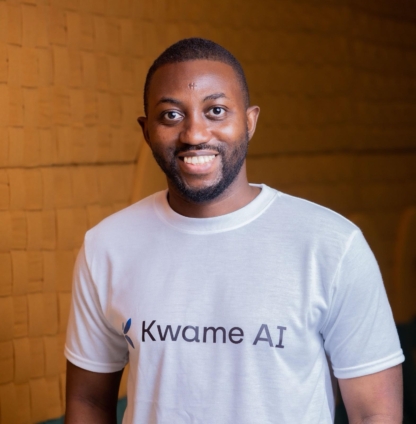
Every time I read about these partnership announcements, I am reminded of Dr Kwame Nkrumah, Ghana’s first president and a staunch pan-Africanist who championed the independence of Ghana and many other African nations. Our company, Kwame AI, bears his name in honour of his vision.
Dr Nkrumah fought tirelessly against imperialism, colonialism, and neo-colonialism. He would be appalled by the current trajectory—this is not the Ghana he envisioned.
If we continue to outsource our future, we risk becoming mere consumers of foreign solutions, rather than creators of our own destiny. Ghana’s EdTech future must be built by Ghanaians, for Ghanaians. Anything less is a betrayal of our potential and our sovereignty.
Latest Stories
-
President Mahama is a professional comedian – DKB
14 minutes -
Final day of Joy FM Back-to-School Fair: Come shop, save and prepare for the new school year
1 hour -
GSE showed strong performance in August 2026 despite recording more stock losses
3 hours -
If CJ needs ethics law to know SOE comments were wrong, he may not be worthy of office – Arthur Kennedy
4 hours -
Stop touring state agencies and focus on the Judiciary’s problems – Arthur Kennedy to CJ
4 hours -
Apologise and don’t do it again – Arthur Kennedy to Chief Justice over SOE comments
4 hours -
Chief Justice remains committed to judicial independence, justice and equality – Judicial Service
5 hours -
Ghana concludes evacuation of citizens from South Africa; total returnees reach 1,900 – Ablakwa
5 hours -
Africa must define its own green transition path – Prof Fatima Denton
5 hours -
WASSCE 2026: English Language performance falls to 62.4% – WAEC
6 hours -
WASSCE 2026: Social Studies records sharp rebound as Maths, Science also improve
6 hours -
2026 WASSCE entry rises by 11% as 512,862 candidates sit exams
6 hours -
WASSCE 2026: English Language performance falls to 62.4% – WAEC
6 hours -
WAEC cancels 2026 WASSCE results of 8,295 candidates over examination irregularities
7 hours -
WAEC releases provisional 2026 WASSCE results for 512,862 candidates
7 hours