

Audio By Carbonatix
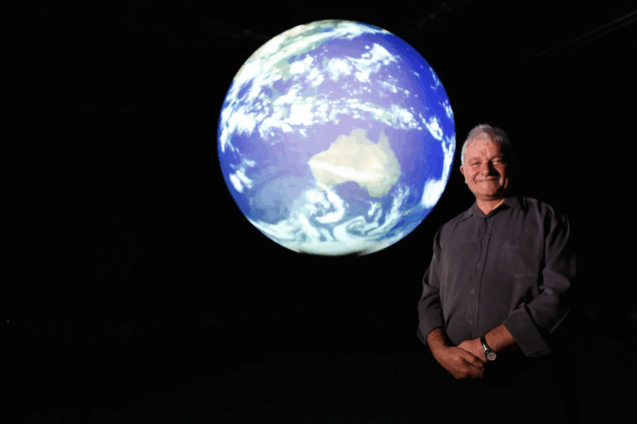
One of Britain's most distinguished scientists, Prof Sir Paul Nurse, says the government is "shooting itself in the foot" with its visa system for science researchers.
Sir Paul told BBC News that high visa fees are deterring early-career researchers, who are instead being welcomed by the UK's economic rivals.
Supporters of the current system say higher visa costs help to fund the NHS and reflect wider public concerns about immigration.
But the Nobel prize-winning scientist says the UK's scientific future is being put at risk.
"Having expensive visa costs is shooting yourself in the foot. It absolutely doesn't help in attracting these sorts of people," Sir Paul said.
Sir Paul, who has taken over as President of the Royal Society, which represents the UK's leading scientists, warns that countries such as China and Singapore are actively courting overseas scientific talent.
"Why do we put hurdles in the way of the people that are actually going to drive our economy? It makes zero sense."
The Nobel prize-winner describes the UK's science base as "fragile" because of a combination of steep visa costs, funding pressures and the negative signal, current immigration rules.
He urges ministers to rethink a system that forces scientists to pay an annual NHS surcharge and to prove they have thousands of pounds in the bank before they arrive.
Official guidance on the Immigration Health Surcharge explains that visa applicants pay the surcharge to help fund their healthcare.
Home Office guidance states that applicants must show set levels of savings to show they can support themselves "without recourse to public funds".
The Centre for Policy Studies, a centre-right policy think tank, argues in its report Taking Back Control for net migration to be brought back down to the "tens of thousands."
But its policy expert on the issue, Karl Williams, broadly agrees with Sir Paul's sentiments, but argues that a tight overall migration limit must be maintained after a historically large recent surge in immigration.
"The wave of immigration we had between 2021 and 2024 is probably the single most significant demographic event in modern British history… If you say yes to one sector, then you start saying yes to other sectors, and you actually just recreate the problems of recent years."
According to Home Office visa statistics, the total number of people receiving a visa for a job in natural and social science in the last quarter was 323 people.
"Even if you doubled that, that wouldn't make a huge difference to the overall migration numbers," Mr Williams told BBC News.
"But there is no robust system to make that work, for example having conversations about where numbers can be reduced in order to let more scientists in".
Latest Stories
-
Bahass Foundation launches vocational skills training to support mental health recovery in Wa
22 minutes -
NPP orders parliamentary aspirants and their supporters to suspend campaign activities
55 minutes -
Techiman unites against child marriage: Joy Impact Makers Awardee leads charge on International Day of the Girl Child
1 hour -
Ghana Psychological Association calls for greater involvement of people with lived experience in mental health care
2 hours -
Ablakwa says Ghana could evacuate more citizens from South Africa if the situation worsens
3 hours -
Violence against girls must be tackled through individual responsibility – Gender advocate
3 hours -
Ghana’s BRICS bid must be guided by national interest – International Affairs Analyst
3 hours -
Journalists look back on a decade of breast cancer reporting in Ghana
4 hours -
President Mahama ends Resetting Ghana tour of Ahafo Region
6 hours -
African negotiators seek delivery of climate commitments at COP31
6 hours -
BoG develops AI rules for financial sector
6 hours -
‘Big Push’: Government assures contractors of prompt payments
6 hours -
Court fines miner for breaking into gold buying shop
6 hours -
Tarkwa court jails labourer for three years over GH¢123,000 theft
7 hours -
GAEC must retain nuclear scientists for Ghana’s nuclear ambitions – Minister
7 hours