

Audio By Carbonatix
The November 2025 Food Security Monitor report published by AGRA states that 23.96% of Ghanaians, representing about 8 million people, are experiencing Insufficient Food Consumption (IFC).
The report notes that the percentage of the population facing IFC has gone up by 8.4% over the last year. Compared to two years ago, the rate has increased by 55.6%.
The report, however, characterises Ghana’s IFC situation as moderately low, compared to other African countries.
People facing IFC refer to those with poor or borderline food consumption, according to the Food Consumption Score (FCS).
The Food Consumption Score (FCS) is a proxy indicator of food security that measures the diversity of household diets and the frequency of food consumption.
The FCS is calculated from the frequency of consumption of eight food groups by a household over seven days prior to the survey, using standardised weights for each food group that reflect its respective nutrient density.
It then classifies households as having ‘poor’, ‘borderline’ or ‘acceptable’ food consumption.
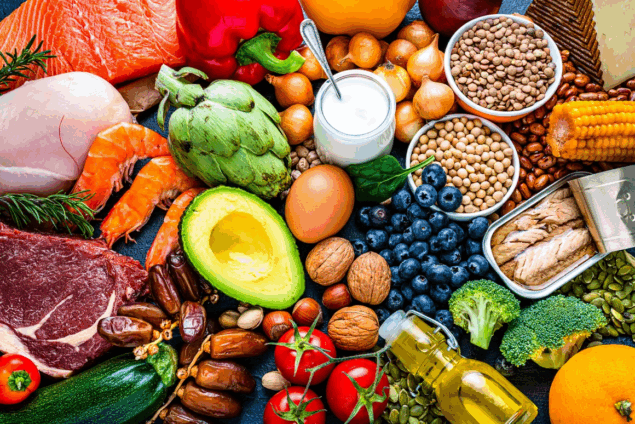
Poor food consumption typically refers to households that do not consume staples and vegetables every day and never, or very seldom, consume protein-rich food such as meat and dairy (FCS of less than 28).
Borderline food consumption typically refers to households that consume staples and vegetables daily, along with oils and pulses a few times a week (FCS of less than 42).
Acceptable food consumption typically refers to households that consume staples and vegetables every day, frequently include oils and pulses, and occasionally meat, fish, and dairy (FCS greater than 42).
The report says the number of people facing IFC has worsened across all monitored countries compared to last year, with the steepest increases recorded in Nigeria (+101.4%), Niger (+21.4%), and Uganda (+18%).
Burkina Faso, Kenya, and Mali also registered notable rises, while smaller increases were observed in Rwanda, Togo, and Zimbabwe.
The report says West Africa faces persistent and severe food insecurity, primarily driven by conflict, displacement, and market disruptions. Niger faces the most severe crisis, with 76.6% (21.4M) of its population facing IFC.
Mali follows at 52.4% (13.2M). Burkina Faso has 46.5% (11.2M), up 11.2% year-on-year. Nigeria has the most significant absolute number, 56.4M (23.7%), with volatile trends: up 101% from last year but down 37.5% over two years. Côte d’Ivoire has the lowest IFC at 15.6%, although up 5.1% year-on-year.
The report, however, paints an optimistic picture of the future. It says in West Africa, harvesting of main-season cereals is nearly complete under generally favourable conditions, supported by average to above-average rainfall and adequate distribution throughout most of the season.
While some areas experienced localised impacts from rainfall deficits and flooding, overall weather patterns were conducive to crop development.
However, production outcomes remain constrained in regions affected by persistent insecurity and socio-economic challenges.
Aggregate cereal output for the subregion is projected at 82.9 million tonnes, representing a 10.4% increase over the five-year average and 7.3% above last year’s campaign, signalling strong regional performance despite localised constraints.
The Gates Foundation, the Rockefeller Foundation, and the UK International Development support the monthly Food Security Monitor report produced by AGRA. It tracks food security situations across 17 countries in Eastern, Southern, and Western Africa.
Latest Stories
-
Fuel prices set to rise again from Sept 1; petrol could hit GH¢16.21 – COPEC
7 minutes -
REGSEC restricts Akwasidae celebrations in Denkyira amid security concerns
13 minutes -
Eric Adjei distributes free fertiliser to farmers in Jaman North
20 minutes -
Akufo-Addo urges NPP factions to unite behind Bawumia for 2028 victory
31 minutes -
NDC mourns Western Regional Elections Director Papa Assan
38 minutes -
Minerals Commission warns against fake job recruitment schemes
45 minutes -
10 recruits dismissed for defying phone ban – Interior Minister
51 minutes -
IEAG commends GoldBod, BoG for improving forex stability
1 hour -
Bawumia donates GH¢50,000 to St Jude Catholic Church at Weija
1 hour -
Mahama calls for faster mobilisation of AU Peace Fund resources
1 hour -
Improved roads bring new vehicle options to Tumu-Bolga, Tumu-Tamale, Tumu-Wa routes
1 hour -
Cedi records 7.9% depreciation against US dollar in first half of 2026
1 hour -
GIS launches operation on anti-human trafficking and exploitative street begging
2 hours -
Awutu-Senya District Assembly organises clean-up ahead of Awubia Festival
2 hours -
Vice President Opoku-Agyemang receives Democracy Cup
2 hours