

Audio By Carbonatix
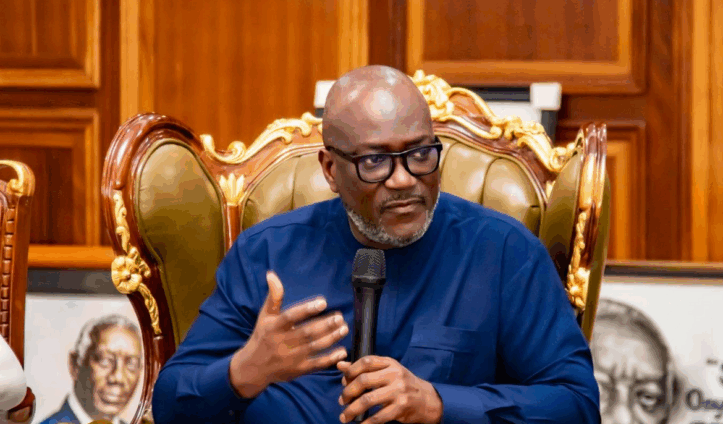
Chairman of the Constitution Review Committee, Prof Henry Kwesi Prempeh, says Ghana’s four-year presidential term no longer reflects global democratic standards and is increasingly out of step with international practice.
Speaking on Joy News on December 25, he said the committee’s work has shown that Ghana is now among a shrinking group of democracies still operating a four-year presidential term, especially in Africa.
He explained that a major concern with the current system is the time lost at the beginning of every administration.
“So you come in, you are supposed to appoint everybody. The new Council of State has to be convened before you appoint; consult them and appoint. So it takes forever,” he said.
According to him, this creates management challenges and significantly reduces a president's effective time to govern.
He said some of these issues were identified and addressed to free up time, but the deeper problem remains the short length of the term itself.
Prof Prempeh said the evidence gathered by the committee shows a clear global shift. “We gathered evidence that actually, Ghana is among a dwindling number of countries that still do four years, especially new democracies and in Africa,” he said.
He noted that most presidential systems now operate for longer terms. “Most do five. In our region, some do seven. Benin, Liberia, does I think six, Nigeria and Ghana do four years,” he said, adding that Ghana and Nigeria have often moved “lockstep.”
According to him, the trend is no longer debatable. “We realised that the evidence we’re gathering was that the global norm now has shifted from four to five in presidential systems, and that in our own region, five is the norm,” he said.
Prof Prempeh said the committee approached the issue with flexibility, noting that no specific number of years is sacred. “Since any number is arbitrary, then let’s be guided by comparative best practice,” he said.
He argued that if the world is moving towards a five-year term, Ghana should seriously consider following suit. “If the world is moving towards five, then maybe it makes sense to use five; then it makes a good number actually to use,” he said.
Addressing concerns about abuse of longer terms, Prof Prempeh said a five-year term could actually strengthen accountability.
He noted that incumbents often argue that four years is not enough to deliver. “People tell us, oh, when their term is coming to an end, oh, give us another term. We didn’t have enough time,” he said.
He explained that voters are more likely to accept that argument under a four-year system. “A Ghanaian voter might accept that four years is not enough and give you a second term to finish your work,” he said.
But he insisted that the same argument would be more complex to sell after five years. “If you have five years, it is going to be difficult to convince a voter that five years was not enough,” he said.
From the voter’s perspective, Prof Prempeh said the longer term raises the bar for performance. “Five years is tough on the incumbent,” he said, adding that it could lead to fewer presidents securing second terms.
“If you have not performed well in five years, Ghanaians are not really going to entertain the thought of letting you stay,” he said.
He also dismissed fears that a five-year term automatically means longer stays in office. “The four, four was becoming like a tradition, like everybody gets eight,” he said.
Under a five-year system, he argued, the second term would be far from guaranteed. “So it’s not like you just multiply five by two and say, hey, 10 years, there is too much,” he said.
According to him, securing a second five-year term would be much harder. “The 10 is going to be difficult to get,” Prof Prempeh said.
Latest Stories
-
2026 U20 WWC: Ghana’s Ambassador to Czech Republic welcomes Black Princesses to Poland
9 minutes -
Oti NPP executives demand completion of stalled government projects
21 minutes -
Jinapor demands answers as Alima Mahama is asked to pay for Embassy spending outside her tenure
30 minutes -
Russia doubles scholarships for Ghanaian students to 240 annually
31 minutes -
Cedi’s year-to-date loss slumps to 4.09% as recent gains gather pace
50 minutes -
‘Home has spoken’ – Justin Kodua Frimpong says as Ashanti delegates back his re-election bid
54 minutes -
Mustapha Abdul-Hamid, seven others’ NPA case adjourned to August 27
1 hour -
Alima Mahama Refund: Jinapor challenges Ablakwa’s authority, says only Auditor-General can surcharge
1 hour -
Wontumi Conviction: 2 star witnesses placed under police protection amid death threats
1 hour -
Srem-Sai reveals surge in death threats after Wontumi conviction
1 hour -
GCB, Ecobank, 4 others are top tier banks in Ghana – PwC Banking Survey
2 hours -
Today’s front pages: Tuesday, August 18, 2026
2 hours -
Banks’ sustainable success will be defined less by interest margins – PwC
3 hours -
CJ Baffor-Bonnie was part of ‘grand conspiracy to remove Torkornoo – Afenyo-Markin alleges
3 hours -
The GIPA Act: Resetting Ghana’s investment framework
4 hours