

Audio By Carbonatix
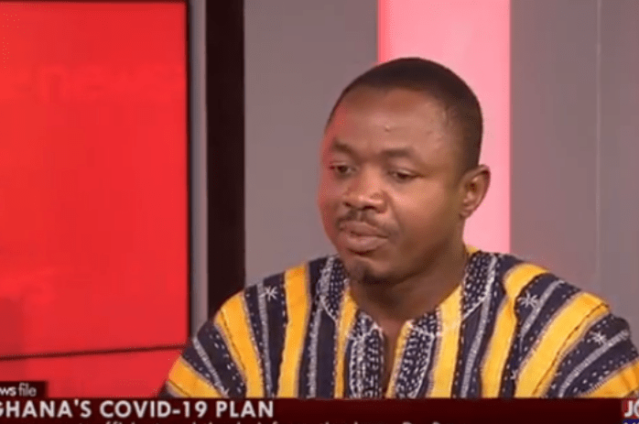
The Member of Parliament for Lambussie, Prof. Titus Beyuo, has criticised Ghana’s national transport strategy, characterising the current urban mobility chaos as the "predictable price" of decades of poor planning and a stubborn overreliance on road transport.
Speaking on Channel One TV on Saturday, January 17, 2026, the medical-professional-turned-legislator argued that while the immediate transport shortages in Accra and Kumasi may eventually ease, the underlying structural rot remains unaddressed.
Prof. Beyuo observed that Ghana’s current predicament—marked by long queues at terminals like Madina and Kaneshie—is a cyclical symptom of a deeper failure to diversify how people and goods move across the country.
“This is not entirely new, and I think it will settle, but this is a reflection of our lack of planning and not having a deliberate effort to tackle our transportation,” he said.
With Accra’s population projected to double to 10 million in the coming years, Prof. Beyuo warned that a firefighting approach—simply buying more buses for a saturated road network—will lead to total gridlock.
Drawing on his background as a former General Secretary of the Ghana Medical Association (GMA), Prof. Beyuo linked the transport crisis directly to the nation’s high road accident rates. He revealed that as far back as 2018 and early 2021, the GMA organised high-level conferences that warned of the lethal consequences of a "unimodal" system.
Any country that wants to tackle the carnage on its roads will have to deploy multiple forms of transportation,” he emphasised, adding that road accidents in Ghana aren't just a matter of "bad driving" but a consequence of placing too much pressure on a single mode of travel.
The Lambussie MP argued that for Ghana to achieve true mobility, the state must pivot toward a multi-modal transport system. This would involve the integration of:
- Rail and Trams: High-capacity systems to move thousands of commuters into city centres without adding to road traffic.
- Inland Waterways: Utilising the Volta Lake and coastal routes for freight and passenger travel.
- Dedicated Bus Lanes: Ensuring that high-occupancy vehicles are not stuck in the same bottlenecks as private cars.
He noted that developed nations are better positioned to manage disruptions precisely because they do not "put all their eggs in one asphalt basket".
Prof. Beyuo’s remarks come at a time when experts are lamenting the rotting of hundreds of state-owned buses (Aayalolo and Metro Mass) in depots due to maintenance failures. He insisted that while roads will always be the backbone of local travel, they can no longer be the sole focus of policy.
Latest Stories
-
Government to procure furniture to help more SHSs move from double-track — Haruna Iddrisu
6 minutes -
Adutwum spokesperson alleges ‘turf war’ between Education Ministry and GES over Free SHS
8 minutes -
Black Stars: Adu Kwabena a doubt for September-October games after head injury
20 minutes -
Fire guts four-bedroom apartment at Millennium City
22 minutes -
KMA seeks funding to restart stalled Kumasi Central Market Phase II project
42 minutes -
Government unveils new guidelines to improve regulation of non-profit organisations
47 minutes -
Annoh-Dompreh cautions against partisan application of law in political speech cases
54 minutes -
Oti Peace Council sensitises Assembly Members in Jasikan, Kadjebi on conflict prevention
1 hour -
Nawara petitions Ghana Police over alleged armed raid, gold seizure and destruction of mining equipment
1 hour -
Ahafo Ano South West DCE Abubakar Sedik dies after brief illness
1 hour -
Ghana must draw lessons from Nkrumah’s Seven-Year Development Plan — Kwesi Pratt
1 hour -
Oil hits over 1-week low on hopes of boost to diplomacy in Iran war
3 hours -
They take GH¢100, sometimes GH¢200 – Okada riders allege police extortion in Accra
3 hours -
NACOC: We’ve found no presidential escort among suspects in €225m France cocaine case
3 hours -
Don’t turn students away over trunks and chop boxes – GES
3 hours