

Audio By Carbonatix
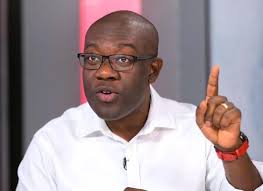
The MP for Ofoase-Ayirebi in the Eastern Region and ranking member of Parliament’s economy and development committee Kojo Oppong Nkrumah, has warned that Ghana’s recent drop in inflation could be temporary if authorities fail to deal with rising production costs, especially electricity tariffs.
Speaking to Joy News, the Ofoase-Ayirebi MP argued that the current low inflation figure is largely the result of tight monetary controls by the Bank of Ghana, rather than genuine improvements in productivity and cost management.
“I submit respectfully that when you are not doing much about the cost-push side, that is when the Bank of Ghana will come in to do heavy sterilisation to suck out the money,” he said.
“So there’s very little money for people to demand.”
His comments follow the release of new data by the Ghana Statistical Service, which showed that inflation fell to 3.3 per cent in February 2026 — the lowest level in several years.
While welcoming the decline, Mr Oppong Nkrumah cautioned that the figures should not be taken at face value.
In his view, the central bank’s policy of mopping up excess liquidity has reduced spending power, leading to weaker demand and slower price increases — but without addressing the real cost pressures faced by producers.
“In plain terms, people don’t have purchasing power,” he said. “Products are still in the market, but buyers cannot afford them.”
He explained that inflation is influenced by both demand and production costs. However, he believes current policies have focused too much on restricting money in circulation, while ignoring factors such as high utility tariffs, transport costs and input prices.
A major concern, according to the former minister, is the rising cost of power for businesses.
He said many producers are reporting electricity bill increases of between 24 and 28 per cent, which are gradually being built into the prices of goods and services.
“The question we should be asking ourselves is, has anything been done to arrest or contain it?” he asked.
Mr Oppong Nkrumah warned that if these costs remain high, producers will eventually pass them on to consumers. Once monetary restrictions are relaxed, he said, inflation could rise sharply again.
“In economics, if you reverse the method and the substantive issues have not changed, you will get a reversal of the scenario,” he cautioned.
However, he argued that without structural reforms to reduce production costs, the gains could prove fragile.
Latest Stories
-
Total expenditure as of July 2026 amounted to GH¢147.07bn, 16% below target – BoG
2 hours -
Total revenue & grants stood at GH¢144.5bn in July 2026, slightly below target – BoG
2 hours -
Ghana Sports Fund urges sports federations to submit credible proposals and measurable targets
2 hours -
Sally Rooney books withdrawn in UK over Palestine Action support
2 hours -
Musk says US government may be behind slowdown of Ukraine drone speeds
2 hours -
Picking Chief Justices nearing retirement could give Mahama immense power – Bentil
3 hours -
Netflix to shed 1,000 jobs in steepest cuts since 2022
3 hours -
Burnham had two hospitality dinners with Man City chairman, deleted records show
3 hours -
Semenyo ‘froze’ after alleged racist abuse, court told
3 hours -
‘Shameless’ – Mourinho critical of Vinicius Jr ban timing
3 hours -
Loyalty can outweigh competence in Chief Justice selection – Bentil
4 hours -
Man City suffer as PSG masterclass sets up Champions League win
4 hours -
Customer Service Africa CEO urges business leaders to observe staff and customer interactions
4 hours -
On night of mayhem for Liverpool, Barcola arrives in style
4 hours -
Muzic Mensah finds healing and renewed love in new single ‘WayƐ Late’
4 hours