

Audio By Carbonatix
The Bank of Ghana has expressed worry that Ghana’s fight against inflation is not yet won, despite signs of improving macroeconomic stability, insisting that deeper analysis of price drivers will be key to sustaining progress.
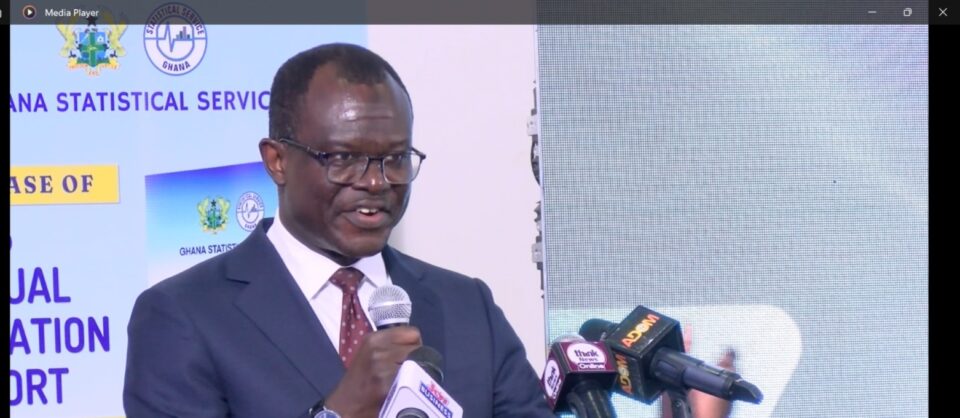
At the launch of the 2025 Annual Inflation Report in Accra, First Deputy Governor Dr. Zakari Mumuni delivered a stark reminder of the dangers inflation poses to the economy and livelihoods.
“Inflation is as violent as a mugger, as frightening as an armed robber and as deadly as a hit man.”
Strong Angle: Stability Gains at Risk Without Sharper Policy Insight
While recent policy measures have helped stabilise the macroeconomic environment, Dr. Mumuni stressed that inflationary pressures remain complex and could easily resurface if not properly managed.
He noted that price developments in 2025 were influenced by a combination of exchange rate movements, food price volatility and global commodity shocks—factors that require more than routine monitoring.
“Understanding not just the level of inflation, but its composition, persistence, and underlying drivers, is essential for effective policy formulation,” he said.
Beyond Headline Numbers
The central bank is now pushing for a shift away from relying solely on headline inflation figures, arguing that such an approach risk masking underlying vulnerabilities in the economy.
Dr. Mumuni emphasised that inflation must be carefully broken down to separate short-term shocks from long-term trends, a move he says will improve the precision of monetary policy decisions.
“Inflation is inherently multidimensional. It cannot be fully understood through headline numbers alone,” he stressed.
Data-Driven Policy the New Focus
The new Annual Inflation Report, produced in collaboration with the Ghana Statistical Service, is expected to play a central role in this strategy by offering a more comprehensive view of price developments across sectors.
Dr. Mumuni described the report as a major step toward improving transparency and strengthening the credibility of economic policy.
“This maiden report enhances the analytical toolkit available to policymakers and strengthens the evidence base for decision-making,” he noted.
BoG Reaffirms Commitment
Despite ongoing risks, the Bank of Ghana maintains that it is firmly committed to restoring and sustaining price stability through disciplined policy actions and stronger institutional collaboration.
“Achieving and sustaining low and stable inflation requires not only appropriate policy actions, but also high-quality data,” Dr. Mumuni said.
The central bank’s warning underscores a key message: while stability may be returning, the real test will be whether Ghana can stay ahead of the underlying forces driving inflation.
Latest Stories
-
NPP had more permanent fuel relief measures than current GH¢2 diesel cut – Amin Adam
13 minutes -
Photos from the 3rd Republic Bank-JoyNews Habitat Fair Clinic
16 minutes -
Ethiopia’s army promises restraint amid fears of new civil war
25 minutes -
Amin Adam calls for review of fuel taxes as diesel prices remain above GH¢18
57 minutes -
World Vision Ghana, Ahafo districts sign MoU for universal WASH coverage
1 hour -
When the gold engine stutters: What Ghana’s Cedi and reserves are telling us about the new economic architecture
2 hours -
Two reportedly die after being trapped in mining pit at Juaboso
2 hours -
Petrosol cleans up Wa Municipal Hospital, to donate medical equipment
2 hours -
‘If NPP was ‘insensitive’ over fuel prices, NDC must accept same description now’ — Amin Adam
2 hours -
KiDi brings the hits to London in sold-out UK headline concert
2 hours -
The last goodbye of Ghanaian shot dead in the US
3 hours -
MCC opens door to Ghana again as MiDA revives development partnership
3 hours -
CSIR moves to turn scientific research into jobs, national growth
3 hours -
More patrons troop in as 3rd Republic Bank-JoyNews Habitat Fair clinic enters final day stretch
3 hours -
German, Russian foreign ministers hold rare talks amid rising tensions
3 hours