

Audio By Carbonatix
The Bank of Ghana (BoG) has clarified that its recent decision to convert part of its gold reserves into foreign exchange assets was a deliberate strategy to diversify the country’s reserve portfolio rather than a depletion of national assets.
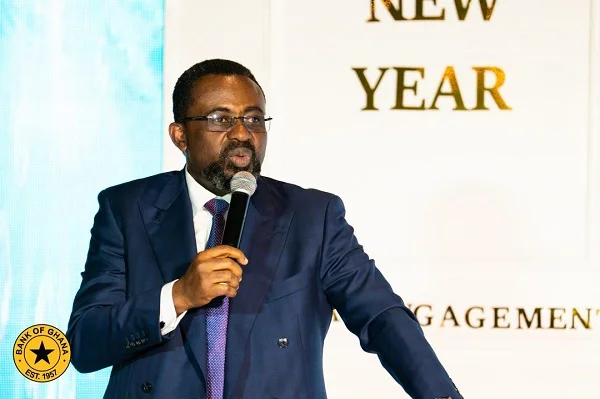
Addressing the Parliamentary Committee on Economy and Development, the Governor of the central bank, Johnson Pandit Asiama, explained that the gold remains within Ghana’s national reserve framework despite the adjustment in asset composition.
“The gold remains part of our national reserves; what changed was the composition of these reserves,” he said.
Dr Asiama noted that under the central bank’s Domestic Gold Purchase Programme, the country’s gold holdings rose significantly from 8.7 tonnes in 2021 to more than 40 tonnes by October 2025.
This represented approximately 42 per cent of Ghana’s Gross International Reserves at the time.
He added that the sharp increase in global gold prices—rising by about 62 per cent between January and October 2025—also boosted the overall value of Ghana’s gold portfolio.
However, the Governor cautioned that maintaining such a high concentration of reserves in a single asset category could expose the country to portfolio concentration risks.
“Such a high concentration in a single asset class introduces portfolio concentration risk for countries like Ghana,” Dr Asiama stated.
He pointed out that international recommendations referenced by institutions such as the International Monetary Fund and the World Gold Council suggest that emerging economies typically maintain around 20 per cent of their reserves in gold to ensure adequate liquidity and flexibility.
“In light of these considerations, the Bank undertook a measured portfolio rebalancing, converting a portion of its gold holdings into foreign exchange assets to restore a more balanced reserve composition,” he explained.
The Governor emphasised that the foreign exchange obtained from the exercise continues to be actively invested to generate returns while strengthening Ghana’s external buffers.
According to him, periodic portfolio rebalancing is a standard practice among central banks to maintain diversification, liquidity and effective risk management.
Dr Asiama also highlighted broader improvements in the economy, including a significant decline in inflation from above 23 per cent at the end of 2024 to about 3.3 per cent in February 2026, as well as signs of stability in the cedi and improved performance within the financial sector.
“This measured rebalancing ensures that Ghana’s reserves remain not only valuable but also liquid and ready for use when needed,” he concluded.
Latest Stories
-
Gov’t moves to upgrade rural 2G, 3G networks to 4G – Sam George
1 second -
Akaa Assembly Member appeals for telecom mast over poor network coverage
5 minutes -
Cybersecurity Authority responds to 3,363 incidents in six months – Sam George
6 minutes -
Ghanaians now get more data for less money- Sam George
7 minutes -
MTN commits US$1.1bn to Ghana network expansion after 5G reforms – Communications Minister
10 minutes -
Ahafo Clergy call for stronger action against galamsey and Tano river pollution
10 minutes -
GMSA calls for protection of Muslim students’ religious rights in mission schools
13 minutes -
MTN cuts 100 Mbps fibre package from GH¢987 to GH¢299 – Sam George
14 minutes -
Sam George touts lower data costs, enhanced DStv value under Mahama
16 minutes -
Women’s Football: Sharon Sampson, Evelyn Badu and top performers from the weekend
16 minutes -
NACOC warns of rising cannabis addiction among children in Volta through toffees, soft drinks
17 minutes -
3,372 BECE candidates without results to get second chance to resit exam
17 minutes -
Elsie Appau-Klu calls for Cosmetology Council, formalisation of beauty and wellness sector
22 minutes -
Government to deploy sovereign virtual platform for secure high-level meetings – Nana Oye Bampoe Addo
23 minutes -
Fire destroys belongings in Tabora Alhaji apartment
24 minutes