

Audio By Carbonatix
Researchers are calling for tighter regulation of AI-powered toys designed for toddlers, after conducting one of the first tests worldwide to investigate how under-fives interact with the technology.
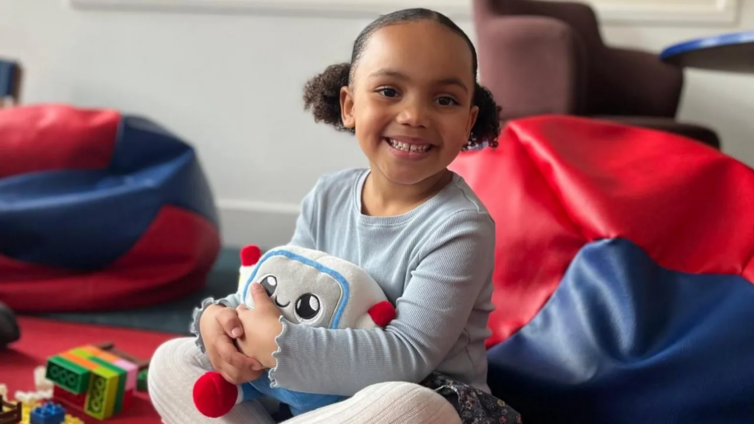
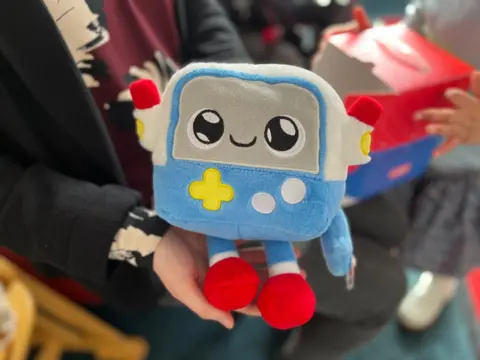
The study looked at how a small sample of children between the ages of three and five interacted with a cuddly toy called Gabbo.
A number of AI toys are already on the market for children as young as three, but there is currently very little research into the impact of the tech on pre-schoolers.
The Cambridge University team found just seven relevant studies worldwide, none of which focused on the toddlers themselves.
Gabbo contains a voice-activated AI chatbot from OpenAI. It has been designed to encourage preschoolers to talk to it and engage in imaginative play.
The parents in the study were interested in the toy's potential to teach language and communication skills.
However, their children frequently struggled to converse with it. Gabbo didn't hear their interruptions, talked over them, could not differentiate between child and adult voices and responded awkwardly to declarations of affection.
When one five-year-old said, "I love you," to the toy, it replied: "As a friendly reminder, please ensure interactions adhere to the guidelines provided. Let me know how you would like to proceed."
The concern is that at a developmental stage where children are learning about social interaction and cues, generative AI output could be confusing.
Study co-author Dr Emily Goldacre said toys like Gabbo could "misread emotions or respond inappropriately" and was concerned that "children may be left without comfort from the toy and without adult support, either".
When one three-year-old told Gabbo, "I'm sad," Gabbo replied, "Don't worry! I'm a happy little bot. Let's keep the fun going. What shall we talk about next?"
The researchers said interactions like this could signal that the child's sadness was unimportant.
After the year-long observational study, researchers say regulators should act now to ensure products marketed to under-fives offer "psychological safety".
Gabbo is made by Curio, a company which has worked with the singer Grimes, former partner of Elon Musk.
Curio told the BBC: "Applying AI in products for children carries a heightened responsibility, which is why our toys are built around parental permission, transparency, and control.
"Research into how children interact with AI-powered toys is a top priority for Curio this year and in the future."
Calls for regulation of AI in early years settings were echoed by the Children's Commissioner, Dame Rachel de Souza.
"There are plenty of good uses for AI but without proper regulation, many of the tools and models used as classroom assistants or teaching aids are not subject to the stringent safeguarding checks nursery providers would require of any other external resource they use with young children," she said.
Concerns over unsupervised play
The report also advised parents to keep AI toys in shared spaces where parents could supervise its interactions, and read privacy policies carefully.
Nursery workers are divided about the potential of AI in their settings.
June O' Sullivan, who runs a chain of 42 London Early Years Foundation nurseries, said she was yet to see evidence of AI benefits in early years.
She says children need to "build a rounded set of skills" and it is more effective to do this with humans than with AI-powered tools.
"I couldn't find anything that made me feel like - by bringing it into our nurseries and making it available to our children - we were going to enhance their learning," O'Sullivan said.
Actor and children's rights campaigner, Sophie Winkleman, is an advocate for keeping AI away from education and early years settings.
She argues that "the harms can vastly outweigh the benefits", and believes developing AI skills should be reserved for later.
"The human touch for little children is sacred and something that should be really protected and fought for," she added.
Latest Stories
-
Forestry Commission arrests 12 illegal miners in Atewa Forest
3 minutes -
NPP National Treasurer aspirant involved in accident during campaign
25 minutes -
Treat coastal communities as partners in sea turtle conservation – Dr Agyekumhene
29 minutes -
The Chief Justice is not a Touring Minister: Baffoe-Bonnie’s SOE visits are unconstitutional officiousness
52 minutes -
Enforcing environmental laws carries political cost, while offenders go unpunished – Frimpong-Boateng
60 minutes -
Galamsey fight collapsed after safeguards introduced in 2018 were abandoned – Prof Frimpong-Boateng
1 hour -
Jail officials who approve projects in wetlands and forest reserves – Prof Frimpong-Boateng
1 hour -
Ghana needs $21bn to restore lands damaged by illegal mining – Frimpong-Boateng
1 hour -
Law student killed in hit-and-run on Tema Motorway; family offers GH¢50,000 bounty
2 hours -
Gas explosion near Larteh school contained after fire outbreak
2 hours -
Nigerian-British businessman dies after penis enlargement procedure in Thailand
2 hours -
CHEAP JUSTICE? – Occasional Kwatriot Kwesi Yankah writes
2 hours -
WASSCE 2026: English performance decline requires urgent action – EduWatch
2 hours -
Old Tafo MCE pledges action as residents raise alarm over faulty drainage systems
3 hours -
Abossey Okai dealers reject spare parts cost as justification for 30% transport fare hike
3 hours