

Audio By Carbonatix
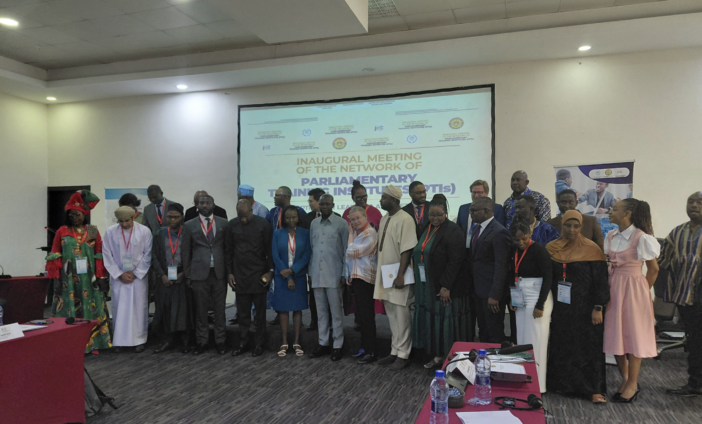
The Parliament of Ghana, through the Parliamentary Training Institute (PTI), in collaboration with the Inter-Parliamentary Union (IPU) opened the inaugural meeting/conference of the Network of Parliamentary Training Institutes (PTIs) in Accra on Monday.
The conference, also in collaboration with the Center for Parliamentary Studies and Training (CPST) of the Parliament of Kenya, aims to bring together PTIs from around the world to foster global parliamentary cooperation.
The two‑day event themed: PTIs: Peer Learning and Networking is scheduled for Monday, March 23, and Tuesday, March 24, 2026.
The gathering attracted leadership, Members of Parliament (MPs), and management of the Parliamentary Service.
Mr. Bernard Ahiafor, the First Deputy Speaker who read a speech on behalf of Mr. Alban Sumana Kingsford Bagbin, the Speaker of Parliament, emphasised peer learning, and networking to strengthen parliamentary democracy.
He said, “The effectiveness of any parliament is closely tied to the quality of its members and the robustness of its support system.” “Training must no longer be seen as an occasional activity; it must be regarded as a strategic institutional partnership,” he added.
Mr. Ahiafor noted that the future of parliamentary strengthening laid in building networks of institutions that could jointly design solutions, exchange resources, and support one another.
He told participants that the Parliament of Ghana’s Training Institute delivered 36 training programs last year, involving 2,792 participants, including MPs and staff.
Professor Nyokabi Kamau, Executive Director, Centre for Parliamentary Studies Training, Kenya, said the conference is seen as a significant step in strengthening parliamentary training networks and sharing best practices among African and international legislative institutions.
Speaking on behalf of the Minority Leader, Mr. Vincent Ekow Assafuah, the New Patriotic Party (NPP) MP for Old Tafo emphasised collective growth, learning in parliaments, technology awareness, and a culture shift where training was integral to parliamentary work.
He cited investment, relevance, and ownership as three conditions for success.
Mr. Mahama Ayariga, the Majority Leader, said the network was a game-changer for parliamentary democracy, capacity building for parliamentary effectiveness, and broadening the scope to the entire democratic ecosystem—media, civil society, and citizens.
The meeting brought together thirty institutions to promote collaboration, share best practices, and address challenges in parliamentary capacity building.
Latest Stories
-
Ghana School of Law SRC President-elect petitions authorities for relief for referred students
42 seconds -
Promasidor Ghana unveils Onga Mix Tomato Paste, names Diana Hamilton brand ambassador
13 minutes -
‘You admitted the loss, now account for the GH¢22bn’ – Minority hits back at GoldBod CEO
15 minutes -
Gender Department raises alarm over rising teenage pregnancy in Ashanti Region
32 minutes -
GJA@77: Ethical journalism foundation for strong, resilient democracies – UK Deputy High Commissioner
36 minutes -
Police pickup carrying suspects crashes into trotro on KNUST campus, several injured
37 minutes -
AMA Mayor apologises to alleged extortion victim, orders refund
38 minutes -
Akwatia MP defends GoldBod, says IMF report didn’t blame it for losses
41 minutes -
Building community after a merger: What UniMAC’s concord initiative can teach higher education
41 minutes -
UN security official meets GoldBod CEO Sammy Gyamfi
46 minutes -
Two detained after French influencer’s scorched body found in vineyard
47 minutes -
ORAL has been reduced to a tool for political convenience – Kwesi Botchway Jnr
48 minutes -
6 in 10 businesses fail to properly account for VAT – GRA
50 minutes -
US retail giant receives $1bn boost from tariff refunds
57 minutes -
Angélique Kidjo makes history for Africa with star on Hollywood Walk of Fame
57 minutes