

Audio By Carbonatix
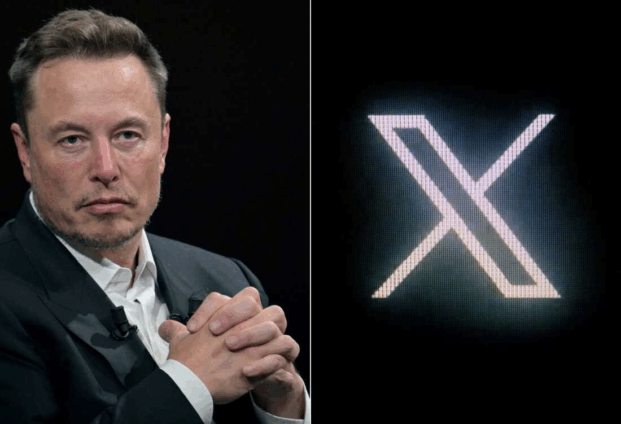
A US judge has dismissed a lawsuit by Elon Musk's X accusing a group of advertisers and major companies of illegally boycotting his platform.
Its parent company X Corp alleged in 2024 that firms including food giants Unilever and Mars, renewable energy firm Orsted and the World Federation of Advertisers (WFA) had conspired to deprive it of "billions of dollars" in advertising revenue.
But in Thursday's ruling, US District Judge Jane Boyle said the company had failed to show it had suffered any harm under federal competition laws.
The BBC has approached X for comment.
X Corp's lawsuit, filed in a Texas court in 2024, followed a decline in advertising revenue after Musk's acquisition of Twitter in 2022.
The tech billionaire had ushered in sweeping changes to the platform after purchasing it, including reinstating the accounts of controversial figures and lifting some content restrictions.
Within a year of Musk acquiring X, advertising revenue had fallen by more than half as some firms paused or reduced their promotions on the site.
The lawsuit claimed the group of advertisers had acted against their own economic self-interest to conspire against the platform, saying this violated US antitrust laws designed to promote fair competition between companies.
At the time, Musk tweeted: "We tried being nice for 2 years and got nothing but empty words. Now, it is war."
X Corp's lawsuit alleged that the accused firms had unfairly withheld spending by following safety standards set out by a WFA initiative called the Global Alliance for Responsible Media (GARM).
Garm's stated aim is to "help the industry address the challenge of illegal or harmful content on digital media platforms and its monetisation via advertising".
CVS and the other defendants denied any wrongdoing and, in counter-filings, urged Judge Boyle to dismiss the lawsuit.
They argued they had acted independently when making business decisions about when and where to spend advertising money, and said X had failed to illustrate otherwise.
Boyle appeared to agree, writing in an opinion filed alongside her judgment that Garm "did not buy advertising space from X to sell to advertisers nor did it, in such an arrangement, tell X not to sell directly to Garm's customers".
"The very nature of the alleged conspiracy does not state an antitrust claim, and the court, therefore, has no qualm dismissing with prejudice," she concluded.
Latest Stories
-
GAEC must retain nuclear scientists for Ghana’s nuclear ambitions – Minister
23 minutes -
Man reportedly mistaken for game and shot by hunter dead in forest
25 minutes -
19-year-old mason jailed 15 years for defiling seven-year-old pupil
30 minutes -
Ghana’s banking sector assets rise 20.47% to GH¢500.2bn – BoG Governor
34 minutes -
22 injured as Sprinter bus overturns at Sege after tyre burst
36 minutes -
UN housing expert urges Ghana to strengthen Rent Control Department amid housing affordability concerns
44 minutes -
Delta-BCI partnership reaches 166,000 people with breast cancer education
53 minutes -
Power restoration fault suspected in Kumasi Central Market fire
6 hours -
The 7-foot giant of Ngleshie Amanfro: Seven-foot Ghanaian Ephraim Saawa dreams of joining the national basketball team
7 hours -
Government promises support for Kumasi Central Market fire victims
7 hours -
Vibes The Movie: Big Ghun’s Ghanaian film earns five nominations at 2026 REFFA
7 hours -
‘I’m a fulfilled man’—Justice Korbieh on missing out on Supreme Court despite two nominations
7 hours -
MamaCare CEO warns unresolved conflicts among health workers could undermine maternal and neonatal care
8 hours -
Health professionals urged to translate medical knowledge into practice to save mothers
8 hours -
Retired judge Justice Francis Korbieh charges 1,568 new lawyers to uphold integrity
9 hours