

Audio By Carbonatix
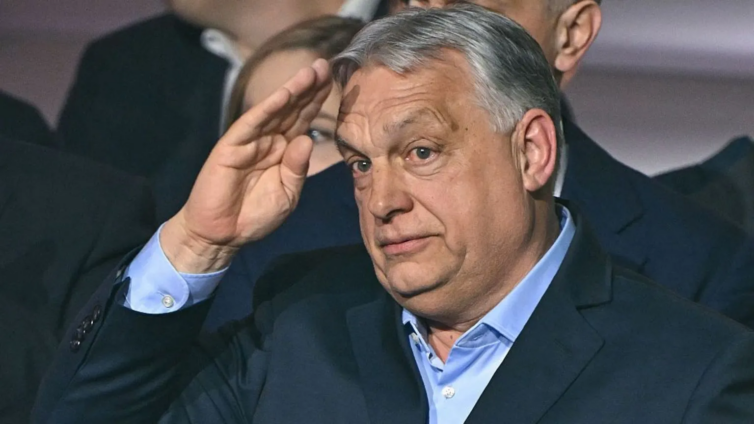
What Viktor Orbán did for the last 16 years in power was "an experiment" - but even he didn't know what to call it. "Illiberal democracy" sounded too negative.
His American friends liked to call it "national conservatism", which sounds better, but it was never strictly true. Unlike most conservatives, Orbán was a rebel.
He constantly radicalised himself. So what could he conserve?
He loved to thumb his nose at the mainstream, at the "Brussels bureaucrats". He was a thorn in their side, but whenever they hit back, he turned it to his own advantage.
He portrayed himself as an "anti-globalist" but invited German carmakers, and Chinese and South Korean EV battery makers to Hungary.
He painted himself as the champion of national sovereignty, but refused to stand up for Ukrainian sovereignty against Russia.
He railed against immigration, but quietly encouraged immigration from Sri Lanka, the Philippines, Ukraine and Turkey to build his new factories.
He poured money into encouraging couples to have more children, but by 2025, the fertility rate had fallen back to 1.31 - the same number he inherited from the Socialists in 2010.
The way he swiftly conceded defeat on Sunday night showed him with a strong eye on his image. He acted as a "majoritarian" democrat, meaning that he believed that "the winner takes all" - and that's how he acted in government.
One year after winning a two-thirds majority in 2010, he wrote a new constitution. He reshaped Hungary in his own image, to suit his own party.
With his two-thirds majority in parliament he pushed through one law after another, to change the structure of the courts, the electoral system, and the economy.
But finally, on Sunday, the Hungarians decisively told him "we don't want to be experimented on any longer".
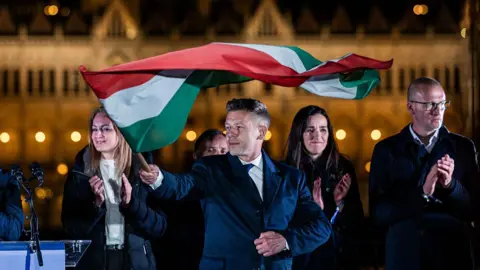
Péter Magyar defeated him because he carried a Hungarian flag to every rally, because he proclaimed an inclusive, less exclusive national message, and perhaps above all because Hungarians felt exhausted by being constantly in conflict.
And they disliked the way the rich got richer, the poor got poorer, and the middle classes shrank.
Orbán often won his fights, but his people wanted peace and quiet. A normal country, but one with a voice.
That is what Magyar is promising. "Tonight we celebrate," he told the huge crowds, dancing on the shores of the Danube.
"But tomorrow, we start work."
Latest Stories
-
Ghana, Germany deepen cooperation on railways, labour mobility
4 minutes -
Huge crowds greet Pope in Paris for open-air Mass
15 minutes -
‘I never said I’ll declare a state of emergency’ – President Mahama on galamsey
55 minutes -
Bobby Banson condemns EOCO’s attempted arrest of Nana Agyei Baffour Awuah
1 hour -
When Kumasi begins to look like somebody is in charge
1 hour -
Parliamentary probe into cocaine seizure would be a waste of time – Inusah Fuseini
1 hour -
Cocaine seizure: Focus on Ghana’s reputation, not partisan blame – Osae-Kwapong
2 hours -
Two Invitations, Three Interrogations: Did Baffour Awuah tell the whole story?
2 hours -
Drug cartels may be seeing Ghana as easy route – Lenin Anane Agyei
3 hours -
Ghana risks gaining notoriety as drug-trafficking hub – Bobby Banson
3 hours -
Government dismissed my drug trafficking warning, then tried to arrest me – Ntim Fordjour
3 hours -
Day Two: 3rd Republic Bank-JoyNews Habitat Fair Clinic underway at Junction Mall
3 hours -
NACOC addressing inherited gaps in fight against drug trafficking – Deputy Director-General
3 hours -
Taekwondo goes to school as GTF launches five-region youth campaign
3 hours -
The issues Mourinho is struggling to fix at Real Madrid
3 hours