

Audio By Carbonatix
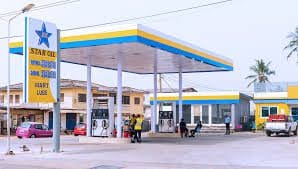
Star Oil has recorded the highest growth in petroleum product sales, consolidating its position as the market leader in Ghana’s oil marketing industry for 2025.
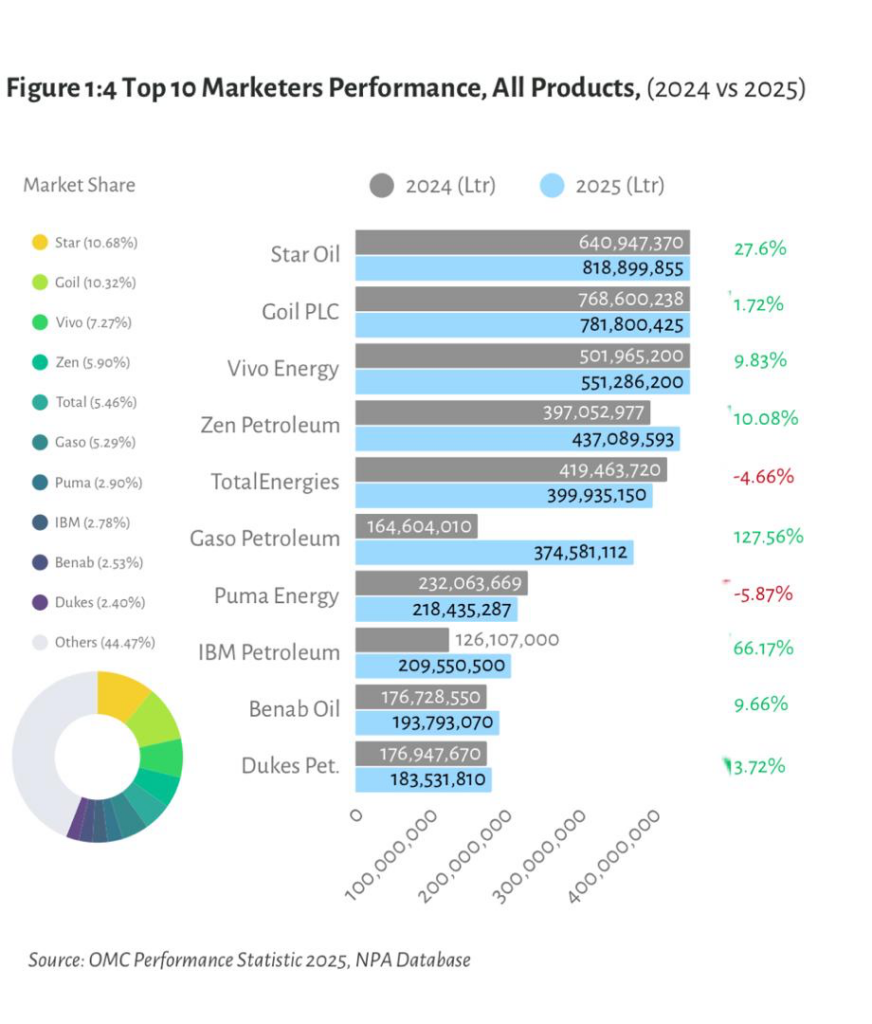
The company grew by 27.76% in total petroleum products sold, achieving a market share of 10.68%. This allowed it to narrowly overtake GOIL PLC, which posted a modest 1.72% growth to secure a 10.32% market share.
The figures are contained in the 2025 Petroleum Product Volume Analysis report sighted by JoyBusiness.
The development places both firms firmly at the top of the industry, highlighting intense competition for market dominance.
Breakdown
Star Oil maintained its lead with total sales of 818 million litres in 2025, up from 640 million litres in 2024.
GOIL, on the other hand, recorded 740 million litres in 2025, compared to 768 million litres in 2024.
Vivo Energy ranked third with a 7.2% market share, selling over 551 million litres of petroleum products.
Zen Petroleum placed fourth, increasing its volumes from 397 million litres in 2024 to 437 million litres in 2025.
TotalEnergies saw a decline of more than 4%, with volumes dropping from 419 million litres in 2024 to 399 million litres in 2025.
Gaso Petroleum, ranked sixth, recorded one of the most significant growth rates. Sales jumped from 164 million litres in 2024 to 374 million litres in 2025, representing an increase of over 127%.
Puma Energy also experienced a slight decline, with volumes falling from 232 million litres in 2024 to 218 million litres in 2025.
Other companies in the top 10 include IMB Petroleum, with a 2.78% market share, and Dukes Petroleum, with 2.40%.
Background of Market Shifts for OMCs
Between 2021 and 2024, the oil marketing industry remained relatively stable, with GOIL consistently ranked first, followed by Vivo Energy and TotalEnergies. Zen Petroleum and Star Oil typically occupied the fourth and fifth positions.
However, from 2023, Star Oil surged to the top and strengthened its lead in 2024. By 2025, it had firmly secured first place, narrowly ahead of GOIL, which moved to second. Vivo Energy maintained third position, followed by Zen Petroleum in fourth, while TotalEnergies dropped to fifth.
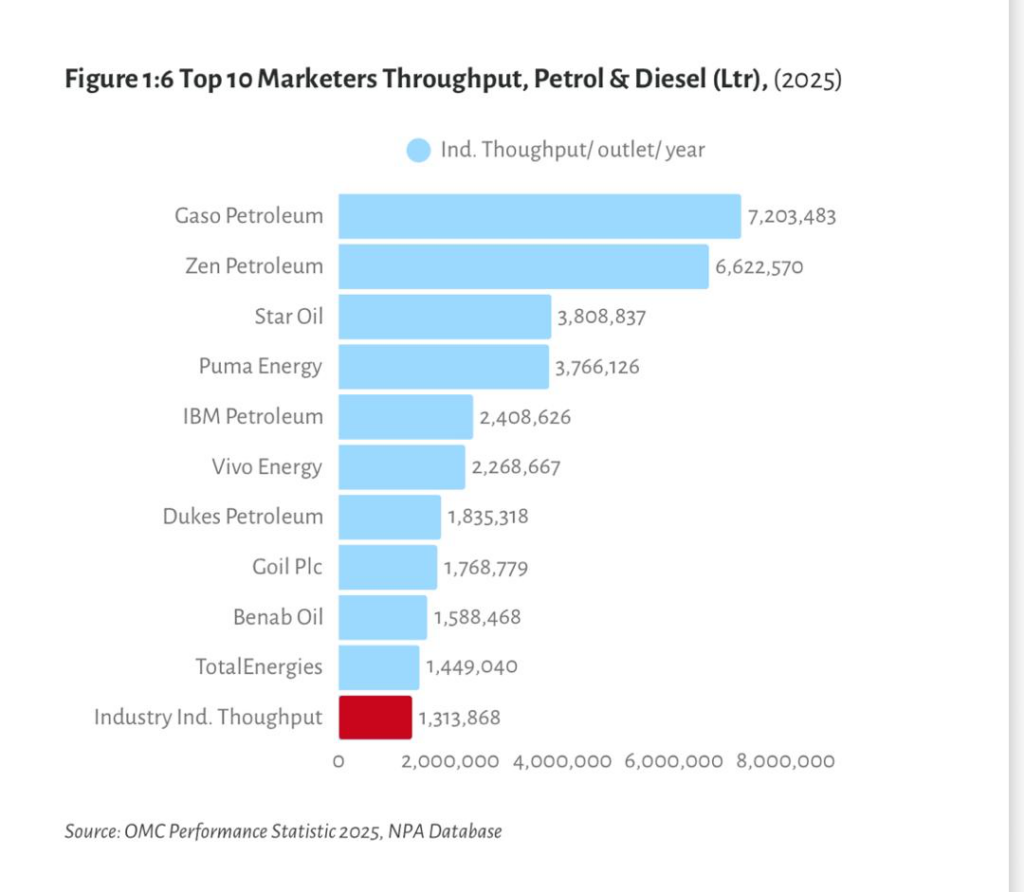
In 2025, the indicative annual throughput for petrol and diesel retail across all oil marketing companies averaged 1.31 million litres per outlet, or about 109 million litres per outlet monthly.
Throughput among the top 10 firms varied significantly. Gaso Petroleum and Zen Petroleum recorded the highest levels at 7.20 million litres and 6.62 million litres per outlet, respectively, far above the industry average.
Despite leading the market, Star Oil ranked third in outlet throughput at 3.81 million litres per station. Puma Energy and IMB Petroleum also showed strong performance.
However, larger players such as GOIL, TotalEnergies and Benab recorded lower throughput per station, suggesting that network size alone does not guarantee efficiency.
LPG Market Share
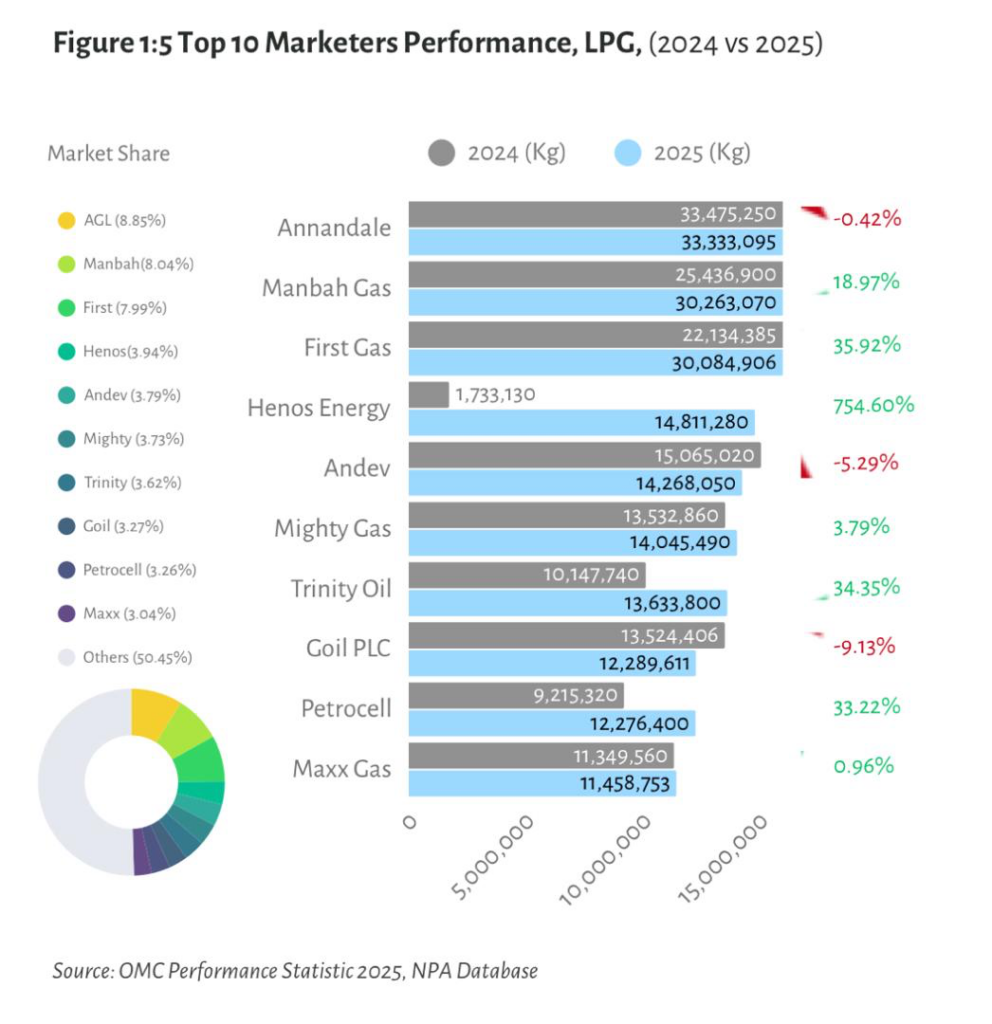
In the LPG segment, Annandale Ghana led the market with an 8.8% share despite a 0.42% dip in volumes.
Manbah Gas followed with an 8.04% market share and a strong 18.97% growth. First Gas, with a 7.99% share, also posted significant gains.
Other notable performers include Henos Energy with a 3.94% share, Andev with 3.79%, Mighty Gas with 3.78%, and Trinity Oil with 3.26%.
Annandale maintained its leadership position throughout the period. While the market remained stable up to 2023, shifts began in 2024 as Manbah moved into second place and First Gas and Henos Energy entered strongly into the top five.
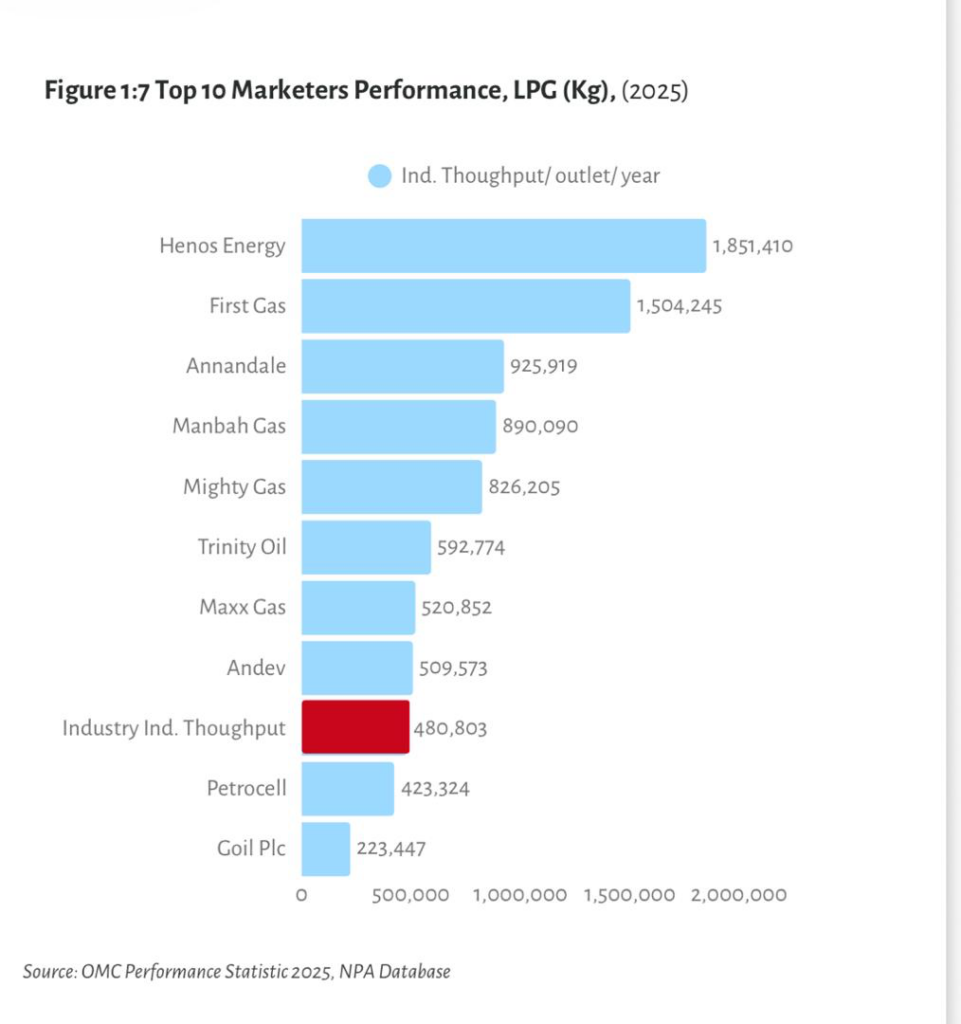
By 2025, the rankings had evolved to Annandale first, Manbah second, First Gas third and Henos fourth, with GOIL and Xpress declining further, reflecting the rise of new and expanding players.
LPG consumption has grown consistently, rising from 43.5 million litres in 1999 to 422 million litres in 2025, nearly a tenfold increase, driven by national efforts to promote the adoption of cleaner fuels.
Premix fuel, however, peaked at 101.7 million litres in 2020, then declined sharply and recovered only modestly. Kerosene and fuel oil have nearly disappeared from the consumption mix, reflecting fuel substitution and improved industrial efficiency.
Latest Stories
-
GES urges communities to help provide kitchens for school feeding programme
6 minutes -
Mahama invokes Nkrumah, says Ghana’s freedom must serve Africa
6 minutes -
From Cotonou to Bata: Ghana and Côte d’Ivoire’s rivalry enters a new chapter
8 minutes -
UN Charter must reign supreme over ‘might makes right’ – Mahama
10 minutes -
BoG to introduce new Heritage Series banknotes in November 2026
11 minutes -
Mahama warns against weaponising identity to fuel exclusion and conflict
13 minutes -
Mahama calls for global equality, says “no race is superior, no nation is inferior”
13 minutes -
24-Hour Economy will transform Ghana into industrial hub – Mahama
14 minutes -
Mahama highlights MahamaCare, Free Primary Health Care at UN
16 minutes -
Mahama says Big Push will bridge Ghana’s rural-urban infrastructure gap
17 minutes -
MPC maintains policy rate at 14% for third consecutive meeting amid inflation risks
21 minutes -
Freedom of any nation is insecure unless linked to freedom of all humanity – Mahama
22 minutes -
Mahama backs stronger global action to lift Cuba embargo
23 minutes -
Full Text: President Mahama’s speech at 81st Session of the United Nations General Assembly
25 minutes -
Climate finance must come as grants, not loans – Mahama
27 minutes