

Audio By Carbonatix
At the Emergency Operations Centre in Pantang, disease control officers monitor screens tracking infectious diseases across the regions. With surveillance systems in place, Director-General of the Ghana Health Service, Dr Samuel Kaba Akoriyea, believes the country is well-positioned to respond to emerging threats.
But preparedness goes beyond systems. In many community and district hospitals, there are no dedicated spaces to manage infectious diseases during outbreaks.
In several districts where infectious disease centres are needed, contractors have abandoned projects. In other areas, completed facilities remain non-functional due to a lack of equipment.
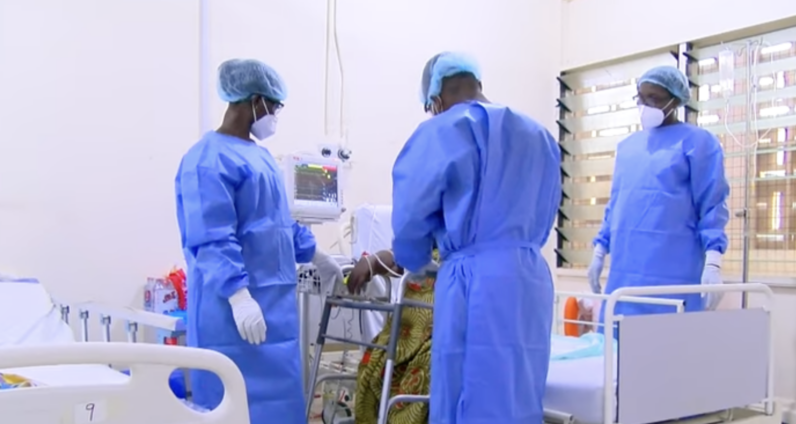
At the Baptist Medical Centre in Nalerigu in the North East Region, patients with different infections are often treated in the same space. Tuberculosis, COVID-19, and Mpox cases share wards, increasing the risk of cross-infection.
When the first suspected Mpox case arrived last year, there was no specialised facility. The hospital relied on a makeshift arrangement. Medical Director, Dr Isabella Amese, explains:
“The current practice is that, let’s say tuberculosis—we have a very small room where we put the patient. Sometimes, we are forced to place another infectious-disease patient in the same room. And that puts the patient at risk of acquiring tuberculosis.”
The room was originally meant for tuberculosis cases alone, but changing disease patterns have stretched its use.
“Recently, we had Mpox. We could have kept them in such a place—if we had it. Right now, we are not performing optimally because we do not have an infectious disease centre.”
At the Eastern Regional Hospital, an improvised holding bay created during COVID-19 serves as the main facility. It has an 11-bed capacity, formed by merging existing units.
For disease control officers, managing multiple infections in a single space poses a constant challenge. It increases the risk to both patients and health workers.
This became evident during early Mpox cases in the region, as officials struggled to manage infections within limited space.
Data from the Ghana Health Service shows that in September last year, 547 epidemic-prone diseases were recorded across 261 districts. Influenza-like illnesses and severe acute respiratory infections were the most common, followed by Mpox and COVID-19.
As of January 18, 2026, Ghana had recorded 980 confirmed Mpox cases.
Despite the risks, a GH¢15 million infectious disease treatment centre in Nalerigu, which started during the COVID-19 pandemic, has stalled. The contract was awarded in 2020, with GH¢4.5 million paid upfront. Six years later, only about 10 per cent of the work has been completed.
The site remains at the foundation level, overgrown with weeds and stagnant water.
Dr Amese believes the facility would have transformed healthcare delivery in the area.
The situation is similar in other regions. In the Western Region, a 30-bed infectious disease centre has been abandoned. At the Effia Nkwanta Hospital, a 16-bed facility is stretched beyond capacity. During surges, tents are erected to manage patients.
Staffing is also a challenge, with limited personnel to handle increasing caseloads.
In Goaso, Ahafo Region, an almost-completed centre is still not operational due to missing equipment. In Zebilla, Upper East Region, a completed facility lacks essential tools and has been repurposed.
The Auditor-General has flagged concerns over stalled projects, recommending contract termination and recovery of funds. The contractor has cited payment delays and confirmed that the project has been terminated.
Globally, emerging diseases continue to pose risks. Ethiopia recently recorded its first outbreak of the Marburg virus, highlighting the unpredictable nature of infectious threats.
Ghana has emergency operations centres in Pantang and Korle Bu, with response teams on standby. But gaps in infrastructure remain a concern.
As the country faces rising cases and unfinished projects, the challenge is clear. When the next outbreak comes, the real test will be whether the systems in place are backed by functional facilities and decisive action.
Latest Stories
-
FDA records GH¢70m surplus in 2025 despite laboratory equipment, illicit product concerns
2 minutes -
‘Are we regulating danger or birthdays?’ – IMANI questions 15-year used vehicle restriction, asks GSA
3 minutes -
Russia, Ghana discuss transport cooperation and logistics development
4 minutes -
Government clears $1.47bn legacy energy debt, saves $500m through fuel-switching — Jinapor
7 minutes -
Why October for Wontumi’s bail application when it could have been heard in August or September? — Frank Davies
13 minutes -
Gender Ministry, Sanneh Institute renew push to end witchcraft accusations in Ghana
15 minutes -
‘Sustainability must become a way of life’ – MTN’s Georgina Fiagbenu
21 minutes -
Sekondi fisherfolk trained in fire prevention and emergency response after June harbour fire
22 minutes -
Benjamin Asare to receive US$38,000 JAC Motors vehicle after Ghana’s 2026 World Cup campaign
32 minutes -
Why I spend my days raising mosquitoes
35 minutes -
The case for the aged talent: Why experience never retires
49 minutes -
Ghana’s new wealth window
55 minutes -
Thinking beyond risk key to building resilient institutions – Stanbic Bank executive
1 hour -
John Boadu leads NPP National Chairman race with 27% — Global InfoAnalytics
1 hour -
AMMREN calls for renewed investment in science, community action to fight mosquito-borne diseases
1 hour