

Audio By Carbonatix
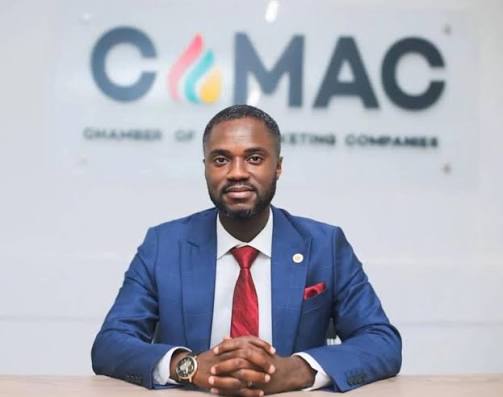
Disagreement is intensifying over who is bearing the cost of recent fuel price cuts, as the Chamber of Oil Marketing Companies (COMAC) insists its members are absorbing the reductions.
The Chamber is now calling on the government to suspend statutory taxes and levies, as well as shorten the reimbursement timeline for oil marketing companies (OMCs).
COMAC is pushing back against claims by the Ministry of Energy that the state is shouldering the cost of the fuel price relief. Instead, it maintains that OMCs are carrying the financial burden.
The dispute follows a public back-and-forth between the Chamber and the Ministry over the true source of the relief consumers are currently enjoying at the pumps.
Speaking on Joy News’ PM Express on Wednesday, April 15, 2026, COMAC Chief Executive, Dr Riverson Oppong, clarified:
“The relief of GH¢0.36 on petrol and GH¢2 on diesel is true, but let me also highlight the fact that this relief stems from the operational margins of industry players. It has not affected government, as it has not touched any taxes or levies that go into government coffers.”
However, the Ministry’s spokesperson, Richmond Rockson, rejected the claim, describing it as “false” in a Facebook post.
He insisted the reductions come from state revenues the government has chosen to forgo in the public interest, adding that it is misleading to suggest the private sector is carrying the burden.
In a statement issued on April 17, COMAC clarified its position, stating that the government has maintained all statutory taxes and levies on petroleum products, with the reduction coming instead from cuts to operational and regulatory margins.
These include the Primary Distribution Margin (PDM), BOST Margin, Fuel Marking Margin (FMM), and the Unified Petroleum Pricing Fund (UPPF), all of which support key downstream operations such as distribution, infrastructure maintenance, product tracking, and price stabilisation.
According to COMAC, the reduction in these margins has directly impacted the revenue of OMCs.
“During the intervention period, OMCs must pre-finance a shortfall of 63 pesewas per litre of diesel sold before reimbursement,” the statement noted.
To illustrate the impact, the Chamber explained that a company distributing 10 million litres of diesel per month would have to advance an additional GH¢6.3 million to cover the gap.
COMAC further noted that reimbursements typically take between 45 and 60 days and do not account for capital costs, creating significant liquidity challenges for companies.
It added that firms are also required to meet statutory tax obligations while pre-financing distribution, creating what it described as a “double financing burden.”
While expressing support for the intervention aimed at cushioning consumers, COMAC stressed that the contribution of industry players must not be overlooked.
The Chamber has therefore called on the National Petroleum Authority (NPA) to reduce the reimbursement period to ease pressure on companies and ensure a stable fuel supply.
It is also urging the government to temporarily suspend or defer statutory tax and levy payments to the Ghana Revenue Authority (GRA) during the intervention period.
COMAC says it remains committed to engaging the government and other stakeholders to ensure the sustainability of the intervention.
Latest Stories
-
NPP national elections: 3,000–4,000 police to handle security, traffic in Kumasi – Karbo
2 hours -
Atta Akyea fumes as Manhyia MP is to spend another night in EOCO custody
2 hours -
SSNIT says La Beach clearance was to protect hotel investments, beaches to remain public
3 hours -
APSU congratulates St Augustine’s College after back-to-back National Investment Quiz wins
3 hours -
Renewed flood intervention at Mallam Junction raises hopes among residents, businesses
4 hours -
St Augustine’s College retain National Investment Quiz title after nail-biting grand finale
4 hours -
Education infrastructure investment will drive Banda’s development – Ahmed Ibrahim
4 hours -
Teacher unions strike: Gov’t presents fresh proposals as talks end inconclusively
5 hours -
51,000 teachers’ promotion arrears to be validated for October payment – Education Minister
5 hours -
Kwabena Boamah appointed Board Chair for Impact Investing Ghana
5 hours -
Striking teacher unions to meet Fair Wages and Salaries Commission on October 6
6 hours -
EOCO working with AG to arraign Nana Baffour Awuah before weekend court
6 hours -
Duraplast reassures customers after fire, announces October 5 reopening
6 hours -
Call off strike, gov’t will not renege on promotion arrears pledge – Haruna Iddrisu to teacher unions
6 hours -
Committee set up to validate teachers eligible for 20% deprived-area allowance – Education Minister
6 hours