

Audio By Carbonatix
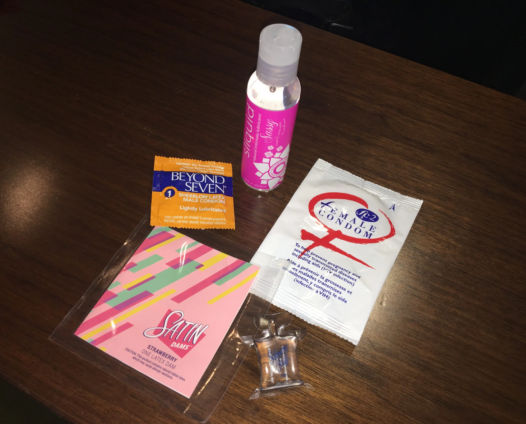
The Ghana AIDS Commission has defended its distribution of condoms and lubricants, insisting the intervention forms part of national HIV prevention efforts and is not targeted at promoting any specific group.
The clarification follows claims by the Member of Parliament for Ningo Prampram and co-sponsor of the anti-LGBTQI bill, Samuel Nartey George, who questioned the purpose of distributing condoms and lubricants, linking it to concerns about activities covered under the proposed legislation.
Speaking during a stakeholder engagement on the bill, Mr George questioned the rationale behind the distribution, suggesting a link to practices the bill seeks to prohibit.
However, the Commission rejected the claims, stressing that the items are made available to the general public as part of broader public health interventions.
Acting Director of Policy and Planning at the Commission, John Eliasu Mahama, clarified that distribution is not restricted to any group.
“We do, but we share them generally. Condoms and lubricants are shared generally. They are procured by the Ministry of Health for HIV prevention interventions,” he said.
He explained that supply is guided by data and public health needs rather than any particular agenda.
“When it comes to the HIV response, most of the donor funding goes for commodities… ARVs, condoms and test kits,” he said, referring to antiretroviral medicines used in HIV treatment.
Mr Mahama added that condoms and lubricants are widely used in heterosexual relationships and among vulnerable groups as part of proven prevention strategies.
“The condoms and lubricants are also used for heterosexual sex. Among the sex worker population, for example, it is one of the proven interventions that has helped Ghana reduce HIV prevalence from 17 per cent 10 years ago to 4.7 per cent,” he said.
Supporting the Commission’s position, Director and Advisor on Human Rights in Parliament, Dr Isaac Annan, said the distribution of such items does not amount to promoting LGBTQ+ activity.
He cited support from international partners, including the Global Fund, to underscore that public health interventions are based on need rather than ideology.
“If the Global Fund is giving Ghana money… it supports malaria, TB and even key populations. But for public health, it is not promoting,” he said.
Dr Annan added that external funding does not undermine Ghana’s sovereignty or dictate national values.
“It is not that we have agreed that any institution or country can suppress our sovereignty,” he said.
Latest Stories
-
Maximus Attah writes: Vacancies that never hire
2 minutes -
‘When the time comes, I will speak’ – Kurt on third-term GFA presidential bid
32 minutes -
UMB S.P.E.E.D. Stars lift Bankers Football Gala trophy
44 minutes -
MMFL makes strong showing at JoySports Invitational 2026
60 minutes -
MTN Media Republic, Ghana Wildlife Society embark on bird, butterfly walk
1 hour -
Fuel Prices: Star Oil holds petrol at GH¢14.97, raises diesel to GH¢16.97
1 hour -
DR Congo Ebola outbreak surges past 6000 cases as death toll nears 3000
1 hour -
Telecel Ghana CEO urges mining industry to build agile people for tech-driven future
1 hour -
Ghana Digital Centres’ loss nearly triples to GH¢6.06m as revenue falls
1 hour -
The private school teacher crisis: A silent exodus
1 hour -
NPC Ghana congratulates Farida Iddriss on Africa Aquatics Zone II leadership role
1 hour -
Zanetor pledges to protect Ghana’s natural resources for future generations
1 hour -
2024 defeat was due to demoralised base, poor preparation – Boakye Agyarko
2 hours -
Ghana welcomes UN report backing reparations for transatlantic slavery
2 hours -
Fidelity Bank convenes debt capital markets conference to turn Ghana’s recovery into long-term growth
2 hours