

Audio By Carbonatix
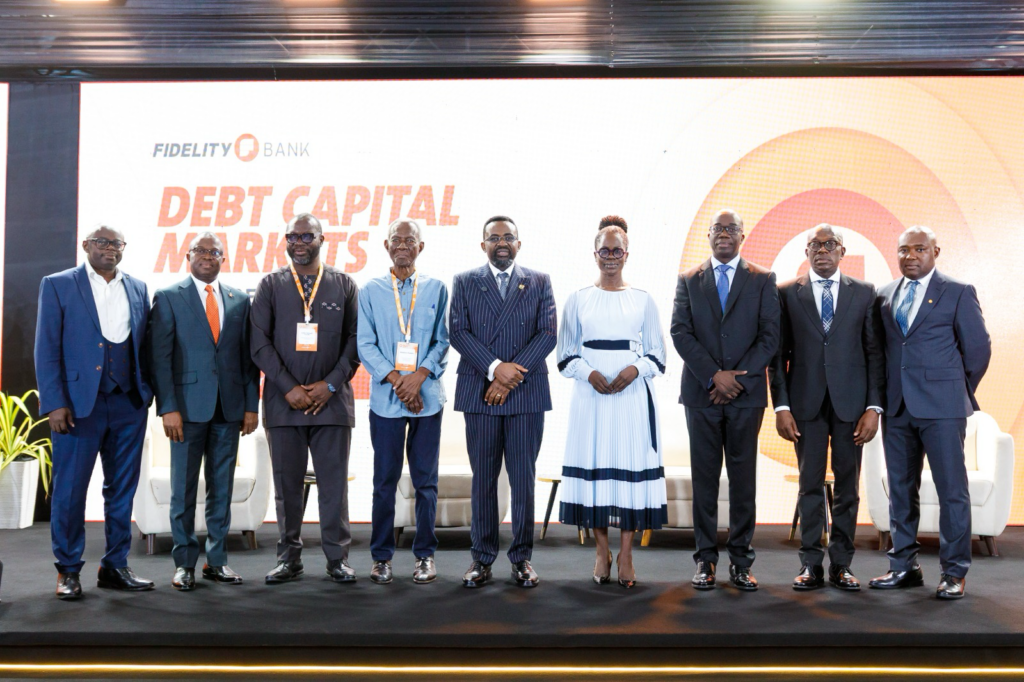
Fidelity Bank Ghana has convened a landmark Debt Capital Markets Conference, bringing together the stakeholders in the financial sector to discuss investment.
It included the Bank of Ghana, the Ministry of Finance, the Ghana Stock Exchange/Ghana Fixed Income Market, the Securities and Exchange Commission, the National Pensions Regulatory Authority, institutional investors, issuers, and market leaders to address a single, pressing question: how Ghana converts its hard-won macroeconomic stability into efficiently priced, long-term capital for productive investment.
Held under the theme “Lower Rates, Higher Opportunity: Unlocking Growth Through the Debt Capital Markets,” the conference marked a deliberate shift in the national conversation —from strengthening economic fundamentals to building the foundations for durable growth in the debt capital markets.
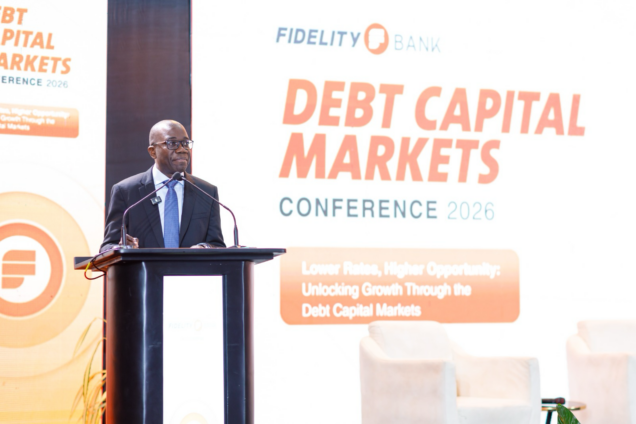
Opening the conference, Julian Opuni, Managing Director of Fidelity Bank Ghana, noted that while much of the past three years had necessarily focused on stabilisation, improving conditions now present a genuine opportunity.
“For capital-market participants, improving macroeconomic conditions are not an end in themselves,” Mr Opuni said. “The practical question is how we convert macroeconomic stability into efficiently priced, long-term capital for productive investment.”
He argued that a growing economy cannot rely on a single funding channel and pointed to Fidelity Bank’s own role in the market, having supported debt capital market transactions totalling more than GHS 30 billion.
“A deep debt capital market is built transaction by transaction, but it develops institution by institution,” he said.
Delivering the keynote address, the Governor of the Bank of Ghana, Dr Johnson Pandit Asiama, presented data confirming the strength of Ghana’s recovery.
Real GDP growth reached 6.4% in the first quarter of 2026, headline inflation had fallen from a peak of 54.1% in December 2022 to 4.6% in July 2026, and gross international reserves stood at $12.9 billion.
He described the reopening of the domestic bond market in March following the expiry of the three-year restriction imposed under the Debt Exchange as the most significant development of the year.
“This is a milestone,” Dr Asiama said, “a transition from crisis management to active, orderly debt management.”
He was clear, however, that the true measure of a deeper market would be found not on an auction sheet, but in “that power project that was completed, that factory that expanded, the housing development that was financed, and the SME that finds room on a bank’s balance sheet because the right capital reached the right use.”
Abena Amoah, Managing Director of the Ghana Stock Exchange, reflected on the market’s decade-long journey since the Ghana Fixed Income Market's founding in 2015, stressing that markets are ultimately institutions of trust built through cooperation.
She was candid about the work ahead, noting that Ghana’s debt capital market remains heavily concentrated in sovereign issuance, with corporate securities accounting for only a small fraction of activity.
“A market built predominantly around one issuer cannot achieve its full potential without broader private-sector participation,” she said, calling on banks like Fidelity Bank to lead the way as issuers and as originators for their corporate clients.
The conference’s panel discussions fostered a frank, forward-looking exchange on sustaining Ghana’s gains.
Veteran economist and investment consultant Kwame Pianim cautioned that macroeconomic stability must be carefully protected during the transition to growth, urging stronger institutions and the disciplined mobilisation of domestic pension and insurance funds for productive investment.
Dr Theophilus Acheampong, Technical Advisor at the Ministry of Finance, offered assurance that recent reforms, including legislated fiscal rules, an independent fiscal council, and a resourced sinking fund, were designed to institutionalise stability and prevent a relapse.
Panellists agreed that the credibility of issuers, the transparency of disclosures, and the strength of governance structures would ultimately determine whether Ghana’s corporate debt market finally takes off.
For Fidelity Bank, convening the conference reflects a conviction that runs through the institution’s understanding of its role: that Ghana’s next phase of development depends on building a broader, deeper financing architecture, and that the country’s own institutions must lead in shaping it.
Latest Stories
-
Ghana Psychological Association calls for greater involvement of people with lived experience in mental health care
27 minutes -
Ablakwa says Ghana could evacuate more citizens from South Africa if the situation worsens
54 minutes -
Violence against girls must be tackled through individual responsibility – Gender advocate
58 minutes -
Ghana’s BRICS bid must be guided by national interest – International Affairs Analyst
1 hour -
Journalists look back on a decade of breast cancer reporting in Ghana
2 hours -
President Mahama ends Resetting Ghana tour of Ahafo Region
4 hours -
African negotiators seek delivery of climate commitments at COP31
4 hours -
BoG develops AI rules for financial sector
4 hours -
‘Big Push’: Government assures contractors of prompt payments
4 hours -
Court fines miner for breaking into gold buying shop
4 hours -
Tarkwa court jails labourer for three years over GH¢123,000 theft
5 hours -
GAEC must retain nuclear scientists for Ghana’s nuclear ambitions – Minister
5 hours -
Man reportedly mistaken for game and shot by hunter dead in forest
6 hours -
19-year-old mason jailed 15 years for defiling seven-year-old pupil
6 hours -
Ghana’s banking sector assets rise 20.47% to GH¢500.2bn – BoG Governor
6 hours