

Audio By Carbonatix
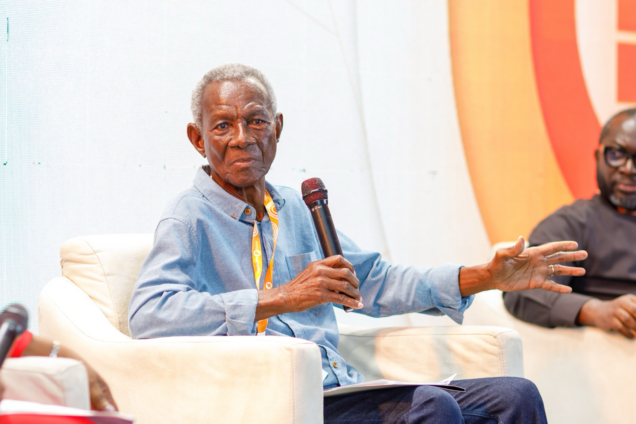
Veteran Economist and Investment expert Mr Kwame Pianim has commended Fidelity Bank Ghana, the nation’s largest privately owned Ghanaian bank, as an example of sound governance, credible succession, and homegrown ownership.
He was emphatic that Ghana’s economy needs to sustain its recovery and build a deeper, more resilient capital market.
Mr. Pianim made the remarks during a panel discussion on the macro-environment at Fidelity Bank’s Debt Capital Markets Conference, held in Accra under the theme “Lower Rates, Higher Opportunity: Unlocking Growth Through the Debt Capital Markets.”
He opened by commending the bank for convening a conversation he described as both timely and necessary.
“Let me thank Fidelity Bank for convening this,” Mr Pianim said. “It gives me confidence. When I look at the numbers, I say, wow.”
Reflecting on more than five decades of witnessing Ghana’s economic cycles, Mr Pianim was characteristically candid about the work required to protect the country’s hard-won stability, warning against complacency, urging fiscal discipline through the transition to growth, and calling for stronger institutions and guardrails to keep the country on course.
But it was when he turned to the qualities that make an institution credible and enduring that he pointed directly to Fidelity Bank.
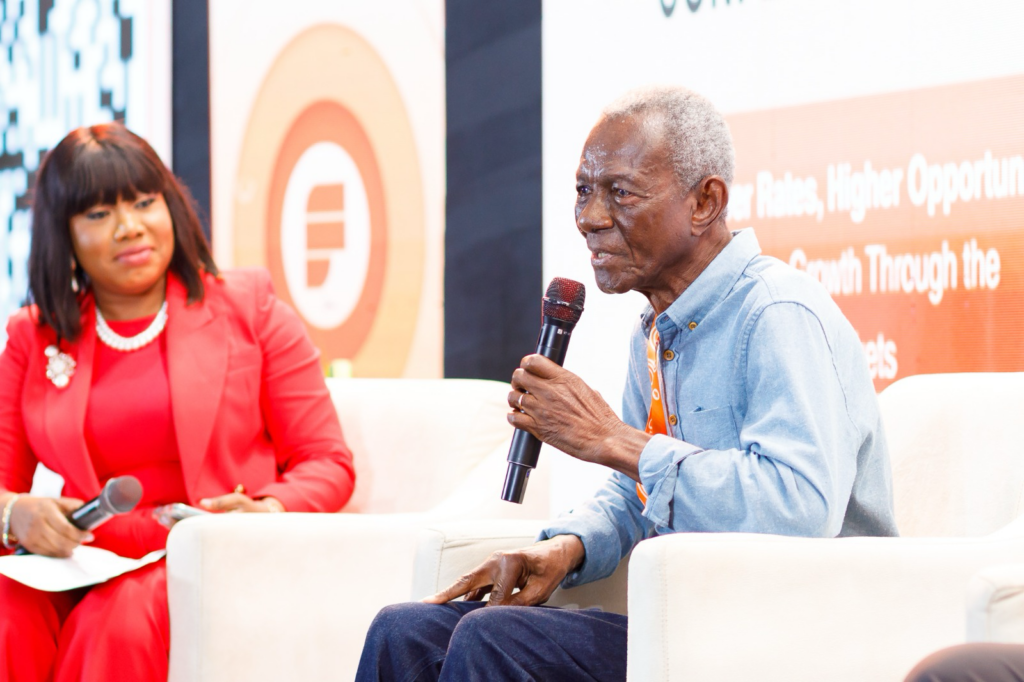
Asked what advice he would offer any issuer considering the capital market, Mr Pianim placed integrity and continuity at the centre of his answer. “Be honest. Have the right numbers,” he said.
“Honesty, good management, and making sure that whatever you are doing, you are going to have a good succession plan, like Fidelity Bank has done, the transition from the founders of the bank to a new generation. Then you’ll be able to pay.”
For Mr. Pianim, Fidelity’s orderly leadership transition was proof of the kind of institutional maturity that gives investors confidence and allows a business to honour its obligations over the long term.
He returned to the bank again when addressing how Ghana can build a financial system that answers to its own priorities.
Arguing that the country must strengthen the domestic sources of capital that fund its growth — its pension funds, its insurance pools, its own institutions —Mr Pianim stressed the importance of Ghanaian ownership in the financial sector.
“If we strengthen the structures, the sources, and make sure that all these financial institutions are significantly owned, like Fidelity Bank, by Ghanaians, then we are on the right path,” he said. “And then we will be dancing to our inner tune, not to others’ tune.”
In hosting the Debt Capital Markets Conference, the bank brought together the Bank of Ghana, the Ministry of Finance, the Ghana Stock Exchange, institutional investors, and market leaders around a shared task: converting Ghana’s recovery into lasting, productive growth.
Latest Stories
-
EcoBank invests in digital education of 4 Garisson School to mark 40 years in Africa
15 minutes -
AGI urges investment in skills and raw materials to strengthen local manufacturing
18 minutes -
GPL 2026/27: ‘We have to rectify our mistakes’ – Boadu reacts to Aduana FC defeat
19 minutes -
No disability access, no building permit – KMA declares
19 minutes -
Asantehene to lead environmental restoration effort at Jimi Land Reclamation Site
23 minutes -
Poor Ghanaians are being jailed because they cannot afford justice – Crime Check Foundation
24 minutes -
No conflict in appointing Emelia Agbenyo as Deputy EC Chair – NDC
25 minutes -
87-year-old man jailed 20 years for defiling 9-year-old girl at Ofankor
28 minutes -
Sankofa Gold targets 70kg output after 9-month shutdown
30 minutes -
Tamale, Bolgatanga had just one Legal Aid lawyer between them – Kwesimintsim MP
37 minutes -
PAC orders eviction of former irrigation company MD from official residence
41 minutes -
Legal Aid Commission has offices in only 45 of Ghana’s 261 districts, needs 180 more staff
43 minutes -
Challenging Heights welcomes Ghana’s Tier 1 ranking, calls for more anti-trafficking funding
1 hour -
Cedi extends depreciation against dollar; going for GH¢12.10 at forex bureaus
1 hour -
ECG cannot keep lending electricity for free
1 hour