

Audio By Carbonatix
The Democratic Republic of the Congo faces the fastest-growing Ebola epidemic in recorded history. Official figures released Monday confirm more than 6,000 cases and 2,911 deaths. Health authorities noted a small positive sign amid the crisis. More than 1,360 people have successfully recovered from the virus.
Deep Roots of Insecurity and Displacement
Eastern Congo provides fertile ground for the epidemic to spread rapidly. Armed conflict, mass displacement, and population movements hinder containment efforts. A concurrent strike by local health workers compounds the crisis. Displacement sites present the most acute danger due to severely precarious living conditions. The virus recently breached two additional health zones in the region.
Global Health Alarm
The World Health Organisation warns the outbreak remains entirely out of control. Current transmission trajectories threaten to surpass the devastating 2014-2016 West Africa epidemic. That disaster claimed over 11,000 lives across Guinea, Liberia, and Sierra Leone. Officials trace the current contagion back to February, despite formal declarations arriving in May. The virus has now crossed from three initial zones into nearly 60 areas. Most infections and fatalities occur inside local communities rather than monitored contact networks.
Frontline Violence and Burial Tensions
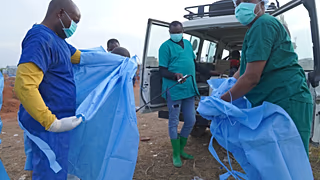
Response teams face immense hostility while attempting to contain the spread. Armed assailants recently stormed an Ebola burial site outside Mambasa in Ituri province. Attackers wielding machetes injured one response worker and forced the entire team to scatter. Floribert Magene addressed the constant threat of violence faced by medical personnel. "We demand greater security so we can operate in the field and do our work without endangering our lives," said Floribert Magene, a member of the response team. Traditional funeral practices complicate containment because deceased victims remain highly contagious. Authorities mandate state-managed burials for suspected cases to prevent transmission. These protocols frequently spark friction and protests from grieving families and communities.
Treatment Gaps and Experimental Defences
The current epidemic stems from the Bundibugyo strain, a rare viral type lacking approved treatments or vaccines. Officials launched a vaccination campaign last week targeting health workers and front-line staff. This campaign utilises the Ervebo vaccine, proven effective against the distinct Zaire strain. Clinical trials continue in an urgent race to secure a licensed vaccine for the Bundibugyo variant.
Broader Regional Fallout
Emergency containment measures paralyse daily life across six affected provinces. Restrictions target public gatherings, enforce social distancing, and mandate airport closures. Ituri province bears a double burden from both the epidemic and persistent rebel violence. Advocacy groups urge authorities to deepen community engagement and build local trust. Meanwhile, the World Health Organisation warns that cross-border transmission risks persist despite neighbouring Uganda declaring itself Ebola-free last month.
Humanitarian Crossroads
Balancing immediate epidemiological containment with enduring community trust remains the central challenge for international health bodies and local administrations alike.
Latest Stories
-
2026 World Maritime Day: Danish Embassy organises “The Gulf of Guinea Speaks”
16 minutes -
New Economy will tackle unemployment and restore hope – Ato Forson
21 minutes -
IMMILAC president recounts personal losses as security women lead breast cancer awareness campaign in Wa
29 minutes -
University of Ghana postpones October 12 reopening as GAUA strike persists
43 minutes -
Bahass Foundation launches vocational skills training to support mental health recovery in Wa
1 hour -
NPP orders parliamentary aspirants and their supporters to suspend campaign activities
2 hours -
Techiman unites against child marriage: Joy Impact Makers Awardee leads charge on International Day of the Girl Child
2 hours -
Ghana Psychological Association calls for greater involvement of people with lived experience in mental health care
3 hours -
Ablakwa says Ghana could evacuate more citizens from South Africa if the situation worsens
4 hours -
Violence against girls must be tackled through individual responsibility – Gender advocate
4 hours -
Ghana’s BRICS bid must be guided by national interest – International Affairs Analyst
4 hours -
Journalists look back on a decade of breast cancer reporting in Ghana
4 hours -
President Mahama ends Resetting Ghana tour of Ahafo Region
6 hours -
African negotiators seek delivery of climate commitments at COP31
6 hours -
BoG develops AI rules for financial sector
6 hours