

Audio By Carbonatix
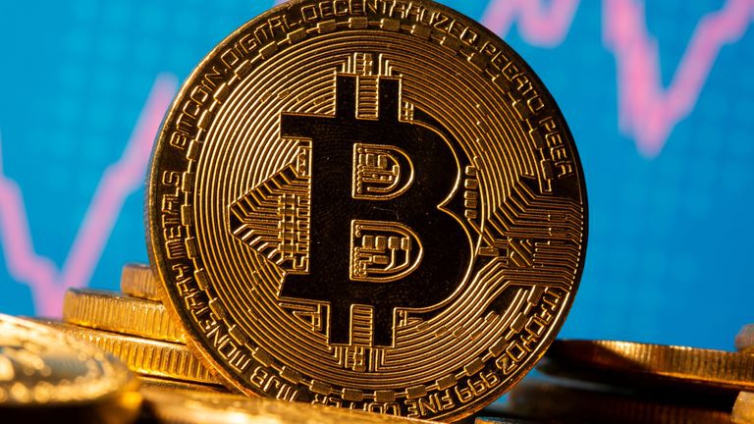
Since its emergence, Bitcoin and other cryptocurrencies have become the topic of many discussions. At first, their popularity was associated with investment. Now they are becoming part of regular business and payment conversations. The current status of Bitcoin price can be traced through various indicators showing the demand for it in the global economic space.
One significant point when talking about digital assets today is that their role in business has changed. The cryptocurrencies that were once seen as some sort of innovation are becoming more of an integral part of the modern financial world.
In particular, this is evident in the growing importance of various metrics such as the Bitcoin price live, which is $71,581.64 USD as of April 12th (up +0.24% over the past month). These figures are not simply numbers on a screen. They represent growing interest, participation and the very gradual integration of digital assets into everyday financial systems.
Connection Between Bitcoin Price Trends and Business Sentiment
Among the factors influencing business confidence and companies' decisions, price trends in the cryptocurrency market also play a role. Since digital assets are seen by the market as part of the global finance system, price trends give important signals to companies.
On the one hand, any stability in prices means that cryptocurrencies are slowly turning into something more reliable. They stop being just a fluctuating tool for making profit or losing money, but become more of a stable payment method.
On the other hand, any price fluctuations do not necessarily mean that companies become less interested in cryptocurrencies. On the contrary, they start looking into them in a very systematic manner.
Why Stable Prices Influence Merchants' Adoption of Digital Payments
One factor that can affect merchants' decisions about including new payment options in their businesses is the stability of Bitcoin's price. Since cryptocurrencies can serve as another payment option, especially in the digital world, the stable situation with prices gives businesses an opportunity to consider them.
When price movements are more predictable, businesses can better assess how these payment options might fit into their operations. Stability reduces uncertainty. It makes it easier to integrate new systems alongside traditional payment methods.
This growing interest is supported by a lot of broader industry data. According to Statista, “Revenue in the Cryptocurrencies market is projected to reach US$96.1bn in 2026,” while “In the Cryptocurrencies market, the number of users is expected to amount to 993.64m users by 2026.”
These figures highlight the scale of adoption taking place. As more users engage with digital assets, businesses are encouraged to explore how they can meet evolving expectations around payments.
How Companies Decide to Include Bitcoin Payments and the Data That Backs This Process
What makes Bitcoin an attractive choice for payments is its capacity to make cross-border transactions without the help of any intermediary. This process can be easier. And it can increase access to global markets.
In this case, there are business benefits. It makes it easier to connect with customers who are interested in using digital money. And it makes the business process more efficient while dealing with foreigners.
There is also a branding element. A lot of companies that adopt emerging technologies often position themselves as forward-thinking and adaptable. This perception can strengthen relationships. Especially with customers who value innovation.
Importantly, the decision to explore Bitcoin is not driven by a single factor. It is influenced by a lot of factors including technological capability, customer interest and broader market trends.
Why There Is a Growing Interest in Bitcoin and Other Cryptocurrencies Among Consumers
Among the trends influencing the adoption of digital payments in general and Bitcoin in particular is increased consumer demand. More and more people are becoming aware of Bitcoin's potential. As a result, they are increasingly interested in using it for everyday transactions.
This demand creates a feedback loop. When customers show a lot of interest in digital payment options, businesses are more likely to explore and implement them. In turn, this increases visibility. It encourages further adoption.
The process is gradual but consistent. It reflects a shift in expectations, where flexibility and choice are becoming more important in how people interact with financial systems.
How This Trend Influences the Development of the Digital Finance Sector
As the usage of cryptocurrencies becomes more widespread, businesses see how important they are for developing the digital payments sector. By accepting payments from customers with cryptocurrencies, companies can expand their presence in the global digital market.
In this case, digital currencies become another tool helping companies compete in the market. For instance, they allow connecting businesses to customers who like innovative solutions and prefer payments via cryptocurrencies.
What Should Be Expected from the Development of Bitcoin and Similar Technologies?
Among all trends that characterize Bitcoin development, the price can still serve as an indicator of future development. However, this metric does not fully reveal future changes in the field.
Ultimately, the influence of Bitcoin on business confidence and digital payments is part of a larger transformation. As technology and finance become increasingly interconnected, the way value is exchanged will continue to evolve, shaping the future of commerce in ways that are only beginning to take form.
Latest Stories
-
NSMQ 2026: Augusco declared winners, book quarter-final spot after Anlo, Kumasi High walk off
2 minutes -
Democracy Cup 2026: Winner to play in the United States in May 2027
23 minutes -
NSMQ 2026: St. John’s Grammar knocks Mpraeso SHS off seeded spot, advances to quarter-finals
28 minutes -
Rashid Pelpuo welcomes new role, thanks Mahama for keeping him in government
48 minutes -
Mahama inaugurates committee to oversee GH¢1bn Bawku Revitalisation Fund
1 hour -
Berko’s US conviction does not automatically establish Ghana bribery claims – OSP
1 hour -
Mahama sets GH¢1bn Bawku revitalisation plan in motion
2 hours -
‘I assure the President of my unwavering loyalty’ – Brogya Genfi after new appointment
2 hours -
US-tested evidence could strengthen OSP’s case against persons of interest in Asante Berko case – Kpebu
2 hours -
Luv FM-Kel Charcoal Toothpaste High School Debate; OKESS and SAHUS clinch final semifinals spots
2 hours -
KNUST to get GETFund support to complete Teaching Hospital – Education Minister assures
2 hours -
Ghana to build its biggest power plant since independence – Ato Forson
2 hours -
APL demands forensic probe into GoldBod following $1.7billion gold-trading losses
2 hours -
Government workers without valid NIA details risk salary suspension from September 15
3 hours -
OSP must investigate everyone in AKSA deal’s value chain – Mary Addah
3 hours