

Audio By Carbonatix
The growing burden of non-communicable diseases (NCDs), mental health conditions, injuries, and violence is placing increasing pressure on health systems across Africa, with experts warning that urgent and coordinated action is needed to reverse the trend.
Across the World Health Organization Regional Office for Africa, countries are grappling with high rates of hypertension, diabetes, cancer, and sickle cell disease, alongside a surge in mental health disorders and preventable injuries. Limited access to essential medicines, technologies, and services continues to widen the gap between need and care.
Director of Health Promotion, Disease Prevention and Control, Dr. Benido Impouma, says the situation poses a serious threat to development gains across the region.
“The burden of non-communicable diseases, mental health conditions, violence, injuries, and disability is rising in the WHO African Region, threatening health and development,” he said.
Despite these challenges, countries are showing resilience by adopting proven strategies and frameworks to tackle the crisis. Many have begun implementing initiatives such as the WHO Package of Essential NCD Interventions (PEN), PEN-Plus, and the Mental Health Gap Action Programme (mhGAP), alongside targeted approaches like SHAKE, SAFER, ACTIVE, and REPLACE to address key risk factors.
According to Dr. Impouma, these tools are already making a difference. “These evidence-based tools, supported by strengthened surveillance, help countries better understand their NCD burden and resource needs, informing more efficient and equitable health system planning,” he noted.
Efforts are also expanding in cancer care, with the Women’s Integrated Cancer Services (WICS) emerging as a promising model for improving women’s health outcomes across the continent.
The WHO says its regional programme is now prioritizing integrated, people-centred care, stronger governance, and improved access to essential medicines, while scaling up prevention efforts across all stages of life.
“Our country support is anchored by our strategic investment areas in mainstreaming NCDs and mental health, expanding access to quality care, and strengthening mental health governance and health system capacity,” Dr. Impouma explained.
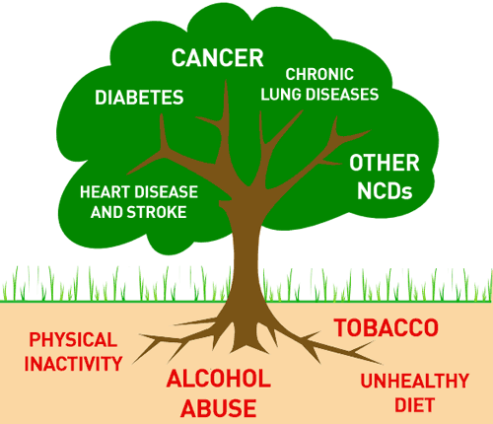
This includes boosting health promotion efforts, tackling modifiable risk factors such as unhealthy diets and harmful alcohol use, strengthening primary health care services, and improving disease surveillance systems.
As countries work toward achieving the Sustainable Development Goals, digital innovation and stronger partnerships are also being positioned as key drivers of progress.
“As we move through this strategic period, we remain committed to supporting Member States to prioritize NCDs, use digital innovation to build resilient systems and empower communities,” he said.
Dr. Impouma also acknowledged the role of partners supporting the region’s response.
“We are grateful to the partners who have joined us in this journey. Together, we can change the trajectory of NCDs in the African Region.”
Health experts say sustained investment, policy commitment, and community engagement will be critical if Africa is to curb the rising tide of NCDs and protect future generations.
Latest Stories
-
WAVVZ founder strengthens Ghana-US creative ties through fashion
9 minutes -
UMA-Subika’s majority-local workforce sets a new benchmark for Ghanaian mining
19 minutes -
Gov’t proposes 10-year fixed term for Chief Justice, 19-member cap for Supreme Court
21 minutes -
Social media reactions to Sedina Tamakloe-Attionu’s acquittal by Court of Appeal
35 minutes -
Government rejects proposal to tax President’s ex gratia and pension benefits – Ayine
37 minutes -
Former UCC, UHAS SRC President Abraham Nortey declares NDC parliamentary bid for Domeabra-Obom
39 minutes -
Central Banks Bought Far Less Gold Than Thought at Start of Year
40 minutes -
Gov’t backs 300-seat Parliament with reserved representation for women, youth, PWDs under proposed constitutional reforms
49 minutes -
Gov’t supports moving presidential elections to November under constitutional reforms
54 minutes -
Dual citizens may contest Parliament without renouncing foreign citizenship under proposed reforms
58 minutes -
Government’s response to Constitutional Review report is not a white paper – Ayine
1 hour -
NPP describes Tamakloe acquittal as “travesty of justice,” demands Wontumi discharge
1 hour -
Government proposes 35-year minimum age for presidential candidates, rejects CRC’s 30 years recommendation
1 hour -
Government backs five-year presidential and parliamentary term proposal
1 hour -
Think before you type: Respect must extend online
1 hour