

Audio By Carbonatix
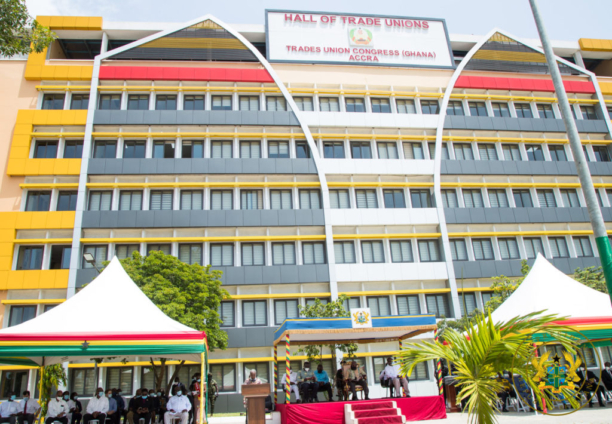
The Trades Union Congress (TUC) has cautioned that Ghana could remain dependent on International Monetary Fund (IMF) programmes unless it adopts production-driven economic policies.
Dr Kwabena Nyarko Otoo, Deputy Secretary General of the TUC, said the country’s continued reliance on IMF-style policies risked undermining sustainable economic transformation and job creation.
He made the remarks on a current affairs programme monitored by the Ghana News Agency.
Dr Otoo’s comments come after Ghana exited the IMF-supported Extended Credit Facility programme and entered a 36-month non-financing Policy Coordination Instrument arrangement with the Fund.
He said Ghana’s repeated recourse to IMF support stemmed not only from external shocks but also from policy frameworks that prioritised macroeconomic stabilisation over productive sector growth.
Dr Otoo noted policymakers often continued to implement IMF-style measures after programme completion, creating a cycle of dependence that failed to promote industrialisation and broad-based development.
“The IMF leaves and may not even give us money, yet the people in our ministries and at the Bank of Ghana are so addicted to IMF policies that do not ensure production,” he said.
Dr Otoo said the policies had contributed to an import-driven economy, limiting job creation and domestic value addition.
He noted that although recent macroeconomic indicators, including improvements in foreign reserves, appeared positive, they did not necessarily reflect improvements in livelihoods.
“Take gold prices out of the equation and assess where the economy would have been,” he said.
Dr Otoo said gains in external commodity prices, particularly gold, had significantly influenced the current economic outlook, while domestic initiatives such as the gold purchase programme had also helped to stabilise the economy.
He stressed the need for policies that promoted local production, industrialisation and decent job creation to ensure long-term economic and social stability.
“Our challenge is to ensure that macroeconomic stability translates into social stability. That means creating decent jobs and building a productive economy,” he said.
Dr Otoo called for a comprehensive review of Ghana’s economic strategy to reduce import dependence and enhance domestic value creation.
He stressed that without such reforms, Ghana could continue to cycle in and out of IMF programmes despite periodic signs of economic recovery.
Latest Stories
-
Kudus, Djiku return a boost to Black Stars – Agyemang-Badu
13 minutes -
‘If the world, Africa honoured Nkrumah as the Millennium Man, why are we not doing same?’ – Asiedu Nketia
15 minutes -
Yaw Preko backs renewed push to revive Colts football
17 minutes -
UMB Speed Stars defeat Black Stars Legends 6-2 in friendly
28 minutes -
Dafeamekpor hails Kwasi Pratt Jnr as ‘scholar of formidable proportions’
30 minutes -
The BECE exam and placement conundrum: Necessary evil or failing system?
31 minutes -
‘Who did this to you and what was your crime?’ – Father grives over late Ivan Baidoo
44 minutes -
Israeli strikes kill three people in Gaza, medics say
47 minutes -
Tribute, tears flow as family bids farewell to 20-year-old law student
1 hour -
2026 World Cup: Why pay a purse holder $10,000? – Assafuah questions Black Stars spending
1 hour -
Stakeholders call for coordinated response to adolescent health challenges
2 hours -
CNN and MS NOW say reporters denied White House access after Trump banned some media outlets
2 hours -
Mahama directs AMA, sister assemblies to prevent renewed dumping at Agbogbloshie
2 hours -
Deputy Health Minister charges military nurses to uphold compassion, excellence
2 hours -
Three suspected robbers killed as police dismantle gang in Upper East
2 hours