

Audio By Carbonatix
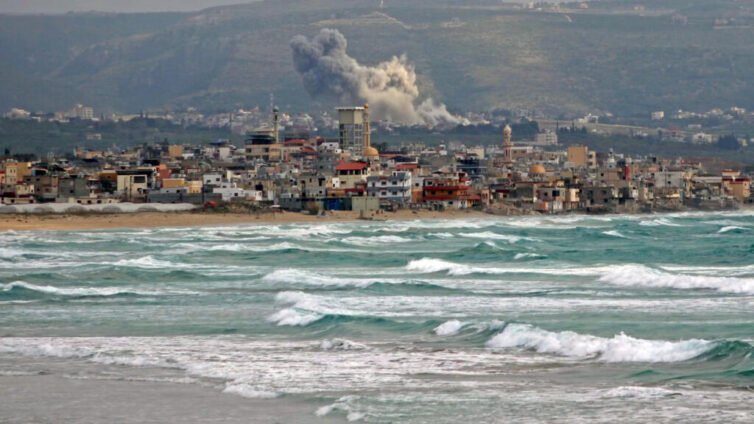
An intensive wave of Israeli airstrikes and expanding ground operations killed dozens of people across southern and eastern Lebanon on Tuesday. The heavy bombardment followed a direct vow from Israeli Prime Minister Benjamin Netanyahu to step up military actions against Hezbollah. Lebanon's health ministry confirmed that at least 31 people were killed in the latest attacks, including several children and three women, while 40 others were wounded.
The Israeli military stated that it targeted more than 100 Hezbollah fighters and infrastructure sites overnight. The assault marked one of the heaviest periods of bombardment since a U.S.-brokered ceasefire took effect in mid-April. The escalation came immediately after Netanyahu instructed forces to "press the pedal even harder" against the group. Meanwhile, Hezbollah reported that its fighters directly confronted advancing Israeli troops as the military expanded ground operations deeper into Lebanese territory.
The deadly strikes heavily impacted southern municipal areas, causing 14 deaths in Burj al-Shamali near Tyre, five in Kawthariyat al-Riz, four in Habbush, six in Maarakeh, and two in Salaa. Operations struck deep into sovereign territory. Structural damage occurred near critical humanitarian infrastructure and historical landmarks, including the 900-year-old, UNESCO-recognised Beaufort Castle.
Early Wednesday, sirens sounded in northern Israel after a projectile was launched from Lebanon. The Israel Defence Forces stated the projectile landed in an open area, causing no injuries.
Israel Deepens the Security Buffer
The latest military surge follows a clear policy directive from Jerusalem to fundamentally alter the security landscape along the border. Netanyahu, speaking at a security cabinet meeting on Tuesday, confirmed that Israel was systematically expanding its footprint to prevent cross-border operations by the Iran-backed Shia Muslim group.
"The IDF is operating with large forces on the ground and seizing dominant terrain," Netanyahu said. He added that troops were "fortifying the security zone" to protect communities in northern Israel from Hezbollah attacks.
The operational shift has pushed Israeli forces deeper into Lebanese territory. An Israeli military official confirmed that troops have begun operating beyond the initial, Israeli-announced "Yellow Line," which extends roughly 10 kilometres (six miles) deep inside Lebanon. This mandate followed a video statement on Monday in which Netanyahu declared that Israel would increase both the volume and intensity of strikes to counter Hezbollah's evolving deployment of fibre-optic drones, which have successfully evaded standard air defences.
"We will deal them a crushing blow," Netanyahu vowed.
Urban Exodus and Casualties in the Rubble
Netanyahu’s warnings triggered immediate panic in Beirut's southern suburbs, a prominent Hezbollah stronghold. Thousands of families packed vehicles, lining the streets in a desperate bid to flee the capital's periphery. While deliberate strikes spared the capital itself during the immediate overnight bombardment, Israeli warplanes launched dozens of strikes, hitting nearly 50 distinct locations across the country.
The human toll of the bombardment concentrated heavily in the eastern Bekaa Valley and southern municipalities. In the eastern town of Mashghara, an overnight strike levelled multiple residential homes. The Lebanese health ministry stated that "yesterday's Israeli enemy airstrike on the town of Mashghara in West Bekaa resulted in a preliminary toll of 11 martyrs, including two girls and a woman, and 15 wounded, including a child."
Among the survivors in Mashghara was a seven-year-old boy named Mohammad, who was pulled from the debris by rescue crews after his father and two sisters were killed.
"When I woke up, I felt like I couldn't move, and beside me was just darkness," Mohammad said from his hospital bed, his body covered in lacerations and his head wrapped in bandages. "I heard the sound of the guys who were rescuing me. They took a long time to pull me out."
The strikes have transformed municipal areas into hollowed-out conflict zones. Ahmad, a local municipality member in Mashghara, described the scale of destruction while navigating collapsed residential blocks and shops.
"I'm not a member of Hezbollah, but everyone in the village stands with the resistance, and the enemy is sparing no one," Ahmad said. His assessment was abruptly cut short by the roar of overhead jets and a subsequent explosion along a nearby transit route.
Hezbollah Rebounds with Direct Confrontations
The IDF defended its widespread aerial campaign by releasing surveillance footage of the Mashghara strikes, asserting that the targets were specific "Hezbollah infrastructure sites where terrorist activity was identified." The military reported hitting 90 weapons storage facilities, command centres and observation posts overnight.
Col. Avichay Adraee, the IDF's Arabic-language spokesman, issued sweeping evacuation orders for at least 50 southern and eastern towns—including the major southern city of Nabatieh. Adraee claimed that repetitive ceasefire violations by Hezbollah left Israeli forces with no operational alternative but to act.
Hezbollah has actively resisted the push, utilising asymmetric tactics and launching explosive drones and rockets at Israeli army barracks in northern Israel. The group stated that its fighters directly confronted an advancing Israeli force attempting to enter Zawtar al-Sharqiyah, a strategically vital town overlooking Nabatieh city, using heavy artillery and close-quarters engagements.
Hezbollah characterised its operations as a direct "response to the violation of the ceasefire" by Israel. The political and military calculations in Israel shifted rapidly after the IDF confirmed a soldier was killed in combat in southern Lebanon on Sunday. That casualty brought total Israeli military losses from Hezbollah attacks to 23 soldiers and one civilian contractor since this phase of the conflict ignited on March 2. Conversely, the Lebanese health ministry stated that Israeli strikes over that same period have killed at least 3,185 people.
Threats to Civil Infrastructure and Global Diplomacy
The geographical expansion of the conflict has raised urgent alarms regarding Lebanon's civil infrastructure. Multiple airstrikes landed near the Qaraoun Dam on the Litani River, a primary water and power installation in eastern Lebanon.
The Litani River Authority issued a sharp public warning, stating that "any direct or indirect targeting of the Qaraoun Dam or its facilities could lead to catastrophic risks for residents, infrastructure, and vital installations in the areas downstream." The agency implored international diplomats to intervene immediately to shield the installation from kinetic strikes.
The risks to humanitarian workers continue to climb. Lebanon’s civil defence reported that a first responder succumbed to wounds sustained during a double-tap strike in the town of Qaraoun while attempting to treat a civilian injured in a previous attack. Another strike in Srifa killed a rescuer from the Risala Scouts association, an organisation linked to the Hezbollah-allied Amal movement, raising the total number of dead rescue workers to 121 since March.
The escalating violence threatens to permanently derail backchannel diplomatic talks involving the United States, Israel, and Iran aimed at salvaging the formal cessation of hostilities. Figures from international observers suggest the truce has effectively collapsed on the ground. UN Secretary-General spokesperson Farhan Haq revealed that UN peacekeepers (UNIFIL) detected "91 airspace violations, the highest number since the cessation of hostilities came into effect." Haq added that UNIFIL recorded 399 firing incidents attributed to the IDF alongside 11 projectile trajectories attributed to Hezbollah in a 24-hour window, underscoring a systemic unravelling of the diplomatic framework.
The Diplomatic Crossroads
With the U.S.-brokered truce unravelling on the ground, the conflict has reached a critical bottleneck. Israel continues to frame its intensified deep-theatre incursions as a defensive requirement to permanently neutralise threats to its northern borders. Conversely, Hezbollah remains committed to military resistance, asserting its right to retaliate against what it labels systemic Israeli violations. As international mediators scramble to preserve the diplomatic architecture of the mid-April agreement, the accelerating violence threatens to lock both factions into a broader, unchecked war of attrition, with trapped civilian populations bearing the ultimate cost.
Latest Stories
-
Labour Minister wants SOEs to help shape new public pay system
2 hours -
IPEC will ensure Equity and Sustainability in SOEs Compensation
2 hours -
White House bars CNN from travelling with Trump on Air Force One
3 hours -
Fennis wins second consecutive ITF J60 title in Accra
3 hours -
Spain beat England in thriller after Kane penalty miss
3 hours -
GPL 2026/27: Zaidan’s late goal ends Hearts of Oak unbeaten start
3 hours -
CEOs demand clarity on pay harmonisation, board autonomy as FWSC engages SOEs bosses over IPEC transition
3 hours -
2026 Women’s Super Cup: FC Savannah, Epiphany Warriors maintain top spots ahead of final group games
3 hours -
‘Is EOCO responsible for determining lawyers’ fees?’ – Baffour Awuah
3 hours -
David Beckles claims second J60 Accra title
4 hours -
No France cocaine suspect linked to Mahama, Vice President’s security details – NACOC
4 hours -
Anwelle Foundation launched in Jirapa to tackle poverty, youth unemployment
4 hours -
Joy Sports Editor Fentuo Tahiru Fentuo to moderate inaugural Music Meets Football Summit in Zambia
4 hours -
Court premises too volatile for Baffour Awuah’s attempted arrest by EOCO – Inusah Fuseini
4 hours -
Drug bust: Under no circumstances will NACOC leadership be compromised – Twum-Barimah
4 hours