

Audio By Carbonatix
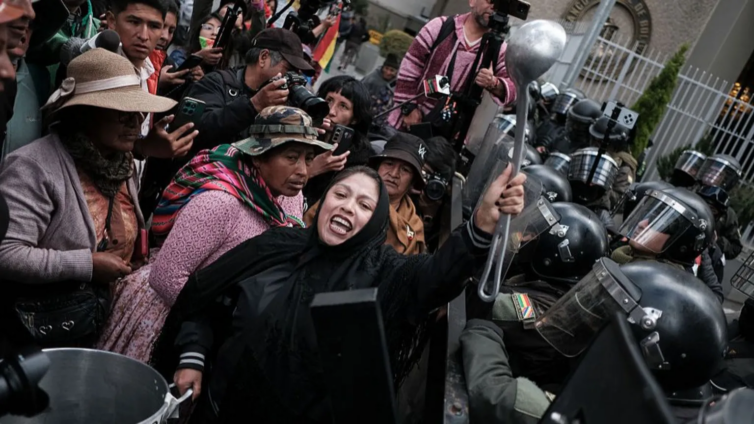
Bolivia's President Rodrigo Paz has warned the country is "at breaking point" after a month of anti-government protests that have led to seven deaths and hundreds of arrests.
Demonstrators led by unions and indigenous groups have set up roadblocks across Bolivia, causing serious shortages of basic goods and paralysing large parts of the nation.
Groups are calling for the reinstatement of fuel subsidies and a rollback of austerity measures, as well as Paz's resignation.
But the US-backed leader, who took office six months ago during an economic crisis, said anyone "wanting to destroy the nation" would have to deal with him and the full force of the constitution.
Paz has been battling growing fury over his centre-right policies, with the protests originally triggered at the end of April by a land reform he proposed.
Some small-scale farmers were worried the measure would make it easier for large landowners to buy up small properties.
The government insisted any sale would have to be voluntary, but powerful organisations representing small-scale farmers were not convinced and blocked the country's main highways in protest.
Paz has since scrapped the reform, but by then the farmers had been joined by other sectors of society venting their grievances.
The government has also scrapped long-standing fuel subsidies amid shortages and inflation, which in turn has raised living costs and enraged a large sector of the population.
Road blockades erected by angry protesters have further exacerbated fuel shortages, creating a vicious circle.
The Bolivian leader renewed his appeal for dialogue and insisted the country needs order, but has not ruled out using so-called "constitutional instruments" to end the blockades.
On Tuesday, Bolivia's Congress voted to make it easier for the president to declare a state of emergency and use the military to regain control.
Lawmakers who backed the move said "violent" groups should not be able to dictate to the elected government, but those who voted against the measure warned it could heighten social tensions.
Paz has previously tried to quell the unrest by reshuffling his cabinet, slashing his salary and that of his ministers, and announcing the creation of a council to negotiate with sectors of society which feel isolated under his government.
But so far, these measures have not subdued the widespread anger.
It's estimated that the protests are causing daily economic losses of more than $50m nationwide.
Latest Stories
-
At least 27 people killed in two shootings in South African township
37 minutes -
Iranian minister says only negotiation can end conflict after Trump rejects Hormuz deal
55 minutes -
Some Ghanaians use free speech to destroy reputations – Bobby Banson
1 hour -
Crowds, deals and home solutions as Republic Bank-JoyNews Habitat Fair enters final day
4 hours -
Fire Service finds only five functional hydrants in Ministries enclave
4 hours -
Government to sign 1,200MW gas power deal before end of 2026 – Mahama
4 hours -
West Mamprusi launches community-led WASH and livelihoods project across 100 communities
4 hours -
Iran says it will wait for official US response after Trump rejects Strait of Hormuz proposal
5 hours -
90 Oti communities to benefit from government electrification project
5 hours -
Floods leave 246 without shelter as 93 houses collapse in North East Gonja
5 hours -
Labour Minister wants SOEs to help shape new public pay system
10 hours -
IPEC will ensure Equity and Sustainability in SOEs Compensation
10 hours -
White House bars CNN from travelling with Trump on Air Force One
11 hours -
Fennis wins second consecutive ITF J60 title in Accra
11 hours -
Spain beat England in thriller after Kane penalty miss
11 hours