

Audio By Carbonatix
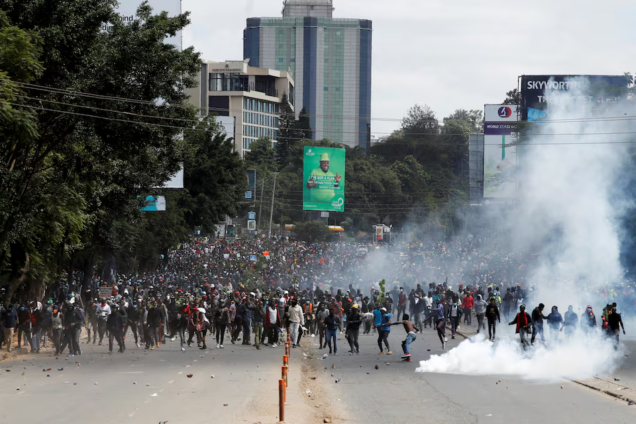
Deadly Kenyan protests that scuppered tax hikes and a failed coup amid fading economic prospects in Bolivia this week are violent reminders of the dangers posed by faltering economies and punishing austerity measures.
Bolivia's President and former economy minister Luis Arce fended off the putsch on Wednesday, but faces ongoing U.S. dollar shortages and soaring borrowing costs that pushed the country's credit rating to "junk."
Kenya's President William Ruto, who reversed support for a tax-hike measure, now must find another path to make his nation's debt pile of some $80 billion more manageable.
Around the world, low income nations were sucked into economic crisis - and in some cases, debt default - after the 2020 COVID-19 pandemic decimated parts of the global economy.
Now, the crisis is reverberating in Kenya, Bolivia and other middle-income nations bearing the brunt of a surge in inflation and the rapid global interest rate rises that followed the pandemic. Borrowing costs soared and Russia's war in Ukraine exacerbated a rise in prices of fuel and food.
"There are a lot of governments around the world all facing the pain, delayed fiscal pain, from the interest rate hikes that we've seen in recent years" said Charlie Robertson, head of macro strategy with FIM Partners, which invests in emerging market debt.
"It's not a surprise that the country [Kenya] might reach a breaking point."
At least 23 people died in Kenya as protests spiralled from online condemnations of the tax hikes into mass rallies demanding a political overhaul.
"It is not just the taxes," said Mary Ngigi, a 37-year-old clothing company worker in Kenya, on why she was protesting.
"When you go to the hospitals, there is no medicine. When you go to the schools, there are no infrastructures."
ANGER SPREADING
Turmoil is spreading. In Nigeria, workers protesting rising fuel and food costs caused a nationwide power outage, and leaders face rising subsidy costs despite tripling petrol prices last year.
Angola is also trying to cut subsidies, while Egypt is under pressure from the International Monetary Fund (IMF) for a slew of spending cuts and reforms that could cause more pain for citizens reeling from record-high inflation above 30%.
Risk intelligence firm Verisk Maplecroft warned that more subsidy cuts or tax hikes could serve as a trigger for unrest.
Argentina was roiled by huge general strikes in May against painful austerity measures and planned reforms by libertarian President Javier Milei, whose cost-cutting drive cheered investors but hammered the real economy.
Rising borrowing costs mean debt service gobbles a growing chunk of revenues. This puts pressure on countries, including Kenya, to raise taxes and cut spending.

In 2023, a record 54 developing countries, equivalent to 38% of the total, allocated 10% or more of government revenues to interest payments, with nearly half of them in Africa, according to a report, opens new tab from UN Trade and Development agency UNCTAD.
Multilateral banks and political risk firms have warned of a ticking time bomb for some time.
While debt relief efforts had centred on the poorest nations with solvency problems, and rightly so according to the World Bank, opens new tab, not enough had been done for lower middle-income countries facing temporary liquidity pressures in the near future.
"Without action, 2024 will see a further rise in debt vulnerability — potentially leading to reversals in development outcomes," World Bank senior managing director Axel van Trotsenburg warned.
RISING PAIN
Kenya, like others, borrowed heavily in the mid-2000s, when interest rates were low -- and China was splashing cash via its Belt and Road initiative to lend to emerging markets worldwide.
Over the past 20 years Kenya amassed some $82 billion of debt to build roads, railways and factories. But not all ambitious projects were completed and many Kenyans felt they had not benefited, opens new tab, while a slew of corruption scandals spurred allegations that elites enriched themselves.
"There is no cut on corruption," Boniface Mwangi, a prominent social justice activist in Kenya told Reuters. "We have no problem paying debt, but...what did you do with that money that you borrowed?"
Ruto has said he is waging a war on corruption and has called for those responsible for graft to be prosecuted.

Kenya managed to avoid default by issuing more debt earlier this year - but at a punishing interest rate above 10%. After this week's protest, the country's bond prices slid again.
To keep crucial IMF cash coming, Ruto must find a way to balance the books.
"Kenya's government has a budget, and cash is not endless - so they need to prioritize," said Lutz Roehmeyer at Capitulum Asset Management.
The IMF, which warned Kenya to reverse "fiscal slippage", did not comment on whether it was asking for too much, but said in a statement that it was "closely monitoring the situation."
For Ruto -- and other leaders struggling to tame debt -- the path forward is far less clear after this week.
"The question is whether this is the canary singing the warning to the government, and to the IMF, as to how much fiscal austerity can be packed into one year," Robertson said.
($1 = 129.0000 Kenyan shillings)
Latest Stories
-
Extractive firms urged to strengthen cyber defences as digital risks grow
2 minutes -
Photos: Mahama engages Ghanaian diaspora in New York on Ghana’s economic recovery
4 minutes -
Man jailed 10 years for defiling 11-year-old girl at Kpandai
46 minutes -
At least 27 people killed in two shootings in South African township
1 hour -
Iranian minister says only negotiation can end conflict after Trump rejects Hormuz deal
2 hours -
Some Ghanaians use free speech to destroy reputations – Bobby Banson
2 hours -
Crowds, deals and home solutions as Republic Bank-JoyNews Habitat Fair enters final day
5 hours -
Fire Service finds only five functional hydrants in Ministries enclave
5 hours -
Government to sign 1,200MW gas power deal before end of 2026 – Mahama
5 hours -
West Mamprusi launches community-led WASH and livelihoods project across 100 communities
5 hours -
Iran says it will wait for official US response after Trump rejects Strait of Hormuz proposal
5 hours -
90 Oti communities to benefit from government electrification project
6 hours -
Floods leave 246 without shelter as 93 houses collapse in North East Gonja
6 hours -
Labour Minister wants SOEs to help shape new public pay system
10 hours -
IPEC will ensure Equity and Sustainability in SOEs Compensation
11 hours