

Audio By Carbonatix
It's been more than 40 years since Bolivia last had to worry about the armed forces seizing power.
The country was governed almost continuously by military regimes from 1964 to 1982, but has been a democracy ever since.
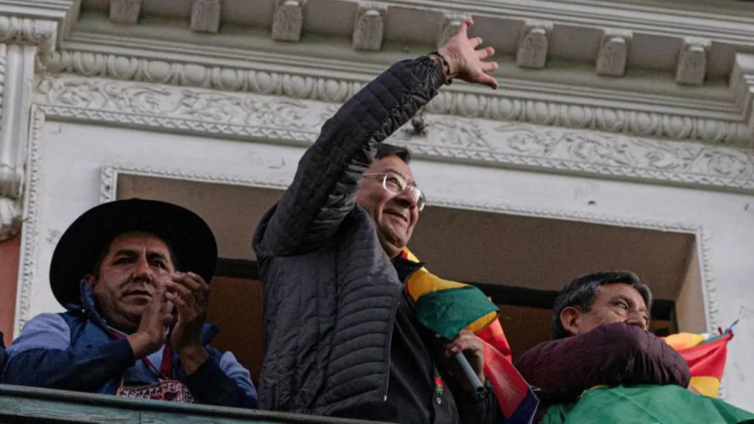
Now Gen Juan José Zúñiga's storming of the presidential palace in La Paz has revived memories of those dark times.
But even after the general's arrest, doubts persist over how genuine a coup attempt this was.
Gen Zúñiga himself told reporters the military had staged the intervention at the request of President Luis Arce, who is locked in an ideological struggle with one of his predecessors that has brought the Bolivian government to a standstill.
According to that view of proceedings, the prospect of a coup has allowed the president to appear as a champion of democracy and give him a much-needed boost in popularity.
It's a view that is taken seriously by Bolivian political analyst Carlos Toranzo, who told BBC Mundo: "There is very little clarity now as to whether it was an attempted coup d'état or, conspicuously, a show put on by the government itself."
Mr Toranzo said the uprising had been an "isolated act" by Gen Zúñiga.
"There was no military movement in all the departments or in other provinces of La Paz. So this is not an institutional act of the Armed Forces."
On Thursday, a day after troops were deployed to La Paz's Murillo Square in an attempt to enter government buildings, the authorities paraded 17 people they said had been involved in the coup attempt.
According to government minister Eduardo del Castillo, a police investigation had determined that planning for it had begun in May.
One of the alleged civilian masterminds, Aníbal Aguilar Gómez, rejected the accusations, declaring himself on hunger strike.
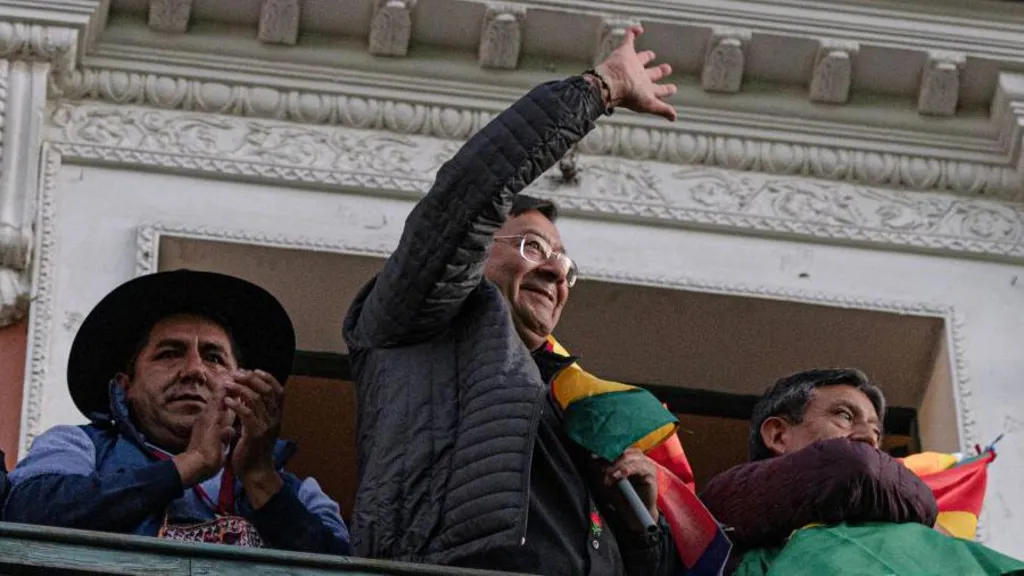
The concept of the self-coup or the "autogolpe" has long been part of the Latin American political lexicon.
Circumstances always differ, but the term usually refers to a sitting president who seeks to seize extraordinary and unlawful powers, having been frustrated by normal democratic limitations.
Now the word is being bandied about once more. But whether or not it is true in this case, how did things get this bad?
Well, it all dates back to one watershed moment in Bolivia's recent history: the presidential election in 2005, when coca-growers' union boss Evo Morales came to power.
Until then, the country had been ruled by an elite descended from European settlers, largely to the detriment of the indigenous majority. But sadly, the improvement in their lot that they had expected as a result of Mr Morales being elected never really came.
"There were moments in the Evo Morales presidency in which Bolivia looked set for a real take-off," Monica de Bolle, senior fellow at the Peterson Institute for International Economics in Washington, told the BBC.
Mr Morales acted decisively to reshape Bolivia, nationalising the country's huge gas fields.
He served two terms as president, during which the price of natural gas, the mainstay of the country's economy, was buoyant. That attracted investment, especially from China.
But then global commodity prices fell, leading to what Ms de Bolle describes as "a slow-motion balance-of-payments crisis" that has now reached a "critical juncture".
Bolivia has not run out of gas, but the industry has gone into decline because successive governments have not been able to invest in it.
As a result, natural gas exports have plunged, depleting the country's foreign exchange reserves, while inflation has soared.
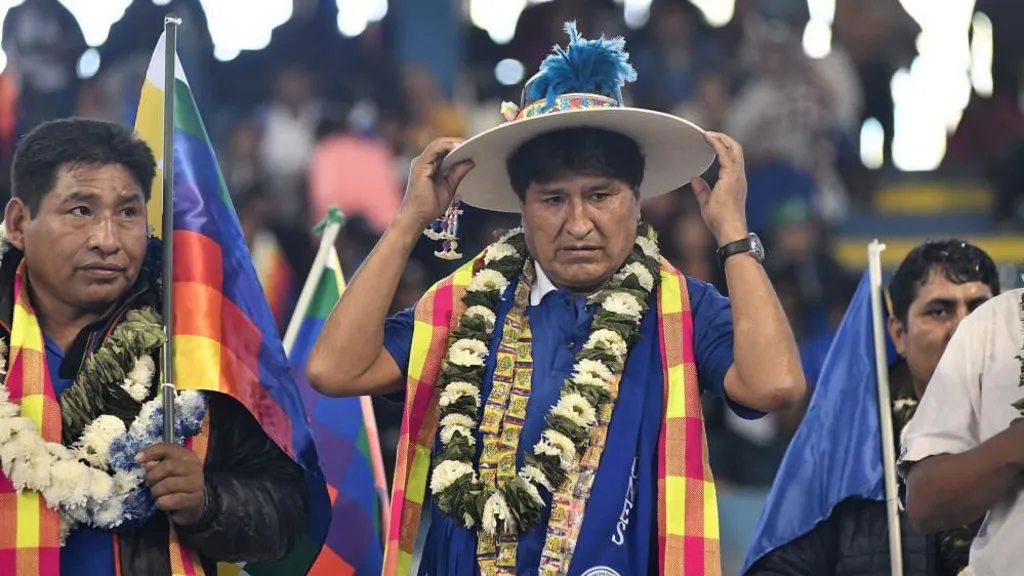
In 2019, Mr Morales ran for a third term in office, in defiance of the constitution, and was duly re-elected. However, he resigned within weeks and left the country after street protests ensued and the head of the army called on him to go.
An interim administration took power, in what Mr Morales' supporters denounced as a coup. But the following year, his left-wing Movement for Socialism (Mas) party was returned to power, this time under President Arce.
Now, with the next presidential election due in 2025, Mr Morales is back in Bolivia and determined to run again, thus making him a bitter political rival of Mr Arce.
"The power struggle between the two is hampering the government's ability to do things that make the situation a little better for the population at large," says Ms de Bolle.
That means the principal supporters of Mas are the ones worst affected by the country's paralysis - and the party's right-wing opponents have the opportunity to discredit the left's entire political project.
The threat to Bolivia's democracy has receded, for now - but there is no end in sight for the country's economic turmoil.
Latest Stories
-
Reality Zone with Vicky Wireko: International Day of the Girl, shaping today’s girl for tomorrow’s future – ZONTA Clubs lead the way
28 minutes -
Global health must be led by countries, not designed for them – Mintah Akandoh
1 hour -
Mahama honoured at 2026 World Health Summit in Berlin for global health leadership
2 hours -
Breast cancer is not a death sentence – Besease Kontire Obaapanin, Magmina Foundation lead awareness campaign
2 hours -
EcoBank invests in digital education of 4 Garisson School to mark 40 years in Africa
2 hours -
AGI urges investment in skills and raw materials to strengthen local manufacturing
2 hours -
GPL 2026/27: ‘We have to rectify our mistakes’ – Boadu reacts to Aduana FC defeat
2 hours -
No disability access, no building permit – KMA declares
2 hours -
Asantehene to lead environmental restoration effort at Jimi Land Reclamation Site
2 hours -
Poor Ghanaians are being jailed because they cannot afford justice – Crime Check Foundation
2 hours -
No conflict in appointing Emelia Agbenyo as Deputy EC Chair – NDC
2 hours -
87-year-old man jailed 20 years for defiling 9-year-old girl at Ofankor
2 hours -
Sankofa Gold targets 70kg output after 9-month shutdown
2 hours -
Tamale, Bolgatanga had just one Legal Aid lawyer between them – Kwesimintsim MP
3 hours -
PAC orders eviction of former irrigation company MD from official residence
3 hours