

Audio By Carbonatix
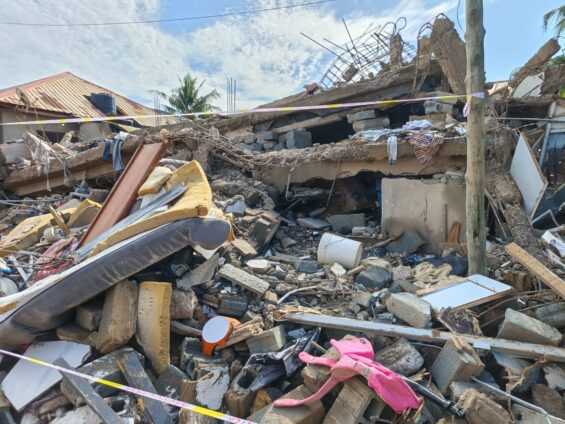
A Joint Technical Investigative Committee comprising structural engineering specialists and statutory representatives from the Structural Sub-division of the Ghana Institution of Engineering (GhIE), the Institution of Engineering and Technology, Ghana (IET-Gh), and the Architecture Registration Council (ARC) has completed its preliminary assessment of the building collapse that occurred within the La Nkwantanang Madina Municipal Assembly (LaNMMA).
The Committee extended its heartfelt condolences to the family of the deceased and wished a speedy recovery to the five injured persons currently receiving medical treatment.
Preliminary findings from the investigation indicate that the collapse was caused by a combination of serious regulatory breaches, structural deficiencies and unsafe construction practices.
According to the Committee, the project was undertaken without the requisite statutory approvals, including approved architectural and structural engineering drawings, building permits and other mandatory technical documentation.
The investigation further revealed that official stop-work directives issued by the Municipal Assembly were disregarded, with construction activities continuing despite regulatory interventions.
The Committee also established that an additional floor was being constructed on the building at the time of the incident.
The unauthorised vertical extension imposed significant additional loads on a structure that had not been designed or assessed to accommodate such stress. Occupants were reportedly present in parts of the building while construction activities were ongoing.
A preliminary engineering assessment of the collapsed structure identified critical structural weaknesses, including discontinuous load-bearing columns, inadequate structural support systems, poor-quality concrete and improperly detailed reinforcement.
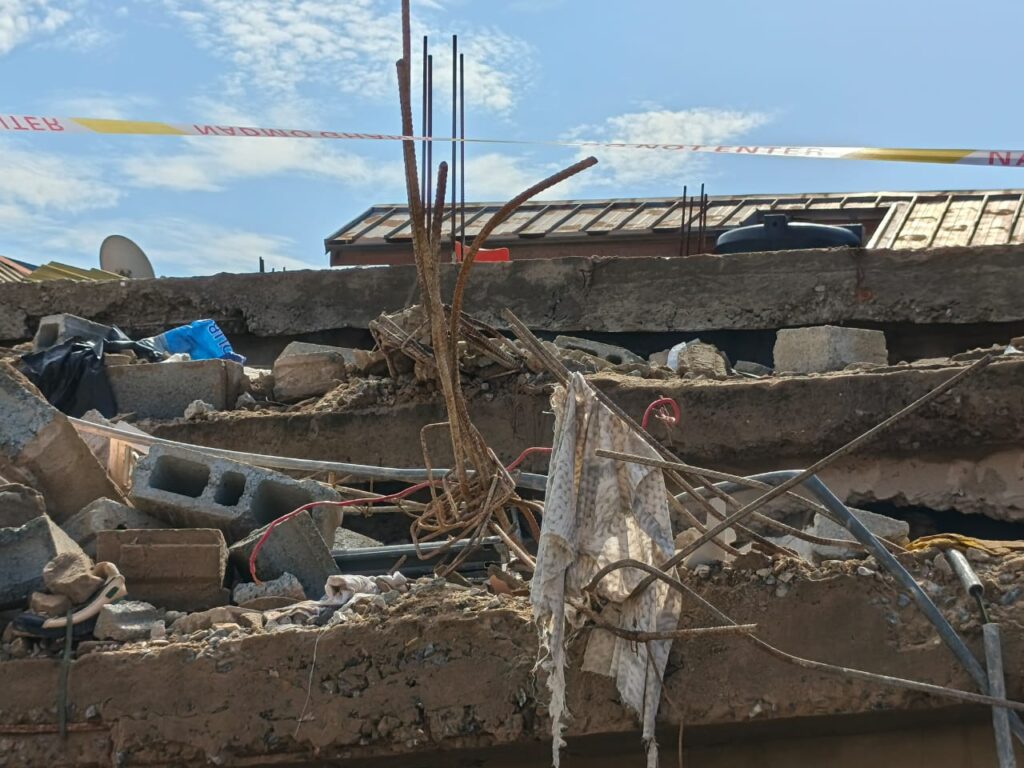
These deficiencies significantly compromised the building’s ability to safely transfer loads to the foundation.
The pattern of failure observed at the site is consistent with a progressive or “pancake” collapse, in which the failure of key structural elements triggers a sequential collapse of multiple floors.
To support the ongoing investigation, samples of concrete and reinforcement steel have been collected for laboratory analysis to determine compliance with applicable engineering and construction standards.
The Committee has recommended that the National Disaster Management Organisation (NADMO) maintain a secured perimeter around the site while unstable portions of the remaining structure are carefully dismantled to safeguard the public and facilitate further investigations.
The Committee emphasised that the incident serves as a stark reminder of the importance of compliance with building regulations, professional supervision and adherence to approved engineering and architectural standards.
The Ghana Institution of Engineering (GhIE), the Institution of Engineering and Technology, Ghana (IET-Gh), and the Architecture Registration Council (ARC) reaffirmed their commitment to supporting the relevant authorities in determining accountability, strengthening enforcement mechanisms and promoting safer building practices across the country.
The Committee will issue a comprehensive final report upon completion of laboratory testing and further technical investigations.
Latest Stories
-
Woman injures three people in third Poland school knife attack in a week
21 seconds -
Ghana should join BRICS as partner, not member – NPP Bono East Regional Secretary
1 minute -
Ghana High Commission warns nationals in South Africa over protests in Johannesburg, Durban
1 minute -
Mahama praises Roads Minister for keeping Big Push contractors on their toes
7 minutes -
World Cup Visa Scandal: ‘My client has not collected money for visas’ – Ampofo Ankrah’s lawyer
19 minutes -
US immigration officials defend ICE agents who shot man in same car as child
28 minutes -
Commentator Katie Zacharia picked as new White House press secretary
31 minutes -
Drone strike by Sudan paramilitary kills 41 near Ethiopian border, rights group says
38 minutes -
King warns malicious online actors are evolving tactics
45 minutes -
Several injured as Saudi capital airport reportedly hit again
48 minutes -
Christa Pike discharged from hospital and returned to prison, her lawyers say
50 minutes -
Ghana’s BRICS move requires clear strategy to manage risks – Godfred Bokpin
3 hours -
Pay teachers realistic income – Duncan Amoah to gov’t
3 hours -
Bechem to become chicken capital of Ghana – Mahama projects
3 hours -
Mentapulse Africa’s Health and Labour Summit calls for better working conditions to retain skilled professionals
3 hours