

Audio By Carbonatix
GDP Is Rising, But Human Capital Will Decide Ghana’s Future
Ghana’s economy has entered 2026 with encouraging momentum. The latest Gross Domestic Product (GDP) estimates show that the economy expanded by 6.4% in the first quarter of 2026, up slightly from 6.2% recorded in the same period last year. This performance confirms that Ghana’s recovery is not only continuing, but also showing signs of resilience despite global uncertainty, tighter financing conditions, and lingering structural challenges.
The growth numbers are important because they show that economic activity remains broad-based. The non-oil economy also expanded strongly, reinforcing the view that Ghana’s recovery is not being driven by one sector alone. Services continued to lead the expansion, supported by growth in information and communication technology, transport and storage, trade, and other key service activities. Industry also showed improved momentum, helped by mining and quarrying as well as a recovery in oil and gas activity.
However, the structure of the growth deserves careful attention. Services accounted for about 48.3 percent of overall GDP growth in the first quarter, confirming the sector’s central role in Ghana’s economy. This is encouraging, particularly given the strong performance of ICT, transport and storage, and trade. But for a developing economy, services-led growth must be complemented by stronger industrial expansion, agro-processing, manufacturing, and export-oriented value addition. Otherwise, growth can become less transformational than the headline number suggests, especially if it does not create enough productive jobs for young people.

On the surface, therefore, the latest GDP figures tell a positive story: Ghana is growing. But beneath the numbers lies a deeper question: is Ghana building the human capital needed to turn economic growth into long-term development and competitiveness?
Economic growth is meaningful only when it translates into better jobs, higher incomes, stronger productivity, improved living standards, and greater opportunities for citizens. A country can record impressive GDP growth and still struggle with unemployment, skills gaps, weak learning outcomes, low productivity, and limited social mobility. This is why Ghana’s current growth performance must be discussed alongside the country’s human capital position.
The relevance of this conversation became even clearer to me during the IMF/World Bank Spring Meetings in Washington, DC, when I saw a Human Capital Index Plus display at the World Bank canteen. Its message was a timely reminder that national wealth is not built only through output, exports, and fiscal consolidation, but through sustained investment in people.
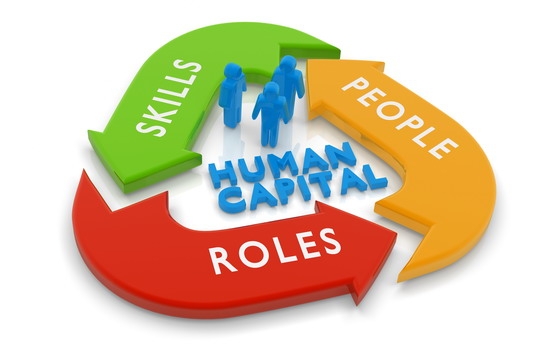
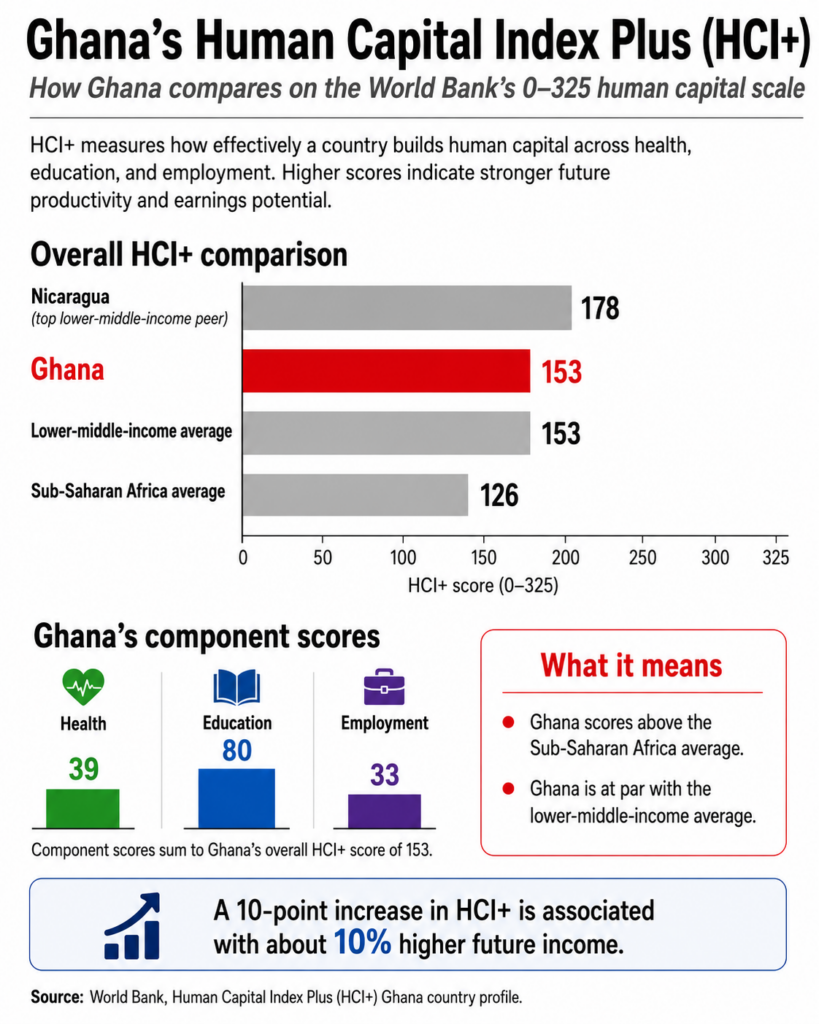
The Human Capital Index Plus, or HCI+, is a World Bank measure that assesses how effectively a country is building the human capital of its people. In simple terms, it looks at whether children born today are likely to grow into healthy, educated, skilled, and productive adults. The index is measured on a scale of 0 to 325, with a higher score showing stronger human capital outcomes. It is built around three main pillars: health and nutrition, education, and on-the-job learning or employment-related productivity. These pillars capture issues such as child survival, nutrition, schooling, learning, adult health, employment prospects, and the ability of workers to acquire productive skills over time. The value of the HCI+ is that it goes beyond school enrolment or health access alone; it connects investment in people directly to future productivity, earnings, and long-term economic growth.
The World Bank’s Human Capital Index Plus provides an important lens for this conversation. Ghana’s HCI+ score is 153 out of 325, placing the country above the Sub-Saharan African average of 126, but only at par with the average for lower-middle-income countries. This means Ghana has made progress, particularly in areas such as education and basic health outcomes, but it has not yet built the depth of human capital required to support higher-value, productivity-led growth.
This matters because the next phase of Ghana’s development will not be driven by natural resources alone. Mining, oil, agriculture, trade, and services will remain important, but long-term competitiveness will depend increasingly on the quality of Ghana’s people: their education, health, skills, adaptability, innovation capacity, and productivity.
The strong growth in Ghana’s ICT sector is a clear example. Digital services can become a major driver of future growth, but only if the country produces enough skilled young people who can participate meaningfully in technology, data, artificial intelligence, cybersecurity, software development, digital finance, and business process outsourcing. Without stronger investment in skills, the sector may grow, but many Ghanaians could remain outside the most productive parts of the opportunity.
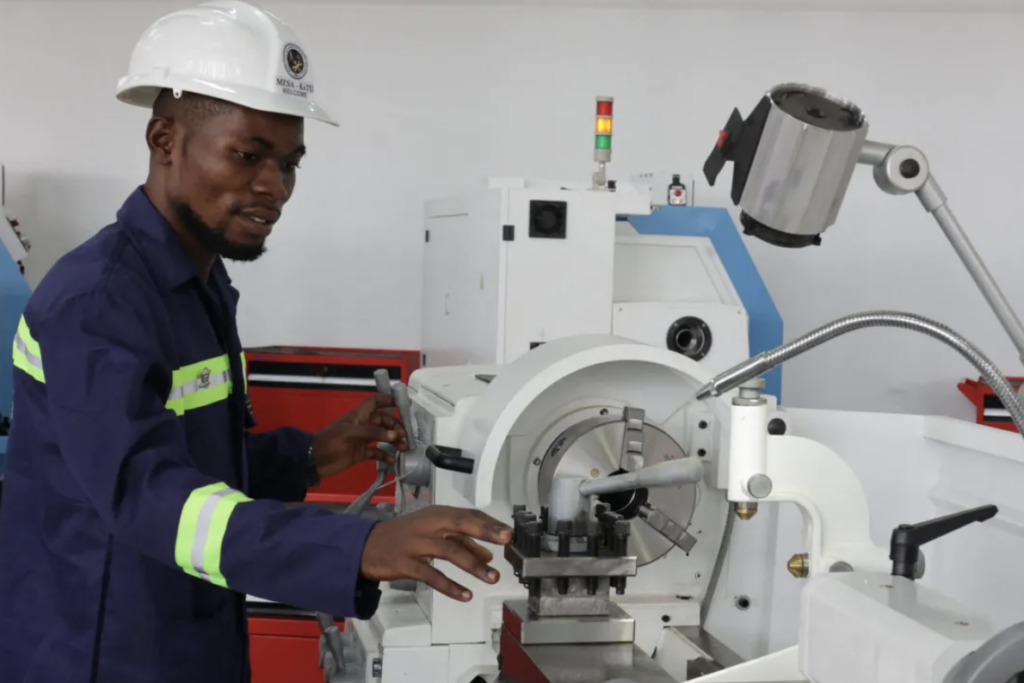
The same applies to industry. Ghana’s industrial growth must go beyond extraction and basic production. The country needs engineers, technicians, machine operators, logistics professionals, quality control experts, risk analysts, financial specialists, and entrepreneurs who can support value addition. A growing economy without a skilled workforce risks remaining dependent on raw commodity exports rather than building deeper domestic value chains.
Education is therefore central. Ghana has expanded access to schooling, including through major policy interventions such as Free SHS, but the next policy challenge is quality and relevance. It is not enough for children to be in school; they must acquire strong literacy, numeracy, digital, technical, and problem-solving skills. The labour market is changing quickly, and the gap between school completion and workplace readiness remains one of the biggest constraints to productivity.
Technical and vocational education must also become more central to Ghana’s development model. If growth is to translate into industrial upgrading, agro-processing, construction, manufacturing, logistics, and modern services, Ghana needs a stronger pipeline of technically trained workers. The country must therefore treat TVET, apprenticeships, digital skills, and industry-linked training as core economic policy, not merely social intervention.
Health is equally important. A healthy population is more productive, learns better, works longer, and contributes more effectively to national output. Investments in nutrition, maternal health, child health, preventive healthcare, mental health, and adult survival are not merely social spending items; they are long-term economic investments.
The employment dimension is also critical. Ghana’s growth must create more decent, productive, and sustainable jobs. If the economy expands but the structure of employment remains informal, low-paid, and insecure, the full benefits of growth will not be felt. Human capital must therefore be connected to labour market reforms, private sector development, entrepreneurship, industrial policy, and access to finance.
This is particularly important for young people. Ghana’s youthful population can be a demographic advantage, but only if it is matched with the right education, health, skills, and employment opportunities. Without that alignment, the same demographic strength can become a source of social and economic pressure.
The lesson is clear: GDP growth tells us how fast the economy is expanding, but human capital determines how inclusive, productive, and sustainable that growth will be.
Ghana’s 6.4% growth in the first quarter of 2026 should therefore be welcomed. It reflects recovery, resilience, and renewed momentum. But it should also be treated as a call to action. The country must use this period of growth to invest more deliberately in people and to rebalance the structure of growth toward higher productive sectors.

To make that transition, Ghana should prioritize three concrete policy actions. First, strengthen learning outcomes by investing in teacher quality, foundational literacy and numeracy, and expanded digital and technical education aligned with labour market needs. Second, scale up preventive healthcare and nutrition programmes, particularly for mothers and children, to improve long-term health and productivity outcomes. Third, build stronger pathways from education to employment through apprenticeships, industry partnerships, and targeted support for small and medium-sized enterprises that can create quality jobs for young people.
Ghana’s growth story is promising. But the country’s most important development challenge is no longer simply achieving growth but building the human capital that can sustain and transform it. Because in the long run, economic success will depend not only on what Ghana produces, but on the knowledge, skills, health, and innovative capacity of its people.
Data references: Ghana Statistical Service Q1 2026 GDP release; World Bank Human Capital Index Plus country profile for Ghana.
Author:
Ernestina Mensah is a financial markets expert and founder of the Glimmer of Hope Foundation. She writes on economic policy, financial inclusion, and risk management. The views expressed are personal and do not necessarily reflect those of her employer.
Latest Stories
-
Muzic Mensah selected for Boomplay’s inaugural ‘NEXT WAVE’ Programme
2 hours -
Prime Insight to tackle legal vacation controversy and $1million AKSA bribery case
2 hours -
Ghanaian evacuee from South Africa dies on arrival in Accra
2 hours -
POS Foundation raises alarm over student cohabitation, sexual harassment on university campuses
3 hours -
Nandom NPP primary heats up as four candidates enter 2028 race
4 hours -
Mangione admits killing healthcare CEO and pleads guilty to federal charges
4 hours -
The Invite to The Odyssey: 12 of the best films of 2026 so far
4 hours -
Ayra Starr on her secret relationship and teasing Stevie Wonder
4 hours -
NPP Ashanti holds vigil in support of Wontumi as lawyers appeal conviction
4 hours -
TCDA targets higher crop yields as farmers receive inputs
4 hours -
Kofi Amoako Attah inducted into 11th Corporate Ghana Hall of Fame
5 hours -
Newsfile to discuss AKSA energy deal, legal vacation and GoldBod losses
5 hours -
Gushegu MCE says slain Yiidana was targeted as police investigate killing of chief and son
5 hours -
President Mahama reiterates commitment to link regional capitals with good roads
5 hours -
Ex-Cambridge professor at centre of plagiarism row found dead
5 hours