

Audio By Carbonatix
Ghana is chasing corruption, tightening control over its natural resources and spending billions to reshape the economy. But as the government exercises greater power in the name of the public interest, difficult questions are emerging about accountability, due process, and who ultimately pays when the state gets.
First, GoldBod and the disputed losses. The International Monetary Fund (IMF) has reported about US$1.7 billion in losses associated with the Domestic Gold Purchase Programme (DGPP), but GoldBod insists this should not be presented as a loss suffered by the institution. Its audited accounts, it says, show a substantial surplus.
So what exactly was lost, who absorbed the cost, and did the programme's gains in reserves and cedi stability justify the reported trading losses? Are we looking at a GoldBod loss, or a policy cost?
Then, the AKSA power deal. A United States prosecution involving former Goldman Sachs banker Asante Kwaku Berko has put allegations of bribery surrounding a Ghanaian power transaction back in the spotlight.
With allegations of coded payments, shell companies and millions of dollars in the deal, the questions are unavoidable: Was Ghana cheated? Who benefited from the alleged scheme? And if corruption is established, will Ghana investigate and recover whatever the country may have lost?
Meanwhile, legal vacation is on, but what happens to the government's Operation Recover All Loot (ORAL) cases? With prosecutors identifying dozens of cases considered ready for prosecution, could the two-month court vacation slow down the government's corruption drive? Or can urgent criminal cases continue despite the vacation? Will ORAL lose momentum just as some of its cases begin taking shape?
And in the mining sector, the Adamus controversy raises another question about state power and due process. The government revoked three Adamus Resources leases over alleged breaches of mining laws. The company rejects the allegations and says the revocation itself breached due process.
As the dispute continues, is the government enforcing the mining law, or could its own actions face the same legal scrutiny it is demanding of mining companies?
Four controversies. Four battles over money, power, accountability and the law.
When a national economic programme records disputed losses…
When a major power transaction faces international bribery allegations…
When corruption prosecutions confront the court calendar…
and when government revokes mining rights amid a due-process dispute…
Who watches the state when the state is the one exercising power?
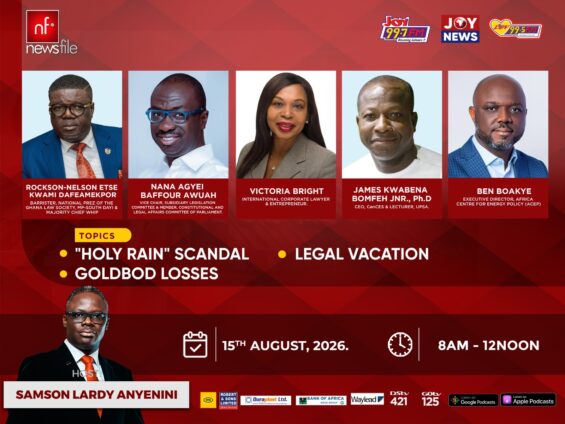
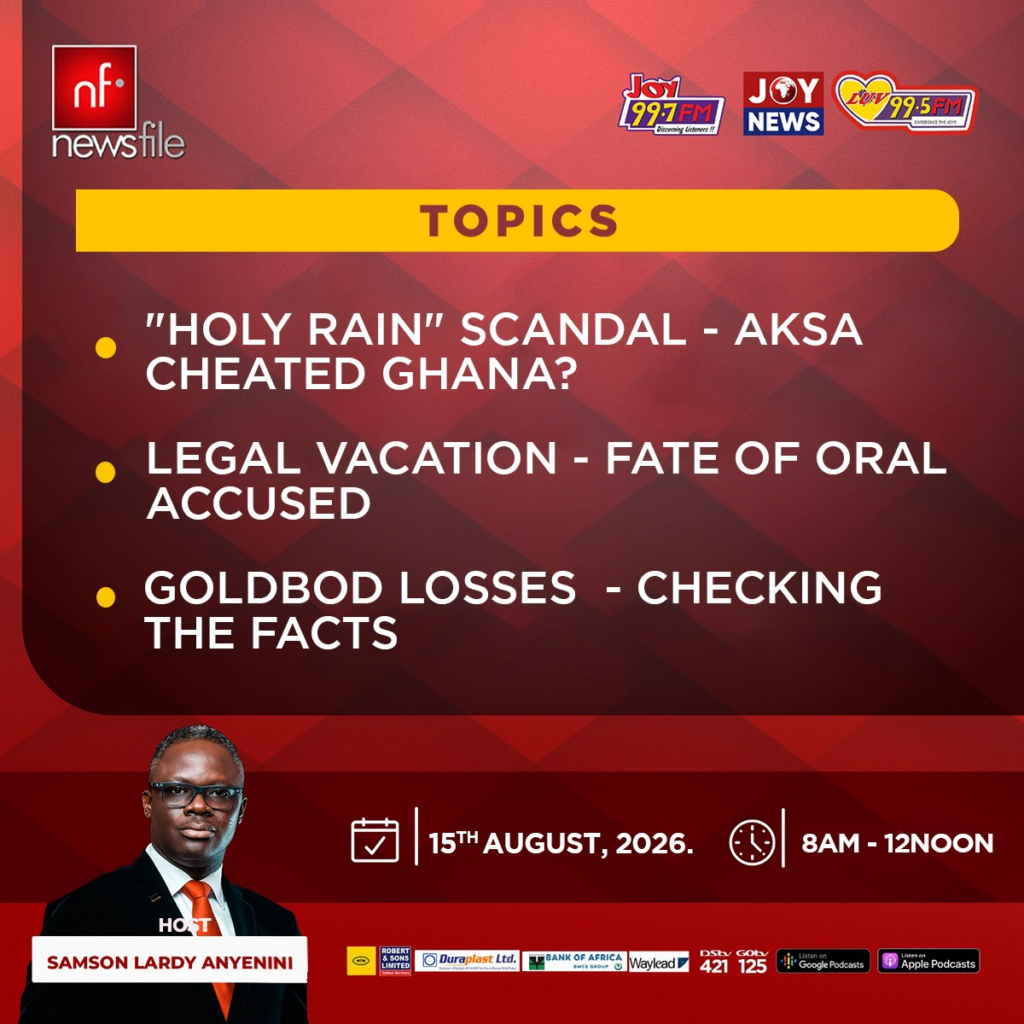
Join Samson Lardy Anyenini and his panel this Saturday at 9 a.m. on JoyNews and MyJoyOnline for the facts, the arguments, and the questions Ghana must confront.
Latest Stories
-
Total expenditure as of July 2026 amounted to GH¢147.07bn, 16% below target – BoG
13 minutes -
Total revenue & grants stood at GH¢144.5bn in July 2026, slightly below target – BoG
29 minutes -
Ghana Sports Fund urges sports federations to submit credible proposals and measurable targets
33 minutes -
Sally Rooney books withdrawn in UK over Palestine Action support
40 minutes -
Musk says US government may be behind slowdown of Ukraine drone speeds
50 minutes -
Picking Chief Justices nearing retirement could give Mahama immense power – Bentil
1 hour -
Netflix to shed 1,000 jobs in steepest cuts since 2022
1 hour -
Burnham had two hospitality dinners with Man City chairman, deleted records show
2 hours -
Semenyo ‘froze’ after alleged racist abuse, court told
2 hours -
‘Shameless’ – Mourinho critical of Vinicius Jr ban timing
2 hours -
Loyalty can outweigh competence in Chief Justice selection – Bentil
2 hours -
Man City suffer as PSG masterclass sets up Champions League win
2 hours -
Customer Service Africa CEO urges business leaders to observe staff and customer interactions
3 hours -
On night of mayhem for Liverpool, Barcola arrives in style
3 hours -
Muzic Mensah finds healing and renewed love in new single ‘WayƐ Late’
3 hours