

Audio By Carbonatix
The Director of Communications at the Bank of Ghana, Bernard Otabil, has warned that misinformation and disinformation pose a growing threat not only to economic stability but also to national security and social cohesion.
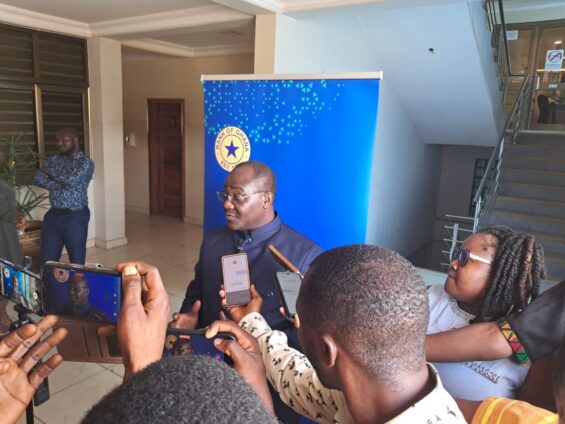
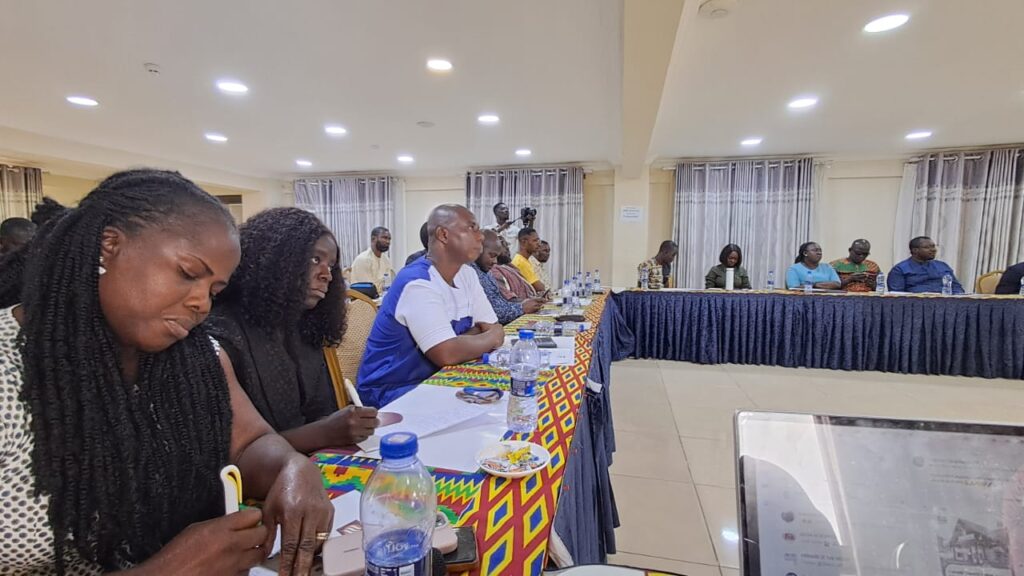
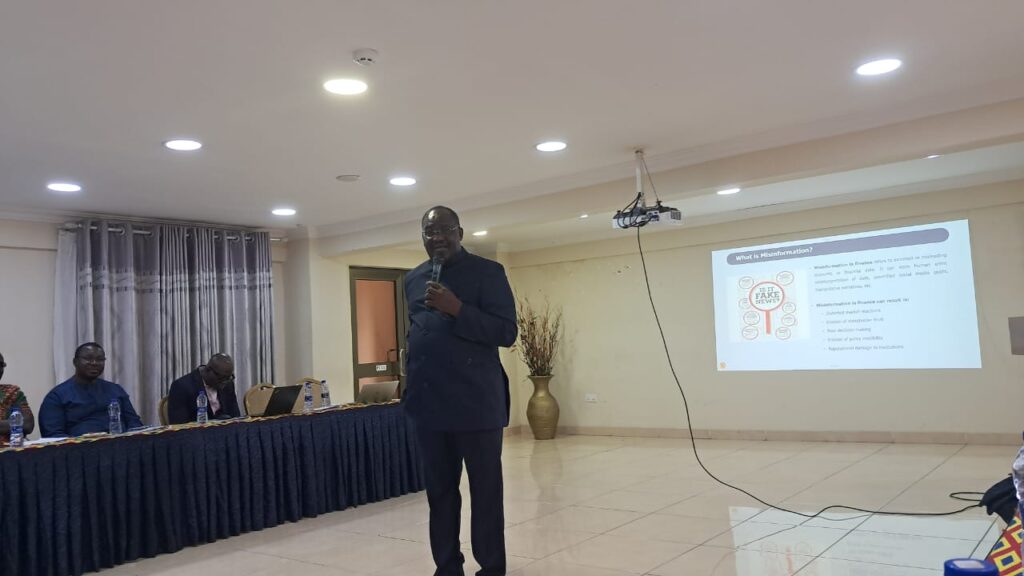
Speaking in an interview with journalists after the opening of the Bank of Ghana's nationwide Media Capacity Building Programme at the Eastern Premier Hotel in Koforidua, Mr Otabil said the central bank's investment in training journalists is aimed at promoting accurate, factual and responsible reporting on economic and financial issues.
According to him, the quality of information available to the public plays a critical role in shaping decision-making by citizens, investors, businesses and policymakers.
"The purpose of this training programme is to ensure that journalists have access to the right information so they can report accurately. Reporting must be factual and grounded in truth. It should not be influenced by spin or distortions that can mislead the public," he said.
The Growing Threat of False Information
Mr Otabil noted that advances in technology and the rise of digital media have dramatically increased the speed at which information spreads, making misinformation and disinformation more dangerous than ever.
He explained that once false information enters the public domain, correcting it becomes extremely difficult because retractions and clarifications rarely travel as far or as fast as the original misleading content.
"When false information is published and consumed, the damage may already have been done before any correction is issued. The rejoinder seldom follows the same path as the original story, leaving many people with a distorted understanding of the facts," he explained.
He warned that misinformation can trigger unintended consequences, including public panic, economic losses, social unrest and threats to national security.
A Global Challenge
Mr Otabil stressed that concerns about misinformation are not unique to Ghana but have become a major global challenge recognised by leading international institutions.
Referencing the World Economic Forum's Global Risk Reports, he noted that misinformation and disinformation have consistently ranked among the most significant threats to global stability in recent years.
"The World Economic Forum's reports for 2024, 2025 and 2026 all identified misinformation and disinformation as major risks likely to shape global affairs in the years ahead. This assessment is based on the views of more than a thousand business leaders and chief executives worldwide, which demonstrates the seriousness of the issue," he said.
According to him, the prominence of misinformation in global risk assessments highlights its capacity to undermine economic growth, sustainable development and public trust in institutions.
'Markets Move on Information'
Mr Otabil emphasised that financial markets and economies depend heavily on information, making accuracy essential in economic and financial journalism.
"Markets move on information. Economies move on information. If inaccurate information reaches investors or fund managers and they make decisions based on it, the consequences can be significant. Investors may lose money, confidence can be eroded, and opportunities for growth may be lost," he said.
He added that inaccurate reporting can discourage investment, distort market behaviour and negatively affect economic activities that support employment, business growth and national development.
Lessons from History
Highlighting the potential consequences of irresponsible communication, Mr Otabil referenced the role misinformation played during the genocide in Rwanda.
He noted that historical evidence has shown how inflammatory and misleading broadcasts contributed to violence and heightened tensions during one of Africa's darkest periods.
"History has taught us that misinformation can have devastating consequences. We have seen instances where irresponsible information dissemination contributed to conflict and loss of life. That is why the media carries such enormous responsibility," he said.
Freedom Comes with Responsibility
While acknowledging Ghana's progress in promoting media freedom, Mr Otabil stressed that freedom of expression must always be accompanied by professional responsibility.
He noted that although criminal libel laws have been repealed, ethical journalism remains essential to protecting public trust and ensuring that media freedom contributes positively to national development.
"The freedom journalists enjoy comes with responsibility. Responsible journalism means verifying facts, ensuring fairness and avoiding the spread of misinformation. This is a civic duty every media practitioner must embrace," he stated.
Strengthening Economic Journalism
Mr Otabil observed that journalists can only report effectively on issues they understand, making capacity-building initiatives such as the Bank of Ghana's programme essential.
He encouraged participants to engage actively with experts throughout the training by asking questions and seeking clarity on complex economic issues.
"A journalist is only as effective as his or her understanding of the sector being covered. We are here to explain what informs our decisions, how monetary policy works and how the activities of the central bank affect the lives of ordinary Ghanaians," he said.
The three-day programme is expected to equip journalists with practical knowledge in areas including monetary policy, inflation management, exchange rate dynamics, financial markets, banking sector operations and ethical reporting standards.
Media's Role in Nation-Building
Describing the media as a key partner in national development, Mr Otabil said journalists serve as powerful multipliers of information whose work influences public opinion, shapes behaviour and promotes accountability.
"We consider the media important partners because you reach people we may never be able to engage directly. Whether through community radio stations, television, newspapers or digital platforms, the information you provide helps citizens make informed decisions," he said.
According to him, responsible journalism strengthens democratic governance, improves economic literacy, exposes corruption and contributes to national development.
Building a Better Ghana
Mr Otabil concluded by urging journalists to uphold professionalism, accuracy and integrity, particularly when reporting on economic and financial matters that influence public confidence and investor sentiment.
He expressed optimism that stronger economic journalism would contribute to a more informed society and support Ghana's development aspirations.
"If journalists continue to report accurately and responsibly, we will build a better Ghana together. The information you share shapes lives, influences decisions and ultimately contributes to the future of our country," he said.
The Bank of Ghana's Media Capacity Building Programme forms part of the central bank's broader efforts to deepen public understanding of economic policies while promoting responsible journalism in an era increasingly challenged by misinformation and disinformation.
Latest Stories
-
NPP national elections: 3,000–4,000 police to handle security, traffic in Kumasi – Karbo
2 hours -
Atta Akyea fumes as Manhyia MP is to spend another night in EOCO custody
2 hours -
SSNIT says La Beach clearance was to protect hotel investments, beaches to remain public
3 hours -
APSU congratulates St Augustine’s College after back-to-back National Investment Quiz wins
3 hours -
Renewed flood intervention at Mallam Junction raises hopes among residents, businesses
4 hours -
St Augustine’s College retain National Investment Quiz title after nail-biting grand finale
4 hours -
Education infrastructure investment will drive Banda’s development – Ahmed Ibrahim
4 hours -
Teacher unions strike: Gov’t presents fresh proposals as talks end inconclusively
5 hours -
51,000 teachers’ promotion arrears to be validated for October payment – Education Minister
5 hours -
Kwabena Boamah appointed Board Chair for Impact Investing Ghana
5 hours -
Striking teacher unions to meet Fair Wages and Salaries Commission on October 6
6 hours -
EOCO working with AG to arraign Nana Baffour Awuah before weekend court
6 hours -
Duraplast reassures customers after fire, announces October 5 reopening
6 hours -
Call off strike, gov’t will not renege on promotion arrears pledge – Haruna Iddrisu to teacher unions
6 hours -
Committee set up to validate teachers eligible for 20% deprived-area allowance – Education Minister
6 hours