

Audio By Carbonatix
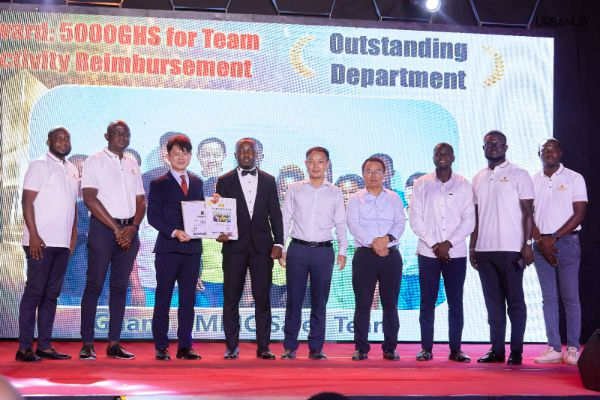
Twyford Ghana has been named Tile & Ceramic Manufacturing Company of the Year at the 9th Ghana–West Africa Business Excellence Awards, adding another accolade to its growing list of achievements while highlighting the company’s expanding role in Ghana’s industrial transformation.
The award, presented in June 2026 at the Kempinski Hotel Gold Coast City in Accra, recognises the company’s contribution to Ghana’s manufacturing sector at a time when the country is seeking to reduce its dependence on raw commodity exports and strengthen industrial production.
Manufacturing at the Centre of Ghana’s Growth Agenda
For years, manufacturing has been identified as a key pillar of Ghana’s economic transformation, despite contributing a relatively modest share to GDP compared with sectors such as gold, cocoa and oil.
With the implementation of the African Continental Free Trade Area (AfCFTA) and shifting global supply chains, Ghana is positioning itself as a regional manufacturing hub for West Africa. Building materials, food processing, light manufacturing and automotive assembly have all been identified as sectors expected to drive that ambition.
Against this backdrop, Twyford Ghana has emerged as one of the country’s leading manufacturing success stories.
From Import Substitution to Global Markets
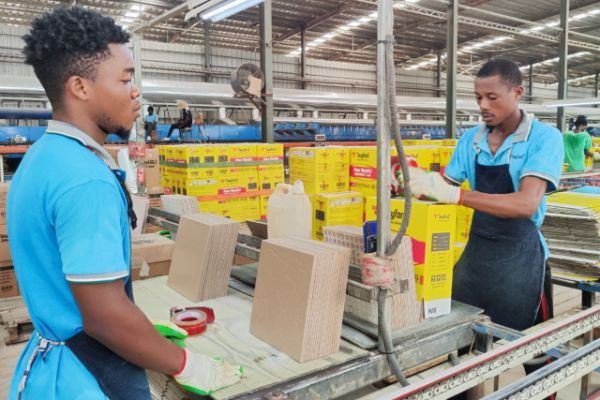
Operating as Twyford International’s largest production base in West Africa, the company has grown into one of Ghana’s biggest manufacturers of building materials.
Its operations now include eight production lines, one of which is under construction, producing ceramic tiles, sanitary ware and glass products.
While initially focused on meeting domestic demand, Twyford Ghana now exports its products to more than 25 countries across West Africa, Europe, Latin America and the United States.
That international reach was further demonstrated when the company became the first Ghanaian building materials manufacturer to exhibit at Coverings, one of the world’s largest tile and stone exhibitions, for two consecutive years.
Its participation attracted attention from several Ghanaian media organisations, which described it as an important showcase for the growing international profile of “Made in Ghana” industrial products.
Investing Beyond Production
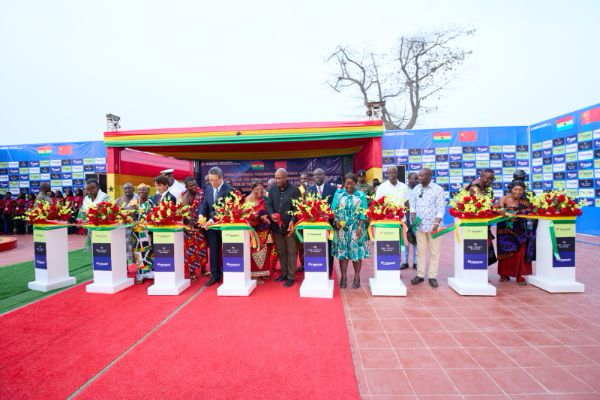
Beyond expanding production, Twyford Ghana says it has invested heavily in localisation by developing local talent, integrating domestic supply chains, transferring technology and increasing Ghanaian participation in management.
The company has trained dozens of local supervisors and managers while partnering with educational institutions to strengthen professional development.
It says these investments are intended to build long-term industrial capacity rather than simply expand manufacturing output.
Employee Welfare and Community Development
Twyford Ghana has also received recognition for corporate social responsibility through the Ghana Manufacturing Awards.
The company provides statutory social security and occupational health protection for employees, as well as private medical insurance for selected staff and their families.
Employees also benefit from accommodation, meals, scholarship programmes, holiday packages and staff welfare initiatives.
The company also partners with the Confucius Institute at the University of Cape Coast to provide Chinese-language training to enhance professional development.
A Model for Ghana’s Industrial Future
As Ghana pursues initiatives such as the proposed 24-hour economy and seeks to deepen regional trade under AfCFTA, Twyford Ghana’s growth reflects the country’s broader industrial ambitions.
Its recognition as Tile & Ceramic Manufacturing Company of the Year highlights not only its commercial success but also a broader shift in Ghanaian manufacturing—from import substitution to export-led production, and from factory expansion to the development of industrial ecosystems.
As Ghana works towards becoming a manufacturing-driven economy, companies such as Twyford Ghana are increasingly positioning themselves as examples of how local production can compete in regional and global markets.
Latest Stories
-
Muzic Mensah selected for Boomplay’s inaugural ‘NEXT WAVE’ Programme
1 hour -
Prime Insight to tackle legal vacation controversy and $1million AKSA bribery case
2 hours -
Ghanaian evacuee from South Africa dies on arrival in Accra
2 hours -
POS Foundation raises alarm over student cohabitation, sexual harassment on university campuses
3 hours -
Nandom NPP primary heats up as four candidates enter 2028 race
3 hours -
Mangione admits killing healthcare CEO and pleads guilty to federal charges
4 hours -
The Invite to The Odyssey: 12 of the best films of 2026 so far
4 hours -
Ayra Starr on her secret relationship and teasing Stevie Wonder
4 hours -
NPP Ashanti holds vigil in support of Wontumi as lawyers appeal conviction
4 hours -
TCDA targets higher crop yields as farmers receive inputs
4 hours -
Kofi Amoako Attah inducted into 11th Corporate Ghana Hall of Fame
4 hours -
Newsfile to discuss AKSA energy deal, legal vacation and GoldBod losses
5 hours -
Gushegu MCE says slain Yiidana was targeted as police investigate killing of chief and son
5 hours -
President Mahama reiterates commitment to link regional capitals with good roads
5 hours -
Ex-Cambridge professor at centre of plagiarism row found dead
5 hours