

Audio By Carbonatix
A Ghanaian researcher is calling for broader changes in how mental illness is represented in the media, arguing that legal reforms alone are insufficient to reduce stigma without corresponding changes in public narratives and social attitudes.
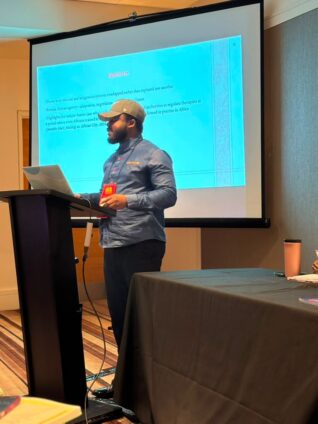
Jonathan Okoe, a doctoral student at the University of Texas at Austin, makes the argument in a recent study titled “Constructing Madness: Media Narratives and Public Understandings of Mental Illness in Contemporary Ghana, c. 2000–2025,” co-authored with Yahaya Halidu and published in the Academic Journal of History and Idea.
The study examines how Ghanaian media coverage, documentaries, and public discussions between 2000 and 2025 have shaped public understandings of mental illness through recurring narratives linked to spirituality, morality, danger, vulnerability, and social disorder.
According to the researchers, the media do not simply report on mental illness but also serve as important spaces where social meanings surrounding psychological distress are constructed, reproduced, and negotiated. As a result, media narratives can influence public attitudes toward people living with mental health conditions.
The article argues that although Ghana’s Mental Health Act of 2012 helped increase awareness of mental healthcare and patient rights, public perceptions of mental illness have evolved more slowly. Many media representations continue to combine biomedical and rights-based language with longstanding cultural narratives associated with spirituality, witchcraft, curses, and shame.
The researchers contend that these representations can contribute to the persistence of stigma, social exclusion, and fear of public judgment, even as efforts are made to improve mental healthcare delivery and protect the rights of patients.
The study also highlights broader challenges facing Ghana’s mental health system, including overcrowded psychiatric facilities, shortages of medication, inadequate funding, and a limited number of trained professionals. According to the authors, these institutional challenges interact with cultural beliefs and media representations in ways that complicate meaningful reform.
Rather than suggesting that the media alone create stigma, the researchers argue that journalism functions as both a reflective and generative space where existing social attitudes are circulated, reinforced, challenged, and sometimes transformed.
They therefore call for more responsible and empathetic reporting on mental health issues, emphasising the need for media narratives that promote dignity, understanding, and informed public discussion.
The researchers conclude that improving mental healthcare outcomes in Ghana will require not only legal and institutional reforms but also broader changes in how mental illness is discussed and understood within society.
Jonathan Okoe is a doctoral student in the Department of History at the University of Texas at Austin whose research focuses on health, medicine, science, technology, digital humanities, and medical anthropology in Africa.
Latest Stories
-
Skytrain Trial: Court rejects Ameyaw Ekumfi’s bid to halt proceedings
4 minutes -
Aggrieved Gold Coast customers petition Mahama over GH¢3.6bn outstanding payments
9 minutes -
ECG loses about 27% of electricity through technical, commercial losses – Engineer
11 minutes -
Declare foreign currency before checking in luggage – Customs cautions travellers
18 minutes -
State of emergency is no ‘magic wand’ for galamsey – Lands Ministry
23 minutes -
Bringing 10 bags of clothes as gifts? Customs explains when duties may apply
24 minutes -
Precious Mawunya-ko appointed PRO for 5th Praise Achievement Awards
27 minutes -
Don’t let poor English define your potential – Prisons Service DG to Ghanaians
28 minutes -
GRIDCo’s operating profit plunges 89% despite net profit surge in 2025
30 minutes -
IGP summons Volta Police Commander over alleged extortion of traders on Aflao–Accra route
31 minutes -
Amin Adam: Gold programme lost money despite 62.9% rise in prices
33 minutes -
Amin Adam challenges GoldBod’s GH¢5.45bn surplus
43 minutes -
Ghana’s power sector losing 27% of electricity supplied – Electrical Engineer
46 minutes -
GH¢1.5m raised to renovate historic Wa Naa’s Palace
50 minutes -
‘Still a work in progress’ – Eric Tinkler admits Kotoko have plenty to improve
51 minutes