

Audio By Carbonatix
The government has announced a major intervention to transform secondary education and eliminate the double-track system through a US$300 million World Bank-supported project.
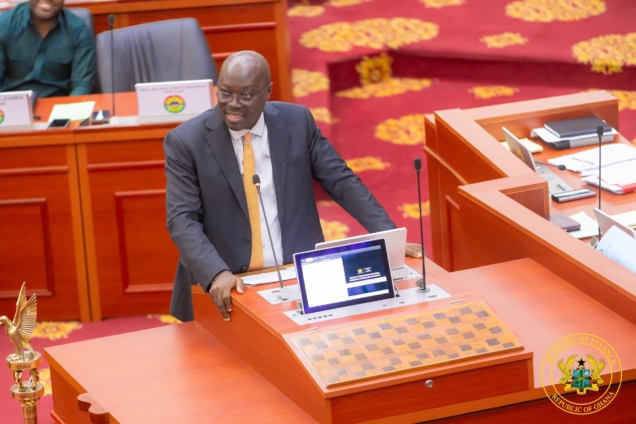
Finance Minister Dr Cassiel Ato Forson, presenting the 2026 Mid-Year Budget Review in Parliament on Thursday, July 23, said the initiative forms part of the government’s efforts to improve access to quality education, expand participation in STEM and Technical and Vocational Education and Training (TVET), and equip young people with skills needed for the future job market.
According to him, the project will deliver 210 major infrastructure interventions across the country, including the construction of 10 new secondary schools and the rehabilitation of 150 existing schools.
Additionally, 30 Category C schools will be upgraded to Category B status, while 20 Category B schools will be upgraded to Category A. The project will also include the provision of furniture for beneficiary institutions.
Dr Forson said the new schools will be strategically distributed across regions with limited access to secondary education.
“One new school each will be constructed in the Western, Western North, Greater Accra, Volta, Oti, Northern, Upper East, Upper West, Savannah, and Central Regions,” he told Parliament.
The Finance Minister explained that the intervention is expected to benefit about 2.3 million students, more than 100,000 teachers, and approximately 2,000 school leaders nationwide.
He said the investment will support the government’s broader objective of improving learning outcomes, particularly in Mathematics and Science, while creating a more effective secondary education system.
“Education remains one of the most powerful investments we can make in the future of our country,” Dr. Forson said.
He added that the project will "contribute significantly to the government’s commitment to ending the double-track system and ensuring that students have access to improved learning environments."
The government has maintained that expanding infrastructure, strengthening STEM and TVET education, and developing digital and green skills among young people are critical to preparing Ghana’s workforce for future economic opportunities.
Latest Stories
-
Parrott scores again as Betis beat 10-man Lille
2 hours -
Mbappe goes joint-fifth in the list as real Madrid beat Inter Milan
3 hours -
Police arrest suspects over murder, bank robberies, gold-related attacks
3 hours -
Pragyia rider gets three months prison term for biting Police Assistant
3 hours -
Palm wine tapper jailed for stabbing farmer
3 hours -
Travel and tour agent remanded over GH¢107,000 recruitment scam
3 hours -
Taxi rank executives arrested over alleged attempted murder
3 hours -
Galamsey operator who posed as pastor to defile student jailed 15 years
4 hours -
Court sentences pub owner, shop attendant for selling expired food, sanitary offences
4 hours -
Mac Allister ‘sad’ at no Liverpool contract offer
4 hours -
Ghana pays $3.5m to University of Memphis over scholarship debt
4 hours -
Fidelity Bank champions value chain approach to unlock Ghana’s agricultural potential
4 hours -
People don’t remember style of play – GFA Comms Director defends Quieroz appointment
5 hours -
Finance Ministry needs ‘refresher course’ in own records over GES recruitment – Adutwum’s spokesperson
5 hours -
Techiman 24-hour market project on course as Regional Minister inspects work, hails construction quality
5 hours