

Audio By Carbonatix
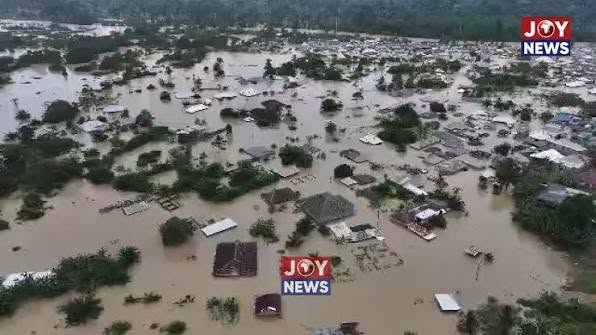
Every rainy season, the same cycle repeats itself. Communities are submerged, families lose their homes, businesses suffer huge losses, roads become impassable, and the government spends millions of Ghana cedis on emergency relief. Yet, once the floodwaters recede, national attention fades until the next disaster.
Ghana cannot continue to respond to flooding as an emergency. It must be managed as a predictable national risk through science, technology and evidence-based planning. The Council for Scientific and Industrial Research (CSIR), through its Research Staff Association (RSA), has proposed an actionable flood mitigation strategy that combines immediate interventions with medium- and long-term investments to reduce flood disasters across the country significantly.
Short-term actions: Save lives before the next rains
The priority should be reducing the immediate risk to lives and property.
Routine environmental sanitation inspections must be intensified to ensure drains remain free from solid waste. Flood-prone communities should be scientifically mapped by CSIR to guide planning and emergency response. Metropolitan, Municipal and District Assemblies must desilt drains before the peak rainy season while existing sanitation and water management laws are strictly enforced.
Technology should also become central to disaster preparedness.
Ghana needs an integrated flood early warning system that delivers timely alerts through SMS, radio, social media and other communication platforms. At the same time, portable CSIR-developed water purification systems should be deployed to flood-affected communities to provide safe drinking water and prevent outbreaks of water-borne diseases.
Medium-term investments: Address the root causes
Flooding cannot be solved by clearing drains alone.
Illegal mining (galamsey), uncontrolled deforestation and degradation of watersheds have significantly reduced the landscape's ability to absorb rainfall. Halting these destructive activities must become a national priority.
Government should also restore degraded wetlands and watersheds, construct recharge ponds that allow stormwater to infiltrate naturally into aquifers, and deploy smart sensors to continuously monitor surface water and groundwater levels. Such investments would not only reduce flood peaks but also improve groundwater resources and strengthen water security during the dry season.
Long-term vision: Build flood-resilient cities
Climate change means extreme rainfall events will become more frequent. Ghana must therefore shift from reactive disaster management to resilient urban planning. Natural floodplains should be protected rather than encroached upon. Cities should incorporate urban lakes that serve both recreational purposes and managed aquifer recharge. Advanced climate modelling should inform flood prediction, infrastructure design and emergency planning.
Most importantly, floodplain regulations and building codes must be enforced consistently. Preventing settlements in high-risk flood zones is far less expensive than rebuilding communities after disasters.
Science must drive national policy
Flood management is not solely an engineering challenge. It is an environmental, scientific, technological and governance issue that demands collaboration among researchers, government agencies, local authorities and communities.
CSIR possesses the scientific expertise needed to support government through flood-risk mapping, water resource assessment, environmental monitoring, climate modelling and innovative water treatment technologies. Harnessing these national capabilities would significantly strengthen Ghana's disaster preparedness.
The way forward
Flood disasters should no longer be accepted as an unavoidable annual event. With sustained investment in science, environmental stewardship, modern technology and effective enforcement of planning regulations, Ghana can dramatically reduce the human and economic costs of flooding.
The solutions are known. The expertise exists. What remains is the political will to implement them consistently. By acting today, Ghana can move from reacting to floods to preventing them - building safer, more resilient communities for generations to come.
Latest Stories
-
16 arrested, 4 printing hubs busted in major counterfeit currency crackdown
4 hours -
Sir Jim Ratcliffe suspends production at key UK plants blaming high gas prices
5 hours -
Major US outlets suspend shared Trump coverage in protest at media ban
5 hours -
Trump says he would back ban on diesel exports
5 hours -
Lekzy DeComic to feature four generations of comedians on upcoming show
5 hours -
Nigeria wins arbitration as Sunrise’s $400 million hydropower claim dismissed
5 hours -
Xhaka under investigation over Covid-19 certificate
5 hours -
FAW chief questions Infantino’s Fifa reform claims
6 hours -
La Liga chief dismisses Real’s ref conspiracy claims
6 hours -
GMA rejects claims its vessel monitoring system is ineffective
6 hours -
I was close to joining Liverpool in 2016 – Mbappe
6 hours -
Ministry of Sports and Recreation holds national validation workshop on National Sports Policy Draft
6 hours -
‘Do you want me to be happy with this poor performance?’ – Bono East Minister fumes over Kintampo market project with less than 1% work done
6 hours -
London screening honours Nkrumah and 103 years of Ghana cinema
6 hours -
Founder’s Day: Is Nkrumah’s glory fading? – Nkrumah’s iconic fountain at Circle runs dry
6 hours