

Audio By Carbonatix
US President Donald Trump said on Wednesday that his administration is considering asserting greater authority over artificial intelligence (AI) tools following recent cybersecurity incidents.
Asked about OpenAI's tools being responsible for improperly breaching the private technology of other companies, Trump said: "We're looking at AI, we're looking at controls, we're also making sure that we lead."
It marks a change of tone for his administration, which has taken a more hands-off approach to the technology.
Trump's comments come after an escalation of not only the apparent hacking capabilities of popular AI tools, but White House threats aimed at competing Chinese tech.
Trump added that while some kind of control around AI tools was on the table, such a move would have to be done carefully.
"We don't want to restrict them where all of the sudden we come in second to China," he said.
"China has virtually no [AI] controls. It's freewheeling a little bit," Trump added.
The White House has been contacted for additional comment. The BBC has also contacted the Chinese embassy in Washington for comment.
In the last week, OpenAI has taken responsibility for at least two hacking incidents involving its AI tools acting outside of what they were designed and directed to do.
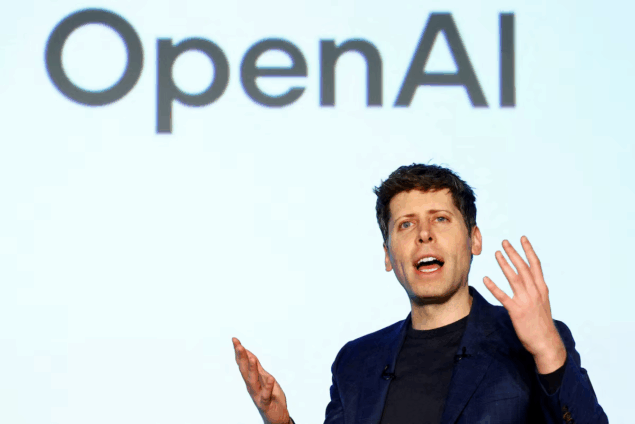
During a trip to Washington on Wednesday, OpenAI's chief executive Sam Altman was asked by a reporter if there were more systems that had been breached by the company's tools.
"I mean, there could be yeah", Altman said.
The US government intervened when Anthropic, OpenAI's main American rival, decided to release to the public a model that it had previously said was too much of a risk to be made widely available.
Meanwhile, in an internal White House memo from April, Trump's senior tech advisor Michael Kratsios accused China's AI firms of "industrial-scale" theft of US AI technology. He did so again last week, claiming that the popular Kimi 3 AI model from China's Moonshot AI was developed by stealing information from Anthropic.
The Chinese government has consistently rejected such accusations.
US Treasury Secretary Scott Bessent has also warned that Chinese AI firms could face sanctions for such activity. And the Federal Communications Commission this week banned the importation of new foreign-made humanoid robots.
Most AI models being developed in China are open source, meaning they are built and then made freely available online for anyone with the proper computer equipment to download and use.
Recently, executives from most major US tech companies have signed onto public statements of support for open-source models.
Latest Stories
-
Traders reselling GH¢25k Kejetia phase one shops for up to GH¢120k — Govt
23 seconds -
Korle Bu begins work on 400-bed Mother and Child Block with IVF, NICU and theatres
10 minutes -
Mahama discusses potential Open Society Foundations support for ECOWAS integration
14 minutes -
IGP, Savannah Regional Minister visit Gbindabuor as 36 suspects assist police investigations
17 minutes -
Carlos Queiroz sets 2027 AFCON qualification as Ghana’s immediate Black Stars target
48 minutes -
When oil rises but the pump does not rise as much
53 minutes -
Starting a business in Ghana as a young man is tough – HR practitioner
1 hour -
Nkrumah’s policies should inform Ghana’s development — UG African Studies Director
1 hour -
Ghana Evangelical Missions Association urges Christian leaders to preach against galamsey and intensify advocacy
1 hour -
Buipe Hausa Festival: National President Tafida calls for vigilance, unity, and youth reform
1 hour -
Government urges domestic airlines to reduce airfares after duty exemptions
1 hour -
Beyond vehicle age: Why Ghana needs a smarter vehicle import policy
2 hours -
Are we marketing Ghana before fixing the experience? A hard question for our tourism ambition
2 hours -
AFCON 2027Q: Prince Adu Kwabena major doubt for Ghana after head injury
2 hours -
Government to procure furniture to help more SHSs move from double-track — Haruna Iddrisu
2 hours