

Audio By Carbonatix
A senior police officer has warned politicians against distributing food and other items during elections, describing such acts as potential vote buying and urging citizens to reject practices that undermine the integrity of Ghana’s democratic process.
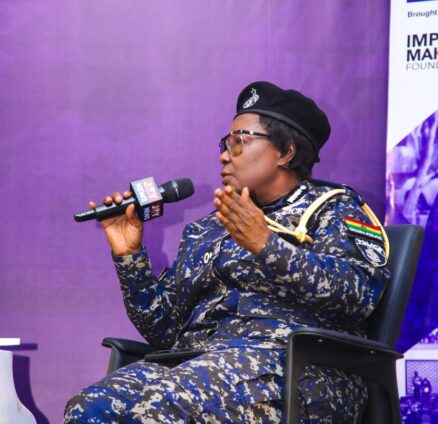
ACP Brown Mercy Wilson, Head of Legal and Prosecution for the Volta Region, made the comments at the JoyNews’ “Democracy Is Not For Sale” forum organised by the JoyNews Impact Makers Foundation.
According to her, politicians who engage in such activities during elections create an environment that could compromise free and fair decision-making by voters.
"When a politician is holding packs of food and sharing during an election, that politician is not a nice person. That environment is a crime scene," ACP Wilson stated.
She urged politicians and public figures to be conscious of their conduct, particularly actions that could influence voters through material inducements.
"We are not supposed to do things that will, for want of a better explanation, offend the sense of decency of people who look to you when you are doing your things or when you are saying your things. Don't do things that will offend their own sense of decency," she said.
Her comments come amid growing national discussions about the influence of money and inducements in Ghana’s electoral processes.
The “Democracy Is Not For Sale” forum series, organised by the JoyNews Impact Makers Foundation, has brought together political actors, civil society organisations, legal experts and citizens to discuss concerns surrounding vote buying and the monetisation of politics.
A pre-forum survey conducted by JoyNews ahead of the Volta Regional edition showed that many respondents were aware of vote buying, with some indicating that they had witnessed politicians or their agents offering money and other incentives to influence electoral choices.
Under Ghana’s electoral laws, vote buying and voter inducement are criminal offences. Sections 240 and 241 of the Criminal Code, 1960 (Act 29), together with provisions under the Representation of the People Act, 1992 (PNDCL 284), prohibit the buying and selling of votes in public elections.
However, concerns have been raised about gaps in the law regarding internal political party elections, as party primaries are not classified as public elections under existing legislation.
This has led to calls from governance experts and civil society groups for reforms to extend legal sanctions against inducements beyond general elections.
The Office of the Special Prosecutor has also expressed interest in investigating allegations of vote buying linked to political party primaries.
Latest Stories
-
Nigeria set to launch National Digital Address System 9 years after Ghana showed the way
4 minutes -
Policy rate decision takes time to reflect in lower lending rates – BoG
14 minutes -
Western Regional Minister applauds Karpowership’s role in Ghana’s power sector
39 minutes -
Livestream: Road safety crises: Where are we getting it wrong?
41 minutes -
Enterprise Life celebrates 25 years of protecting families and building trust
49 minutes -
ICC London rules in favor of Ghana against Tullow over $400m tax charge
59 minutes -
We are disappointed in ICC’s ruling over our corporate income tax assessment in Ghana – Tullow Oil
1 hour -
Cost of building inflation for August 2026 increases to 4.6% – GSS
1 hour -
Today’s front pages: Wednesday, September 30, 2026
2 hours -
Bawumia highlights agricultural, compulsory insurance reforms in IBAG engagement
2 hours -
Ghana will secure Tullow tax revenues while protecting Jubilee, TEN investments – Ato Forson
2 hours -
Ghana wins $393m Tullow tax arbitration as tribunal upholds GRA assessment
2 hours -
Gender Minister assures women’s group of action on Affirmative Action, Development Bank
3 hours -
Over 2,000 teachers in Dormaa comply with strike – GNAT Secretary
3 hours -
Food Buffer Stock seeks stronger liquidity buffer despite record profit
3 hours