

Audio By Carbonatix
Ghana has introduced offshore mariculture as part of efforts to expand the country’s Blue Economy, with the government also preparing legislation to provide a legal framework for managing and developing marine and inland water resources.
The Fisheries and Aquaculture Ministry says a provisional licence has been issued for commercial offshore marine aquaculture, marking the first step towards a new phase of fish production beyond traditional capture fisheries.
The Fisheries and Aquaculture Ministry says the move marks a significant shift in efforts to expand fish production while reducing pressure on declining wild fish stocks.
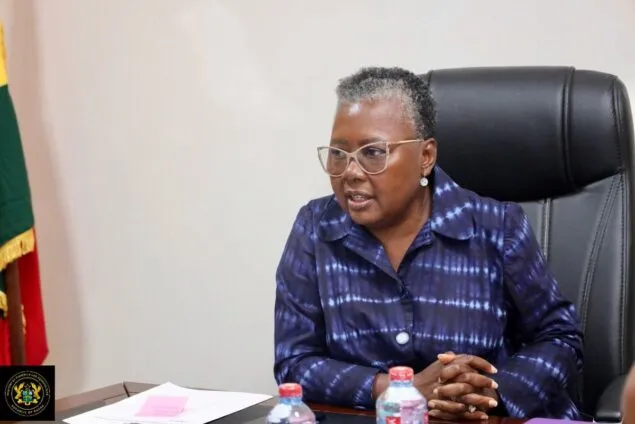
Fisheries and Aquaculture Minister Emilia Arthur said the initiative forms part of the government’s broader reset agenda for the sector, which seeks to promote sustainable production and unlock new economic opportunities.
She explained that offshore mariculture will allow Ghana to responsibly utilise its marine resources while creating new opportunities for investment and job creation.
Mrs Arthur also outlined the government's plans to develop Ghana’s Blue Economy, describing it as an economic strategy rather than only an environmental initiative.
The government of Ghana says it has also completed the development of Ghana’s Blue Economy Strategy and prepared a comprehensive Blue Economy policy framework to guide implementation.
“The Blue Economy agenda seeks to create jobs, attract investment, promote innovation, and unlock the potential of Ghana’s oceans, rivers, lakes, and coastal resources in a sustainable manner,” she indicated.
She added that a bill is being prepared for Cabinet consideration to establish a legal framework for the country’s Blue Economy.
According to her, the frameworks will provide a roadmap for turning Ghana’s marine and inland water resources into engines of inclusive economic growth, climate resilience, and sustainable livelihoods.
Ghana’s coastline stretches over 550 kilometres, while inland water resources, including the Volta Lake, provide opportunities in fisheries, aquaculture, transportation, tourism, renewable energy, and other economic activities.
Fisheries and Aquaculture Minister Emelia Arthur indicated that the government’s focus is to transform some water resources from assets viewed mainly for extraction into resources that are managed, protected, and developed for long-term economic benefit.
Latest Stories
-
Yaw Ampofo Ankrah hasn’t taken or received any money to facilitate visas – Lawyer insists
17 minutes -
World Cup visa scandal: Senyo Hosi urges focus on constitutional accountability
18 minutes -
La Beach demolition: Senyo Hosi condemns lack of consultation
29 minutes -
Russian glide bomb attack on Zaporizhzhia kills at least 15 people
44 minutes -
Jinapor warns underperforming energy sector CEOs of consequences, says no protection for failure
45 minutes -
Fire destroys head of tipper truck on Lower Volta Bridge
50 minutes -
Palmer signs new Chelsea contract until 2034
51 minutes -
World Cup visa scandal: Mahama will act on corruption allegations – Abass Nurudeen
53 minutes -
Abass Nurudeen accuses Minority of ‘scandal scavenging’ over World Cup visa controversy
55 minutes -
US Embassy recognised NSA, GFA and GTA as separate entities for visa applications – Sports Minister’s aide
1 hour -
Only 30% of Ghanaian teachers satisfied with their jobs – CAPCOE data reveals
1 hour -
Communities affected by construction of Akosombo Dam urge government to speed up compensation process
2 hours -
World Cup visa scandal: Sports Ministry not shielding anyone – Sports Minister’s special aide
2 hours -
World Cup visa scandal: Over 30 people misrepresented as GTA board members to US Embassy – Vincent Assafuah alleges
2 hours -
Fire destroys wooden structure near Yesu Mo Villa at Bush Road
2 hours