

Audio By Carbonatix
The RNAQ Foundation says it has served more than three million meals through its Food Bank initiative after completing 365 consecutive days of uninterrupted operations.
The foundation announced the milestone as it marked the first anniversary of the RNAQ Food Bank, describing the achievement as a significant step in its efforts to tackle food insecurity in Ghana.
According to the foundation, what began a year ago as a three-branch pilot project in Korle Gonno, Kasoa and Ashaiman has grown into a nationwide network with 13 operational branches.
The foundation said the initiative was inspired by the childhood experiences of its founder and President of RNAQ Holdings, Richard Nii Armah Quaye, who grew up in Korle Gonno, where access to daily meals was not always guaranteed.
It explained that the Food Bank was established to move beyond occasional charitable donations by creating a reliable system that provides food support every day.
The foundation noted that the initiative was launched against the backdrop of food insecurity affecting millions of students and low-income households, with the aim of demonstrating that a consistent, community-based food support system can be sustained.
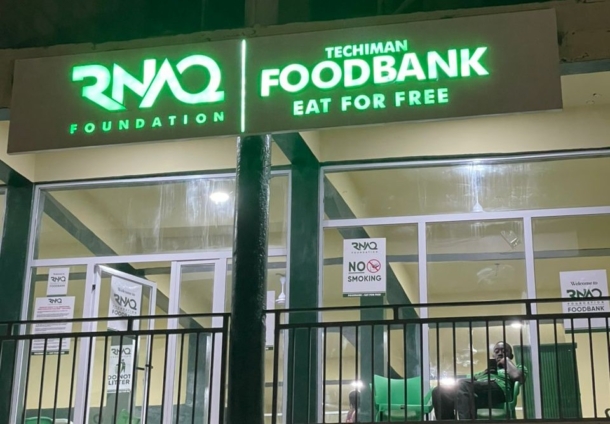
Over the past year, the programme expanded from Greater Accra into other regions across the country. Its largest expansion came in late 2025 with the opening of four branches in Kumasi, Bantama, Asafo, Anloga and Alabar, before adding its 13th branch in Techiman, the commercial hub of the Bono East Region.
To commemorate the first anniversary, the RNAQ Foundation has lined up activities for beneficiaries across all 13 branches.
The foundation also highlighted a five-part documentary series, No One Goes Hungry, and a week-long digital campaign showcasing the initiative's impact, including its support for local food vendors, supply chain operations and beneficiary communities.
It said the Food Bank's ability to operate continuously for an entire year demonstrates that a decentralised food security model can be sustained while promoting dignity, consistency and local economic participation.
Latest Stories
-
Dede Chancelor makes appearance at Milan Fashion Week 2026
20 minutes -
Today’s Front pages: Friday, October 9, 2026
1 hour -
Edmond Kombat named Energy Sector Reform Programme Champion of the Year 2026
3 hours -
PAC summons Takoradi doctor over GH¢341,229 study leave salary
3 hours -
37 Military Hospital traders given 7-days to clear pedestrian walkway
3 hours -
Wontumi challenges EOCO’s handling of Exim Bank loan dispute
3 hours -
Government keeps appealing to striking teachers to resume work – Apaak
4 hours -
Dr Daniel Acquaye urges Christian business leaders to build sustainable enterprises
4 hours -
Chief Justice urges employers to tackle mental health stigma in workplaces
4 hours -
52,000 teachers’ promotion payments targeted for October 15
4 hours -
Nzema chiefs honour Lands Minister, demand sustainable revival of Adamus Resources
4 hours -
ExxonMobil return talks emerge as GIPA CEO holds back details
4 hours -
Council of State meets teacher unions over strike today
4 hours -
Ntim Fordjour appeals to Mahama to abandon regulation restricting preaching in buses
4 hours -
Volta youth farmers commend Agric Minister, appeal for markets for cassava growers
4 hours