

Audio By Carbonatix
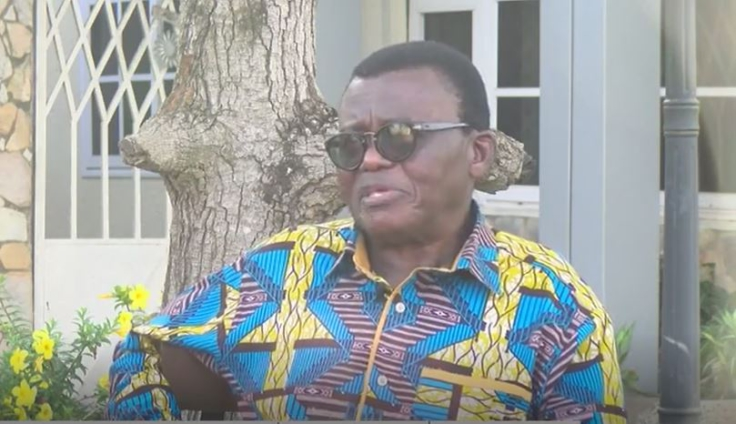
Former United Nations Senior Governance Adviser Prof. Baffour Agyemang-Duah has attributed many of Ghana's governance challenges to a lack of character-driven leadership, arguing that education without strong moral values has contributed to corruption and poor public administration.
Speaking on Joy FM's Midday News during a discussion on the ongoing constitutional review process, Prof. Agyemang-Duah said legal reforms alone would not transform the country unless they are accompanied by efforts to cultivate integrity, accountability and civic responsibility.
According to him, Ghana's governance problems stem not only from institutional weaknesses but also from a crisis of values.
"If a nation does not have core values that it cherishes, no matter what laws you pass, or consitutiomnal reviews you undergo, we are not going to change anything. The character of the people is a problem and I think I can say that education without character is worse than getting no education at all because we are going to use that education, as we have it now, to create problems for the country," he said.
He argued that despite the country's investment in education, many of those entrusted with public office continue to engage in corruption and other unethical practices.
"I mean, all the people who are making laws for us and regulations are highly educated, and yet we have problems of corruption and stealing. I can go on and on," he stated.
He therefore called for a fundamental overhaul of Ghana's educational system to place greater emphasis on character formation alongside academic achievement.
According to him, schools should deliberately instil values such as honesty, patriotism, discipline and public service to prepare young people for responsible leadership.
"We have to find an educational system that inculcates certain fundamental values in our children so that when they grow up to become leaders, they can be different from us," he said.
Prof. Agyemang-Duah also expressed concern that the current generation of leaders risks passing on poor governance practices to future generations if deliberate efforts are not made to change the country's value system.
"This generation may be failing the younger generation, and if they fail us, it is because they will be reflecting our failures, not their own failures," he said.
He noted that Ghana's democratic and governance aspirations would remain difficult to achieve unless reforms focus not only on institutions and laws but also on building leaders of integrity and strong character.
Latest Stories
-
Lekzy DeComic to feature four generations of comedians on upcoming show
40 minutes -
Nigeria wins arbitration as Sunrise’s $400 million hydropower claim dismissed
47 minutes -
Xhaka under investigation over Covid-19 certificate
58 minutes -
FAW chief questions Infantino’s Fifa reform claims
1 hour -
La Liga chief dismisses Real’s ref conspiracy claims
1 hour -
GMA rejects claims its vessel monitoring system is ineffective
1 hour -
I was close to joining Liverpool in 2016 – Mbappe
2 hours -
Ministry of Sports and Recreation holds national validation workshop on National Sports Policy Draft
2 hours -
‘Do you want me to be happy with this poor performance?’ – Bono East Minister fumes over Kintampo market project with less than 1% work done
2 hours -
London screening honours Nkrumah and 103 years of Ghana cinema
2 hours -
Founder’s Day: Is Nkrumah’s glory fading? – Nkrumah’s iconic fountain at Circle runs dry
2 hours -
GHS calls for stronger systems to ensure safe care for NCD patients
2 hours -
Kufuor calls for Africa’s resources and youthful population to be transformed into opportunities
2 hours -
Mahama administration not clamping down on free speech – Shamima Muslim
2 hours -
Ghana TVET Service, UNESCO, KPMG, Microsoft to train 100,000 facilitators in AI
2 hours