

Audio By Carbonatix
Africans are increasingly rejecting pressure to align with any single global power, preferring strategic engagement with multiple international partners as the world moves towards a more multipolar order, a new Afrobarometer report has revealed.
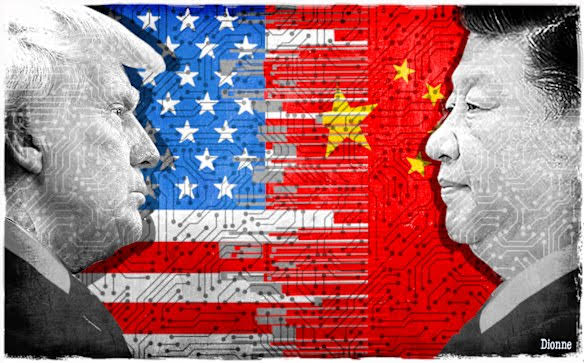
The 2026 African Insights flagship report, titled “Beyond Borders: Citizen Perspectives on a Shifting Global Order,” found that citizens across 38 African countries do not view relations with major powers such as China, the United States, Russia and former colonial powers as a choice between competing sides.
Instead, the report indicates that many Africans support maintaining relations with different global actors based on how effectively those partnerships serve national interests.
Afrobarometer found that positive views of one major power do not necessarily translate into negative views of another. Citizens who view China favourably are also more likely to hold favourable views of the United States.
The report said this reflects a broader preference for nonalignment, allowing African countries to maximise opportunities in an increasingly competitive global environment.
Among major international actors assessed, China received the strongest positive ratings, with 62% of respondents describing its economic and political influence as positive.
China recorded the highest positive ratings in 27 of the 38 countries surveyed, with its approval levels remaining stable since the 2019/2021 survey period.
The United States, however, recorded a decline in positive perceptions, dropping from 59% to 53% across 30 countries.
The European Union recorded 50% positive ratings, while former colonial powers stood at 41%. India received a positive rating of 39%.
Russia recorded the lowest positive perception among the major powers assessed, with 36% of Africans viewing its influence positively.
Although awareness of Russia’s role in Africa has increased, the report found that newly formed opinions have leaned more negative, with negative ratings increasing by six percentage points.
“To the extent that there is an emerging winner in the contest for Africans’ allegiance, China appears to be coming out on top, holding steady in popular assessments, while the United States is losing ground and Russia struggles to gain it,” the report stated.
However, Afrobarometer stressed that Africans are not seeking to replace one dominant influence with another.
The report said citizens are open to partnerships with different countries “depending on the extent to which each is willing to deal with them fairly, support their national interests, and benefit their country.”
Africans prefer neutrality on Russia-Ukraine war
The report also examined African perspectives on the Russia-Ukraine war and found strong support for neutrality.
Among respondents who said they were aware of the conflict — representing 70% of those surveyed across the 38 countries — 72% said their countries should remain neutral rather than support either side.
Majorities supported neutrality in 37 of the 38 countries surveyed.
Mali was the only exception, with 72% of respondents supporting Russia.
Afrobarometer described the position as a calculated form of nonalignment rather than a lack of interest in global affairs.
“This is not neutrality born of indifference, but a rational calculation to maximise national interest in an increasingly uncertain era,” the report stated.
Demand for greater African voice globally
The report also highlighted strong public support for increased African representation in international decision-making.
About 71% of Africans surveyed said their countries should have greater influence in global institutions, including the United Nations.
Majorities supported this position in all surveyed countries except Angola.
Afrobarometer said the finding aligns with the African Union’s campaign for greater representation, including calls for permanent African seats on the UN Security Council.
The organisation concluded that Africans are seeking a more balanced global relationship where the continent can engage multiple partners without being forced into rival camps.
“Africa’s citizens appear to understand what their leaders are starting to articulate: that global engagement needn’t be a zero-sum game,” the report stated.
It added that a multipolar world could provide African countries with opportunities to expand partnerships and advance their national interests.
Latest Stories
-
Bono East Minister cracks whip on contractors over delayed 24-Hour Economy Market projects
2 minutes -
Zelensky condemns ‘vile’ large-scale Russian attacks that killed 15
5 minutes -
Trump to speak to Putin about plague lab worker’s death in Russia
5 minutes -
GHIPO makes case for local plant breeders to protect developed varieties for food sovereignty and reinvestment
7 minutes -
Ghana’s bamboo bikes entrepreneur gets a seat at World Economic Forum
8 minutes -
After years under trees, Akatsi children get a permanent school
9 minutes -
Kanton SHS appeals for more teachers, ICT facilities and infrastructure support
11 minutes -
Black Queens Coach maps out preparations ahead of Olympic qualifying games
16 minutes -
La Traditional Council demands SSNIT documents over Pleasure Beach land claim
16 minutes -
African communities have solutions but lack access – Liberian envoy
21 minutes -
Minority calls for dismissal, prosecution of Sports Minister, GTA CEO over World Cup visa scandal
21 minutes -
Chairman and fellow patriots – Irene Ponu-Brenyah writes to NPP
30 minutes -
Nothing Disappears: What Jamestown Beach reveals about Ghana’s styrofoam ban
32 minutes -
Court delays former NAFCO CEO trial to resolve access to seized gadgets
38 minutes -
Joy FM to offer free LPMs to Super Morning Show advertisers on Oct. 9 to mark Customer Service Week
41 minutes