

Audio By Carbonatix
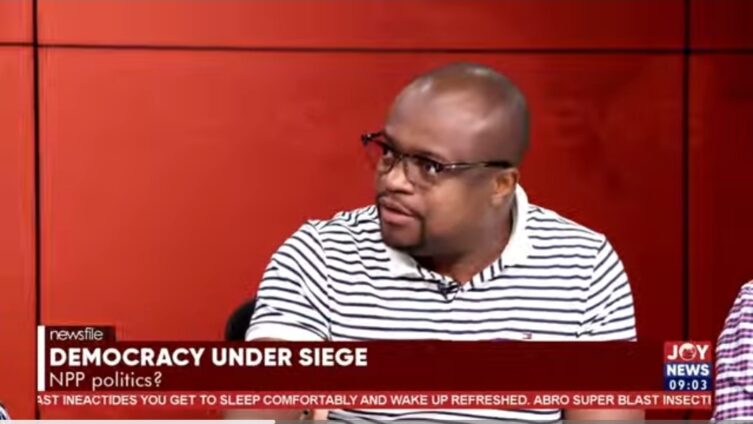
Professor Sharif Mahmud Khalid, Associate Professor of Accounting and Finance and Economic Adviser to the Vice-President, has challenged claims that the introduction of specialised tribunals constitutes a threat to Ghana's democracy.
According to him, specialised tribunals could instead help reduce pressure on the regular courts and improve the administration of justice.
Speaking on JoyNews Newsfile on Saturday, August 8, Prof. Khalid said the debate should be based on evidence and a proper understanding of the purpose of tribunals rather than historical comparisons with periods of authoritarian rule.
He questioned how the establishment of specialised tribunals could, in itself, amount to an attack on democracy.
"How is the introduction of tribunal system a dent on democracy? I would need some education really on this," he said.
"If you have a tribunal on tax, it reduces issues. Maybe you go to GRA, you have your dispute with GRA over your tax liability, and you go to a tax tribunal. Does it not reduce the burden of the judicial pressure we are talking about?" he asked.
He made a similar argument about employment tribunals, saying they could accelerate the resolution of workplace disputes and reduce pressure on the judiciary.
"Do you go to an employment tribunal? Does that not also help in accelerating and also watering down the pressure we are talking about?" he asked.
Prof. Khalid cautioned against automatically associating the word "tribunal" with Ghana's past experiences of detention and authoritarian rule, particularly under the PNDC era.
He argued that the mere existence of specialised tribunals should not be viewed as evidence of democratic regression without examining how they are constituted, their powers and the manner in which they operate.
His comments form part of a broader debate over claims by the New Patriotic Party (NPP) that Ghana's democracy is under attack.
Prof. Khalid has maintained that the assessment of Ghana's democratic health should rely on empirical evidence, including international democracy and press freedom assessments, rather than isolated political cases.
He cited Ghana's position in global press freedom rankings as one indicator that, in his view, complicates claims that the country's democracy is currently under siege.
The debate follows the NPP's Democracy Under Attack demonstration, during which the party raised concerns about alleged selective justice, arbitrary arrests and what it describes as threats to judicial independence.
Latest Stories
-
Total expenditure as of July 2026 amounted to GH¢147.07bn, 16% below target – BoG
36 minutes -
Total revenue & grants stood at GH¢144.5bn in July 2026, slightly below target – BoG
52 minutes -
Ghana Sports Fund urges sports federations to submit credible proposals and measurable targets
56 minutes -
Sally Rooney books withdrawn in UK over Palestine Action support
1 hour -
Musk says US government may be behind slowdown of Ukraine drone speeds
1 hour -
Picking Chief Justices nearing retirement could give Mahama immense power – Bentil
1 hour -
Netflix to shed 1,000 jobs in steepest cuts since 2022
2 hours -
Burnham had two hospitality dinners with Man City chairman, deleted records show
2 hours -
Semenyo ‘froze’ after alleged racist abuse, court told
2 hours -
‘Shameless’ – Mourinho critical of Vinicius Jr ban timing
2 hours -
Loyalty can outweigh competence in Chief Justice selection – Bentil
2 hours -
Man City suffer as PSG masterclass sets up Champions League win
3 hours -
Customer Service Africa CEO urges business leaders to observe staff and customer interactions
3 hours -
On night of mayhem for Liverpool, Barcola arrives in style
3 hours -
Muzic Mensah finds healing and renewed love in new single ‘WayƐ Late’
3 hours