

Audio By Carbonatix
What happens when a country becomes so desperate for gold that it begins to destroy the water, land and livelihoods that keep its people alive?
That is the question Ghana must confront.
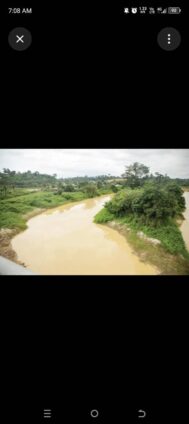
Across several communities, the signs are impossible to ignore. Rivers that once provided clean water have turned brown. Farmlands have been ripped apart. Cocoa trees have been destroyed. Deep mining pits have been left behind, some filled with stagnant water and others waiting to become death traps.
This is the reality of galamsey.
For years, Ghana's illegal mining crisis has been discussed mainly in terms of gold, jobs and the economy. But the conversation must go deeper.
Because galamsey is not only about illegal mining.
It is about the water we drink, the food we grow, the air we breathe, the health of our people and the country we will leave behind for the next generation.
And perhaps the most uncomfortable question is this:
Are we gaining enough from gold to justify what we are losing?
The People Behind the Pits
It is easy to look at a mining site and blame the young men and women working there.
But that is only part of the story.
In many mining communities, unemployment and poverty have made galamsey an attractive source of income. For a young person without a stable job, the opportunity to make money from mining may appear more realistic than waiting months or years for formal employment.
A successful period of mining can help pay school fees, rent, medical bills and household expenses.
That reality cannot be ignored.
Illegal mining must be stopped, but if we do not address the economic conditions pushing people into it, we will continue treating the symptoms without solving the problem.
At the same time, we must ask who is really making the biggest profits.
The galamsey economy does not operate on the strength of a shovel alone. There are people who finance operations, provide machinery, facilitate access to land and buy the gold.
If enforcement stops at the young person found digging while the financiers and powerful interests behind the operation remain untouched, then Ghana is fighting the wrong battle.
The law must reach the entire chain.
We Are Destroying What We Cannot Replace
The most frightening evidence of the galamsey crisis can be found in our rivers.
The Pra, Ankobra and Offin are not just names on a map. They are lifelines for communities.
Yet mining activities have placed enormous pressure on these and other water bodies.
When rivers become polluted, the damage spreads far beyond the water itself.
Families lose access to reliable sources of water. Farmers struggle. Fishing activities are affected. Communities are forced to spend more money finding alternative sources.
For poorer households, this can be devastating.
We may extract gold from the ground and sell it for money, but what happens when the water needed to sustain the people who live there is destroyed?
Gold can be sold. A river cannot simply be replaced.
That is the trade-off we seem to be ignoring.
The Health Cost Is More Than We Can See
The consequences of galamsey are not limited to the environment.
They can also affect human health.
Miners often work under dangerous conditions and may be exposed to dust, contaminated water and hazardous chemicals without adequate protection.
Mercury exposure, in particular, is a serious concern because of its potential effects on the nervous system, with children and pregnant women among those particularly vulnerable.
But environmental health problems can be difficult to see.
A polluted river is visible.
The long-term effect of exposure on a child may not be.
That is why the true cost of galamsey cannot be measured only by the amount of gold extracted or the money generated.
We must also count the health consequences that may emerge years later.
What Are We Doing to Our Farms?
Ghana cannot talk seriously about food security while allowing productive farmland to be destroyed in the search for gold.
Cocoa farms that took years to establish can be destroyed in a matter of days.
A farmer may spend years nurturing cocoa trees, only to watch a mining operation tear through the land.
This is not simply the loss of a farm.
It is the loss of income.
It is the loss of food production.
It is the loss of employment.
And it is the loss of an inheritance that could have been passed from one generation to another.
Gold may provide immediate wealth, but a productive farm can support a family for decades.
We need to ask ourselves whether short-term financial gains are worth sacrificing long-term livelihoods.
What Happens When the Gold Runs Out?
This may be the most important question of all.
What happens when there is no more gold to dig?
The miners will move.
The machines will leave.
The gold will be sold.
But the damaged land may remain.
The polluted river may remain.
The abandoned pits may remain.
The destroyed farms may remain.
And the people will still have to live there.
Who will restore the land?
Who will clean the rivers?
Who will replace the farms?
Who will take responsibility when an abandoned mining pit claims a life?
If we cannot answer these questions today, then we are simply passing the bill to the next generation.
A Ban Alone Will Not End Galamsey
Ghana has tried bans, arrests, task forces and military interventions.
Yet galamsey continues.
That should tell us that something is missing.
Enforcement is necessary, but enforcement alone will not solve the problem.
The law must be applied consistently. Those who finance and profit from illegal mining must be pursued, not only those found at the mining sites.
But Ghana must also create alternatives.
Young people need decent jobs and practical skills. Farmers need support to make agriculture profitable. Small businesses need access to affordable financing.
There must also be a credible pathway for responsible and legal small-scale mining.
If illegal mining remains the easiest way for people to make money while legal alternatives remain difficult to access, the problem will keep returning.
Communities Must Have a Voice
The fight against galamsey cannot be left to government alone.
Traditional leaders, local authorities, community members, civil society organisations, religious leaders and young people all have a role to play.
Communities must be empowered to protect their own natural resources.
Traditional authorities must also be part of the accountability process, particularly where mining takes place on traditional lands.
People who live in mining communities know what is happening around them.
They know which rivers are being destroyed.
They know which farms are being invaded.
They know which areas are being mined illegally.
Their knowledge and participation must be part of the solution.
Ghana Must Choose What It Wants to Leave Behind
There is nothing wrong with Ghana benefiting from its mineral resources.
Mining is an important part of the economy.
But economic development should not mean destroying everything else in the process.
We cannot drink gold.
We cannot eat gold.
We cannot farm on destroyed land.
And we cannot build a healthy future on poisoned rivers.
The choice before Ghana is not simply between mining and no mining.
The choice is between responsible development and destruction disguised as development.
We must find a way to create jobs, generate wealth and exploit our natural resources without sacrificing the very environment that sustains us.
Because the gold beneath our soil may belong to us today, but the rivers, forests and farmland we destroy belong to generations yet unborn.
If we continue poisoning our rivers for gold today, we may wake up tomorrow with gold in our hands but nothing safe to drink.
That is not development.
That is not progress.
That is a debt we are leaving for our children.
Ghana cannot afford to become a country rich in gold but poor in the resources that make life possible.
The true cost of galamsey is not measured only in ounces of gold.
It is measured in dirty water, sick people, destroyed farms, degraded land and stolen futures.
We cannot drink gold.
So what exactly are we willing to lose to get it?
BY: VERONICA VENUNYE KADZRO
Latest Stories
-
Total expenditure as of July 2026 amounted to GH¢147.07bn, 16% below target – BoG
12 minutes -
Total revenue & grants stood at GH¢144.5bn in July 2026, slightly below target – BoG
28 minutes -
Ghana Sports Fund urges sports federations to submit credible proposals and measurable targets
32 minutes -
Sally Rooney books withdrawn in UK over Palestine Action support
39 minutes -
Musk says US government may be behind slowdown of Ukraine drone speeds
49 minutes -
Picking Chief Justices nearing retirement could give Mahama immense power – Bentil
59 minutes -
Netflix to shed 1,000 jobs in steepest cuts since 2022
1 hour -
Burnham had two hospitality dinners with Man City chairman, deleted records show
1 hour -
Semenyo ‘froze’ after alleged racist abuse, court told
2 hours -
‘Shameless’ – Mourinho critical of Vinicius Jr ban timing
2 hours -
Loyalty can outweigh competence in Chief Justice selection – Bentil
2 hours -
Man City suffer as PSG masterclass sets up Champions League win
2 hours -
Customer Service Africa CEO urges business leaders to observe staff and customer interactions
3 hours -
On night of mayhem for Liverpool, Barcola arrives in style
3 hours -
Muzic Mensah finds healing and renewed love in new single ‘WayƐ Late’
3 hours