

Audio By Carbonatix
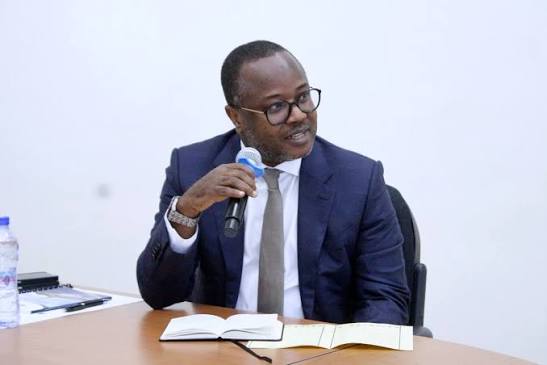
Ghana’s output expansion has been largely driven by factor accumulation - labour, capital, and extractives - rather than by efficiency gains or innovation, Dr. Maxwell Opoku-Afari, a former First Deputy Governor has disclosed.
According to him, this long-run decline in productivity raises fundamental questions about the durability, inclusiveness, and resilience of Ghana’s growth strategy.
He mentioned that between 2013-2024, agriculture remained broadly unchanged at around one-fifth of GDP, industry showed considerable volatility driven largely by extractive activities rather than manufacturing, and services consistently dominated the economy.
The absence of a decisive shift towards higher-productivity, export-oriented manufacturing, he said confirmed that economic growth was not accompanied by the structural changes necessary to broaden the tax base, diversify exports, enhance productivity, and improve debt-servicing capacity. “This disconnect helps explain why strong headline growth did not translate into stronger fiscal or external resilience”.
Dr. Opoku-Afari who is a Non-Resident Fellow of Finance for Development Lab pointed out that borrowing was frequently framed as financing for infrastructure and flagship programmes.
However, in practice, a significant share was absorbed by recurrent spending, weakened by cost overruns, or generated limited growth payoffs due to shortcomings in project appraisal, selection, and execution.
He added that petroleum revenues earmarked for priority infrastructure were also often diverted toward recurrent outlays and debt service, noting that as fiscal pressures intensified, higher government borrowing increasingly crowded out private-sector credit and weighed on investment and potential growth.
He made the expression that the crowding-out channel became increasingly evident over time with private-sector credit growth slowed, while elevated domestic yields raised the cost of capital and constrained investment.
According to him, this is consistent with a debt-overhang dynamic in which persistent fiscal imbalances and rising public financing needs dampen private-sector activity and weaken medium-term growth prospects.
Latest Stories
-
‘I was born in South Africa’, says beauty queen Chidimma Adetshina facing legal bid to deport her
1 hour -
Prince Harry and Meghan moving back to UK
1 hour -
Ghana’s output expansion largely driven by labour, capital rather than innovation – Opoku-Afari
1 hour -
Ghana is ready for nuclear power adoption – Gov’t affirms
1 hour -
GJA@77: Media-government partnership vital to Ghana’s democracy – Shamima Muslim
2 hours -
LUV FM High School Debate: Opoku Ware and St. Hubert Seminary book quarterfinal spots
2 hours -
Stronger research, industry linkages needed to build a competitive digital economy – Deloitte Technology Senior Manager
2 hours -
Economy experience high but unbalanced growth from mid-2000 to 2022 debt crisis – Former 1st Deputy Governor
2 hours -
Tell Your Story: Political, business and industry leaders to share journey with young Ghanaians
2 hours -
‘Gold cannot save you at 2am’ – Obuobia Darko challenges mining giants to invest in healthcare
2 hours -
Wontumi’s incarceration will not stop his chairmanship bid – Palgrave
2 hours -
Eurobond borrowings over 2007-2021 used for budget financing; Ghana borrowed US$15.59bn – Opoku-Afari
3 hours -
Newborn baby found in dustbin at Kasoa Main Station toilet
3 hours -
Ghanaian skincare brand KAEME wins DHL ESG Excellence Exporter of the Year award
3 hours -
Ho Communique: Democracy Not for Sale
4 hours