

Audio By Carbonatix
The 24-Hour Economy Secretariat says sustainable job creation will be driven by increased production, modernised agriculture, manufacturing, and a coordinated national development plan.
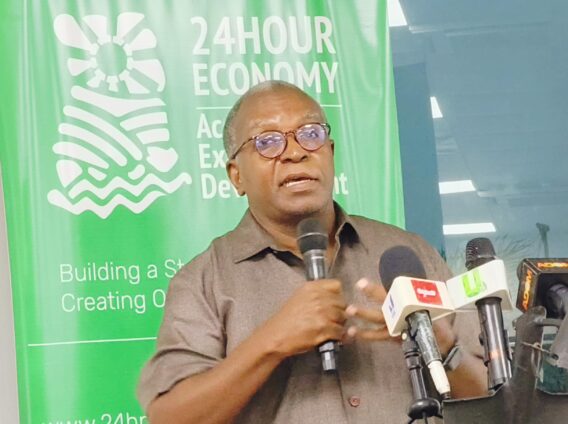
Kyeretwie Opoku, Coordinator of the Secretariat, said the strategy was aimed at addressing the employment needs of millions of Ghanaians, particularly the youth.
Speaking at a 24-Hour Economy Media Engagement in Accra, he said the secretariat would work with the media to improve public understanding of the programme and its objectives.
“Working with you is something we desperately want to do going forward. And tonight is the beginning,” he said.
Mr Opoku said the secretariat was established to help transform the organisation of the economy, create wealth, retain it locally, and support reinvestment for future generations.
He said sustainable employment would result from overall economic growth, particularly in agriculture and manufacturing, rather than government programmes alone.
“Our task, as we understand it, is to plant production first, because the jobs will come from production. We can't all be banking seven years all the time. We must make things that are bought and sold,” he said.
Mr Opoku said the government would seek to reorganise and modernise agriculture to make it less labour-intensive and more attractive to the youth, while improving the processing and distribution of agricultural products.
He said manufacturing would also be critical to job creation, particularly through the processing of agricultural raw materials into finished and semi-finished products.
He cited Ghana’s post-independence industrialisation under the late President Kwame Nkrumah as an example of how coordinated planning and industrial policy could support economic transformation.
Mr Opoku said the development of factories, agricultural estates, ports, power infrastructure and other facilities during that period formed part of a coordinated national development plan.
He said the 24-Hour Economy programme sought to revive national coherence and mobilisation around a development plan centred on agriculture, manufacturing, infrastructure, and investment.
“Our task today, in the 21st century, as a 24-hour programme, is to revive a plan, to revive national coherence, national mobilisation around a plan that delivers very specific social support,” he said.
Latest Stories
-
Hansonic Junction Road to be fixed in 3 months – Ablekuma North MCE
13 minutes -
NSMQ 2026: KNUST SHS crumble as St. Joseph Sem. SHS stage stunning comeback to book one-eighth spot
20 minutes -
Maame Efua Houadjeto partners publication of children’s tourism book
25 minutes -
NSMQ 2026: Ghanata SHS secure one-eighth spot as O’Reilly blames defeat on maths errors
31 minutes -
Badminton: Ghana delivers best Olympic qualifying result in 64 years at 2026 Grand Slam
41 minutes -
Killing of Guinea-Bissau rapper sends opposition underground
1 hour -
China launches biggest ever auto recall campaign over door handle safety
1 hour -
Tankers stack up as Venezuela sells oil faster than its ports can handle
1 hour -
Military dismisses probe claims against Former CDS Oppong-Peprah as ‘malicious’
1 hour -
Air pollution from pesticides linked to farmers respiratory illness
1 hour -
SIC Insurance PLC declares 10.22 pesewas dividend as 2025 profit surges to GH¢84m
1 hour -
Please, just sell me the sponge
2 hours -
Rosenberg: Shortage of petrol but not patriotism as Russians feel growing impact of war
2 hours -
EduSpots launches digital champions programme to accelerate digital learning across 52 communities
2 hours -
Breast cancer campaign takes a new turn as advocates focus on what happens after screening
2 hours