

Audio By Carbonatix
Venezuela's dilapidated oil port terminals are imposing a de facto export cap on the country's resurgent crude production, with tankers having to wait up to 30 days to load because of ageing infrastructure, power outages and quality issues, according to shipping data, sources and documents.
The delays are putting roadblocks on a U.S. plan to quickly boost Venezuela's oil exports following a flagship pact with global trading houses. The fight for infrastructure looks likely to intensify as many partners of state energy firm PDVSA get ready to market their share of output independently under new contract terms.
The last time Venezuela's oil customers had to deal with such long delays was during a naval blockade imposed by the U.S. on the South American country late last year, part of a strategy that culminated with the January 3 capture of then-President Nicolas Maduro. Since then, interim leader Delcy Rodriguez has been sticking to Washington's plan to reanimate oil exports.
But in recent months, PDVSA and its partners have been unable to surpass 1.25 million barrels per day of exports even amid rising crude output, stock drainage and high global demand, vessel monitoring data showed.
When output peaked at more than 3 million bpd more than two decades ago, the nation's terminals were able to handle over 2.5 million bpd of exports, with vessels getting in and out of Venezuelan waters in less than a week.
The loading hiccups are triggering disputes over demurrage, crude quality and ship contamination, according to maritime documents, four sources and vessel monitoring data.
"The speed of crude transfers from tanks to vessels is incredibly slow, which forces tankers to occupy docks for longer than their assigned loading windows. And if a ship arrives to discharge imports, it takes even longer due to lack of fuel storage capacity," a PDVSA source said.
Venezuela's oil ministry and PDVSA did not reply to requests for comment.
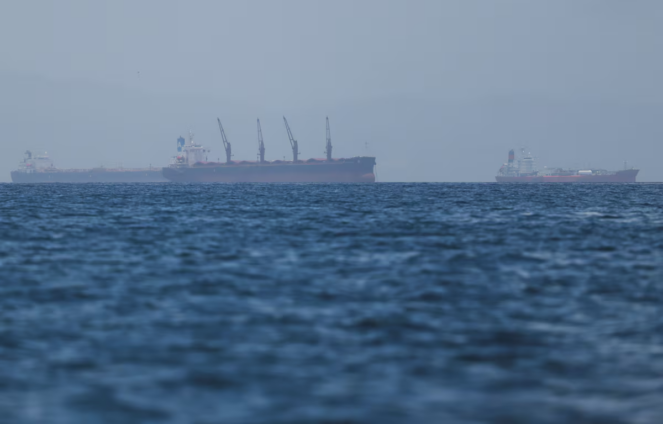
The delays are visible in the dozens of tankers that swirl waiting for oil cargoes at the country's anchorages, particularly near the Jose port on Venezuela's northeastern coast, which handles about 70% of the country's overall exports.
Company shipping reports seen by Reuters showed interruptions this year due to equipment malfunctions, quality issues and power outages when loading and unloading at Jose.
Even companies in more privileged positions to use docks after decades of partnership with PDVSA, like U.S. oil major Chevron, are looking for solutions to improve loading, including requesting access to ports so far dedicated to domestic shipping, sources said.
Chevron did not reply to a request for comment.
Venezuela's oil export agreement with the U.S., extended several times, has allowed traders including Vitol and Trafigura to ship over 140 million barrels of crude and fuel this year, with most cargoes bound to the U.S. and others re-entering markets that had not seen Venezuelan barrels for years, such as Europe and India, as U.S. sanctions are eased.
But as Washington pushes a $100 billion energy reconstruction plan in Venezuela that is mainly focused on boosting crude output, midstream and downstream projects – including those to repair terminals and refineries – are not being prioritized.
Advertisement · Scroll to continue
U.S. and Venezuelan officials praised the oil export recovery in two conferences in Houston this week, and acknowledged infrastructure challenges they said can be addressed through fresh investment.
"We are today in a phase of recovery, but the infrastructure is there," said PDVSA's vice president Jovanny Martinez at one of the conferences. "There are deficiencies and reliability must improve."
BETWEEN RUST AND LEAKS
The traffic jam at the Jose and neighboring Pozuelos anchorages partly predates the current export boom. Venezuela's oil docks are cluttered with relics of the years in which the country was under severe U.S. sanctions, such as blacklisted tankers that arrived quietly and have been unable to leave.
One of them, flying a false Guyanese flag, is docked at PDVSA's Guaraguao port in Puerto La Cruz, its hull and deck visibly rusty even from a distance. Once known as Syrma and used to transport oil to Cuba before being renamed Consul, it has remained there for two years sheltering from a U.S. crackdown on dark fleets that brought seizures and arrests, shipping data and maritime databases showed.
Like many others, the vessel is occupying berth space now at a premium, even as foreign companies seek to reactivate idled terminals to expand crude exports. In mid-August, only two of Guaraguao's seven docks were fully in service, a worker from the terminal said.
The competition for port capacity has prompted many customers to resort to terminals and ship-to-ship transfer areas where oil leaks that stain their tankers' hulls are frequent, causing additional delays and costs, according to the sources and documents.
PDVSA, meanwhile, is increasingly being charged thousands of dollars for demurrage — a delay surcharge applied for each day a tanker remains waiting beyond its assigned loading window — which it has agreed to pay only in crude.
The state company is requiring new customers to pay for cargoes at delivery without any form of credit, which complicates invoicing if those customers claim surcharges or quality-related price discounts, the sources added.
The migration of dozens of oil contracts to new terms approved in a sweeping energy reform that took effect in late July is expected to exacerbate the fight for infrastructure.
But PDVSA has made clear, the sources said, that it will keep control of its terminals, including all cargo scheduling, at least for now.
Latest Stories
-
Ampofo Ankrah did not collect World Cup visa money – Lawyer
1 minute -
Atta Akyea questions why EOCO is detaining Baffour Awuah overnight
4 minutes -
Torgbiga Wenya III opposes proposed elevation of 36 Anlo chiefs to Paramount status
11 minutes -
The strengthening El Niño and what it could mean for Ghana
14 minutes -
Baffour Awuah formally charged with money laundering, loss of public funds – Lawyer
15 minutes -
Drone flight over EOCO building could attract 30-year jail term – Security consultant
23 minutes -
Flying drone over EOCO premises is strictly prohibited – Security consultant
24 minutes -
SIC file was surrendered to client, EOCO has no reason to search Manhyia South MP’s firm – Atta Akyea
24 minutes -
EOCO search of Baffour Awuah’s law firm raises confidentiality concerns – Atta Akyea
25 minutes -
“I will never ignore an invitation from EOCO if I had received one” — Manhyia MP
27 minutes -
Baffour Awuah ready to cooperate fully with EOCO investigation – Bosome Freho MP
50 minutes -
How a Ghanaian technology is helping fish farmers detect hidden threats before fish die
59 minutes -
AI tool helps Ghanaian farmers identify crop threats from field observations
1 hour -
NEIP: Designing a Ghana Startup Agency that builds enterprises, not programmes
1 hour -
Breast cancer diagnosis is not a life sentence – Gender Minister urges early treatment
1 hour