

Audio By Carbonatix
For years, climate change in Africa has largely been framed as a story about the environment — rising temperatures, disappearing forests, floods, droughts, and changing rainfall patterns. But that conversation is changing.
Increasingly, the question is no longer simply how hot will it get? It is becoming: What will that heat do to our bodies, our food, our diseases, our health systems and the livelihoods that keep communities alive?
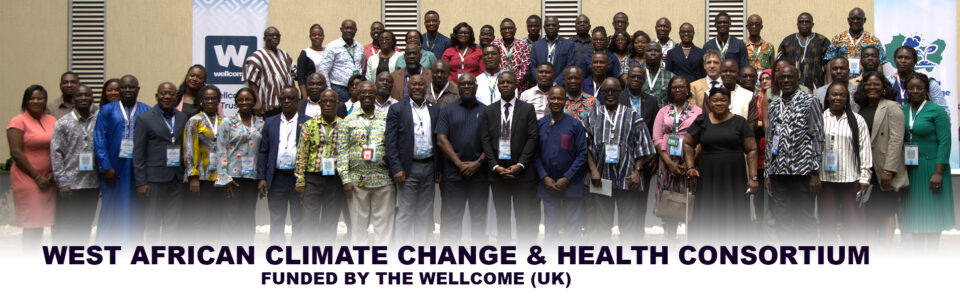
That question sits at the heart of a new regional initiative — the West Africa Climate and Health Science and Policy Consortium (WACH) — which has been launched in Kumasi with support from the Wellcome Trust.
The Consortium, led by the Kwame Nkrumah University of Science and Technology (KNUST), consists of research and policy-influencing institutions in Ghana and Senegal, including the University of Ghana, Oxford University, the Climate and Development Knowledge Network (CDKN) Ghana, ABANTU for Development and Enda Energie Senegal.
Its ambition is bigger than producing another collection of scientific papers. It wants to change the relationship between climate science, health research and public policy — and ultimately, make scientific evidence useful to the people who need it most.
The warning from researchers is straightforward: climate change is already affecting health. Heatwaves, droughts, floods and unpredictable rainfall are altering the conditions in which people live, work and produce food.
And those changes do not affect everyone equally. Women, children, older persons, persons living with disabilities, low-income households and communities whose livelihoods depend heavily on agriculture and natural resources are particularly exposed.
Extreme weather can destroy crops and incomes. Drought can deepen food insecurity. Flooding can disrupt livelihoods and place additional pressure on health facilities. Changing temperatures and rainfall can also alter the conditions in which disease vectors thrive.
For Professor Philip Antwi-Agyei, Consortium Director and Provost of the College of Science at KNUST, this is why the climate conversation must increasingly become a health conversation. The consortium will investigate the relationship between changing temperature and rainfall patterns and diseases including malaria and dengue fever, alongside respiratory illnesses, other non-communicable diseases and the health implications of mycotoxin contamination.
But the researchers are not stopping there. They also intend to explore how indigenous knowledge can contribute to solving climate-related challenges — because communities have spent generations developing ways of responding to changes in their environment.
Perhaps the most striking element of the consortium's approach is what it says it will not do. It will not wait years for its own research to be completed before trying to influence policy.
Professor Antwi-Agyei says there is already a substantial body of research on climate and health scattered across institutions, programmes and previous initiatives. The consortium intends to "harvest" that evidence, identify what is useful and work with policy-influencing institutions to translate it into action.
"We are not going to wait until we begin to produce evidence ourselves. Already, there's a lot of evidence all over the place. We are going to harvest that evidence and see how it can be used to influence policy," he said.
That could prove to be one of the initiative's most consequential decisions. Because the problem Africa faces is not necessarily a complete absence of knowledge — sometimes, the problem is that knowledge does not travel far enough.
The leaders behind the initiative are also challenging the traditional way research success is measured. For the consortium, publishing papers cannot be the final destination. The more difficult question is: What changes because of the research?
At the launch, KNUST's Vice-Chancellor, Professor Christian Ejiri, challenged the consortium to consider whether its research can help a Minister of Health identify where climate-related health risks are greatest. Can climate projections help determine where health facilities should be built or strengthened? Can research provide early information to communities facing heatwaves, droughts or floods? Can scientific evidence help shape agricultural policies that protect nutrition and livelihoods?
Those questions provide a much more demanding definition of research impact. They move the conversation from "How many papers did we publish?" to "How many lives did our knowledge help protect?"
There is another powerful idea running through the initiative: African leadership. Professor Roger Tine, Country Lead for Senegal, says Africa must increase its leadership in research aimed at solving global health challenges such as climate change.
His message was blunt: "We cannot continue to sleep while our communities are suffering. So it is time for us to wake up and drive science that will lead to policy."
That statement captures perhaps the most important philosophical shift behind the consortium. Africa should not simply be a place where the consequences of climate change are observed, measured, and documented. It should be a place where solutions are designed.
Malaria provides one of the clearest examples of why this work matters. Disease transmission is influenced by environmental conditions, including temperature and rainfall. If those conditions change, the geography and intensity of some diseases can change too.
That is why the consortium wants to investigate the epidemiological relationship between rising temperatures, erratic rainfall and climate-sensitive diseases. The objective is not simply to establish that climate change affects health. The harder task is to determine how, where, when and for whom those effects become most significant — and what governments can do about them.
The consortium's focus also extends beyond infectious disease. Food systems sit directly within the climate-health equation. When droughts or floods affect agricultural production, the consequences can move from farms to markets and eventually into households.
Reduced agricultural productivity can affect incomes. Lower incomes can affect access to nutritious food and healthcare. Poor nutrition can increase vulnerability to disease. And food insecurity can place additional pressure on already vulnerable households.
This is why the consortium's mandate deliberately brings climate, health and food systems together — to understand the connections rather than study each problem in isolation.
Perhaps the most uncomfortable challenge facing the consortium is not scientific — it is institutional. West Africa already has researchers, universities, government agencies, civil society organisations, communities and development partners working on pieces of the climate challenge. The consortium's task is to connect them.
Professor Antwi-Agyei says the initiative will therefore leverage existing programmes, tools, policies and climate initiatives across Ghana, Senegal and the wider sub-region instead of attempting to reinvent everything. That approach could make the initiative more efficient, but it also creates a demanding responsibility: coordination.
The initiative's stated ambition is ultimately simple, even if achieving it will not be. It wants to see stronger health systems, more resilient food systems, better-informed policies, better-prepared communities, and fewer people suffering because climate-related risks were ignored or poorly understood.
The KNUST leadership has argued that the consortium's ultimate success should not be measured by the number of publications it produces. It should be measured by whether lives are protected, health systems are strengthened, food systems become more resilient, policies become more evidence-informed, and communities become better prepared for a changing climate.
That is a much harder standard — but it is also a more meaningful one.
The launch has created the platform. The funding has provided an important foundation. The researchers have identified the questions. And policymakers have been brought into the conversation from the beginning.
But the real test will come when the speeches end and the work begins. Will existing evidence actually reach policymakers? Will research influence government decisions? Will communities receive information early enough to protect themselves? Will climate projections influence the way health facilities are planned? Will research change how malaria and other climate-sensitive diseases are monitored?
Those are the questions that will determine whether WACH becomes another research project — or something much more consequential.
For Professor Roger Tine, the direction is clear: "It is time for us to wake up and drive science that will lead to policy."
That may ultimately be the consortium's most important promise — not simply to study a changing climate, but to ensure that the knowledge generated today helps West Africa survive, adapt and remain healthy in the climate that is already arriving.
Latest Stories
-
First National Bank redefines gifting with launch of Investment Gift Cards
31 seconds -
Supreme Court has settled OSP’s prosecutorial mandate – Kissi Agyebeng
55 seconds -
OSP recovered GH¢8.5m, $2m and saved state over GH¢100m through payroll cleanup – Kissi Agyebeng
7 minutes -
World Bank says 56.4% of Ghanaians remain in poverty despite economic growth
10 minutes -
The Inconvenient Truth: The Boardroom is where tomorrow is quietly written or quietly erased
11 minutes -
Personal dislike for OSP leadership behind calls to abolish office – Kissi Agyebeng
11 minutes -
AMA arrests 6 drivers, mates for allegedly charging unapproved fares in Accra CBD
16 minutes -
Attacks on OSP linked to discomfort over its investigative powers – Kissi Agyebeng
16 minutes -
Uefa set to drop Fifa tournament boycott threat
19 minutes -
24-Hour Economy Secretariat partners BOSAG to build Ghana’s outsourcing talent pipeline
21 minutes -
‘Today, I announce the rebirth of the OSP’ – Kissi Agyebeng
21 minutes -
Only 27% of Ghana’s 94,200km road network is paved – World Bank
25 minutes -
More than 50 kidnapped and 47 killed in violent gang attack in Haiti, UN says
32 minutes -
World Bank warns Ghana’s fiscal surplus is being driven by spending cuts
38 minutes -
Ghana’s public debt falls to 49% of GDP in 2025 from 70.3% — World Bank
43 minutes