

Audio By Carbonatix
Long before an institution fails in public, it has usually failed in private, one comfortable meeting at a time.
NyansaKasa (Words of Wisdom): "The boardroom is where futures are either protected or permanently postponed."
There is something deceptively ordinary about a boardroom. A long table. Upholstered chairs. Water bottles arranged with almost military precision. Yet decisions made in these quiet, air-conditioned rooms can determine whether thousands keep their jobs, whether pensions remain secure, or whether an entire institution simply ceases to exist a decade hence.
Boardrooms are not prestigious meeting spaces. They are workshops in which the future is assembled, piece by piece, decision by decision. Institutions rarely wake up one morning and suddenly fail. They are weakened gradually, one poorly interrogated proposal at a time, until the accumulated debt of avoided questions finally comes due.
This matters with particular force in Africa, where capital is scarce, and unemployment remains stubbornly high. When a large company collapses in a wealthy nation, deep capital markets and social safety nets absorb much of the shock. When an important African institution fails, employees, pensioners, and entire communities carry the consequences for years. Our boardrooms, therefore, cannot afford the luxury of ceremonial governance.
The Future Rarely Arrives with a Warning Label
A board's task is not to predict the future with perfect accuracy. Nobody can. Its task is to ensure that today's decisions do not needlessly mortgage tomorrow's possibilities. Kodak remains one of corporate history's most instructive lessons: one of its own engineers built an early digital camera in the 1970s, yet the company hesitated because digital technology threatened a highly profitable film business. The future was visible. Embracing it simply required disrupting a comfortable present. Blockbuster and Nokia later suffered variations of the same fate, each dominant until an entire industry reorganised itself around them.
These are commonly told as failures of strategy. More precisely, they are failures of governance. A competent board asks not only how well the organisation is performing, but what might render today's success irrelevant tomorrow. That second question grows more urgent by the year as artificial intelligence reshapes industry after industry. A board that congratulates itself on an excellent set of results this year, while remaining incurious about how its sector might look within five years, is celebrating yesterday while tomorrow quietly packs its bags.
NyansaKasa: "The rear-view mirror can confirm how far you have travelled. It cannot tell you whether the bridge ahead has collapsed."
Governance, properly understood, must therefore see beyond the next quarter. It must learn, again, to see the next generation.
When Nobody Asks the Uncomfortable Question
Boardroom failure rarely originates in incompetence. The annual report usually displays a row of impressive biographies: accountants, engineers, bankers, seasoned former executives. And yet collective intelligence can still produce collective blindness the moment challenge becomes socially inconvenient. The danger has a name: groupthink.
A confident chief executive presents an ambitious proposal. Management is enthusiastic, the consultants have produced handsome slides, and the projections rise beautifully from left to right, as projections have an uncanny habit of doing. Nobody wishes to be the one director remembered for delaying progress by asking whether the assumptions are realistic. Someone says, quietly, that they are comfortable. Another says they support it. Everyone nods, the minutes record unanimous approval, and the meeting adjourns early. Three years later, the resulting impairment is, rather poetically, just as unanimous.
It would almost be amusing if shareholders and ordinary taxpayers didn’t so often pay for the joke. This is why the most valuable director around any table is rarely the one with the longest curriculum vitae, but the one prepared to ask the question everybody else finds inconvenient.
NyansaKasa: "When everybody around the table is admiring the accelerator, governance requires somebody to remember that the vehicle also needs brakes."
The brakes exist not to prevent movement, but to make responsible speed possible.
Africa Has Already Paid the Tuition for This Lesson
Africa does not require imported case studies to understand governance failure; the tuition has already been paid in full, at home. Ghana's banking sector clean-up identified poor corporate governance, weak risk management and the diversion of customer deposits among the vulnerabilities that ultimately forced the revocation of several licences. South Africa's Steinhoff scandal prompted its Parliament to interrogate the oversight frameworks that allowed roughly twenty billion rand belonging to public pension funds to be put at risk. VBS Mutual Bank had already faced regulatory penalties for compliance failures years before its eventual collapse confirmed that earlier warnings had largely gone unheeded.
Behind every one of these figures sits a person: a saver, a pensioner, a small supplier awaiting payment. Twenty billion rand is not an abstract governance statistic; it represents working lives spent trusting that somebody was minding the till with appropriate seriousness. The uncomfortable question running through each episode is simple. What, precisely, was happening in the rooms responsible for oversight while risk was quietly accumulating? Every sitting director should feel a small measure of discomfort at that question. Good. Governance occasionally needs discomfort, much as a bitter medicine may still be the one that heals.
The Boardroom Is Not a Retirement Gift
One of Africa's most consequential governance habits is treating a board seat as a reward for seniority, loyalty or friendship, rather than as an assignment demanding continued, active competence. A directorship is not a lifetime achievement award; it is work, and it carries consequences for people the director will very likely never meet.
This is especially true within public institutions, where oversight exists precisely to prevent abuse and to hold public spending accountable to the citizens who ultimately fund it. A million lost through weak oversight is never merely a missing line in a ledger. It can just as easily represent a clinic without medicine or a classroom without a roof. Reclassifying an irregular expenditure does not, by itself, demonstrate that governance has improved; it simply changes the label on the bottle.
NyansaKasa: "Changing the name on the medicine bottle does not cure the patient."
Where Oversight Either Becomes Real or Becomes Theatre
No single board can examine every material risk with equal depth, which is precisely why functional committees exist. Audit committees must interrogate financial integrity. Risk committees must examine what could seriously damage the institution, including risks that management itself may be quietly underestimating. Remuneration committees must ensure incentives never reward short term behaviour that manufactures long term problems, while technology and environmental oversight must move well beyond glossy reporting toward the exposures such reporting so often conceals.
Yet the mere existence of a committee guarantees nothing. A committee is only as effective as its members' competence, its chair's authority and its collective courage to challenge management when challenge is required. Four honest questions, asked at the end of every cycle, tend to reveal the truth quickly: what did we identify, what did we challenge, what changed because we existed, and what did we help prevent? Where the answers remain vague, the committee is very likely functioning as administration rather than as governance.
Governing Beyond One's Own Tenure
The deeper difficulty is temporal. Executives think in annual targets, politicians in election cycles, and directors in finite terms of appointment. Yet many of the decisions now confronting African institutions, concerning industrialisation, climate resilience and the digital transition, demand horizons stretching well beyond the tenure of anyone currently seated at the table. Singapore's disciplined institution building and Botswana's long stewardship of diamond revenue illustrate the same principle: resources provide opportunity, but governance determines how much of it survives to benefit the next generation.
NyansaKasa: "True governance sees further than the next quarter, because it sees the next generation."
The Boardroom Africa Now Needs
Reversing this pattern requires more than another governance code, however well drafted. Africa already has considerable regulation; what it needs urgently is behaviour that matches that architecture. Board appointments should begin with competency rather than acquaintance; directors require continuous education; and chairs must deliberately cultivate the psychological safety that allows dissent to be voiced without social cost. Above nearly everything else, boards must rediscover courage: courage to challenge a popular chief executive, to halt a fashionable but reckless investment, and, on occasion, simply to say no when saying yes would be so much easier. Governance without courage is merely compliance wearing a well-tailored suit.
When the Meeting Ends, Tomorrow Begins
Every board meeting eventually concludes. Papers are gathered, laptops close, and cars leave the basement one by one. Yet the decisions themselves remain behind, quietly becoming factories, jobs, innovations, losses or, occasionally, scandals that make the following morning's headlines. Governance carries the peculiar burden that its greatest successes remain largely invisible, while its failures rarely do.
Perhaps, then, every board should occasionally set aside the familiar agenda and ask a less comfortable question: not what management wishes approved today, nor what will flatter this year's results, but what future is actually being created. The child who will inherit tomorrow's public debt is not seated in today's boardroom. Nor is the pensioner whose savings are being invested on trust, nor the community living beside tomorrow's half-finished project. Future shareholders, by definition, have no vote at all. The board is, quite simply, sitting in their seats temporarily.
That is the final inconvenient truth. Boardroom privilege is borrowed, authority is temporary, and stewardship, properly understood, is intergenerational.
NyansaKasa: "The boardroom is where futures are either protected or permanently postponed."
The question worth asking is not whether our boardrooms appear impressive or well attended by distinguished names. History will ask something simpler: when tomorrow sat silently on the agenda, did those entrusted with today have the wisdom and the courage to protect it?
About the Author
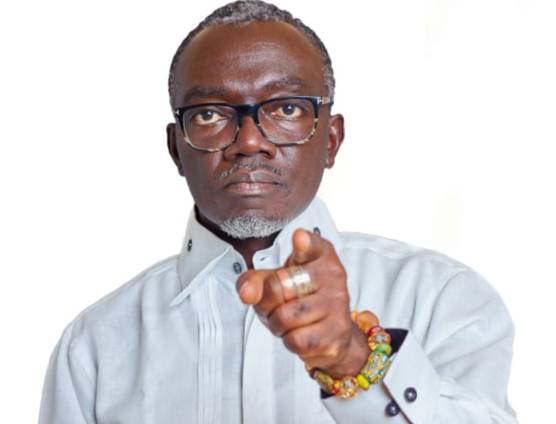
Ing. Professor Douglas K. Boateng is a strategist in governance, industrialisation and supply chains, and serves as a professional chairperson, an international Chartered Director (UK) and a Chartered Engineer (UK). A Pan-Africanist and social entrepreneur at heart, he has spent his career working across public institutions, corporate boards and industrial policy, in Africa and beyond, guided by the conviction that strong institutions are built one honest decision at a time. His contributions to industry and academia have earned him more than six lifetime achievement awards throughout his career. He is the founder of NyansaKasa, Words of Wisdom, a collection of daily aphorisms he has written and shared since late 2019, distilling decades of experience advising governments, boards, and enterprises on governance, accountability, and institutional resilience into words meant to challenge and endure. He convenes the Boardroom Governance Summit, Africa's largest boardroom-focused summit, and writes a widely read op-ed series titled “Inconvenient Truth” and “What Is Wrong With Us,” featured on some of the region's leading digital media platforms. Professor Boateng can be reached via LinkedIn or at info@panavest.com.
Latest Stories
-
Minerals Commission inaugurates GH¢28m multipurpose sports complex in Kenyasi
6 minutes -
OSP has made corruption too costly to engage in lightly – Kissi Agyebeng
16 minutes -
U.S. FDA approves landmark pancreatic cancer drug that’s shown to improve survival
19 minutes -
NSA extends August 28 deadline for National Service applicants with biodata mismatches
22 minutes -
Ghanaian woman dies in China after collapsing at airport on journey to pursue Master’s Degree
29 minutes -
NSMQ 2026: Osei Tutu SHS hold off Ahantaman Girls, Presby SHTS to reach quarterfinals
44 minutes -
We worked with the FBI on Asante Berko case – OSP rejects claims it lacks competence
48 minutes -
Keep political actors out of police affairs to tackle electoral violence — Asah-Asante
50 minutes -
Africa cannot fund energy needs with public budgets alone – Ato Forson
58 minutes -
NSMQ 2026: Keta SHTS secures quarterfinals spot after beating Anum Presby, Kadjebi Asato
1 hour -
OSP has saved Ghana over 20 times the resources invested in it – Kissi Agyebeng
1 hour -
Kwabena Donkor, four others named as persons of interest in Asante Berko case – OSP
1 hour -
Police interdict officer over alleged demolition at Accra Race Course
1 hour -
Performance of OSP shouldn’t be measured by political applause – Kissi Agyebeng
1 hour -
April 15 ruling brought OSP prosecutions to standstill – Kissi Agyebeng
1 hour